Foundation isn’t going anywhere, but a lot of people are reaching for it less. Lightweight, skin-first makeup has taken over feeds and fashion weeks, and the appeal is easy to see. It takes less time and feels more comfortable in warm weather. It also tends to look more natural up close.
The catch is that “no foundation” doesn’t mean “no effort.” The looks that work best rely on good skin prep, a few well-placed products, and realistic expectations. Here’s how to build the most popular no-foundation looks, which product types make them easier, and how to adjust for your skin type.
What “No-Foundation Makeup” Actually Means
Most trending no-foundation looks fall into one of three camps:
- Zero base at all. Just skincare, SPF, and color on the cheeks, lips, and brows.
- Spot-correcting only. Concealer goes where you want it (under the eyes, around the nose, over blemishes) and nowhere else.
- Sheer-layer looks. A skin tint, tinted moisturizer, or tinted sunscreen evens out tone without the full-coverage feel.
The goal isn’t to hide your skin. It’s to make it look like the best version of itself. That’s why the look depends so much on what happens before the makeup goes on.
Start With the Skin: Prep Matters More Than Product
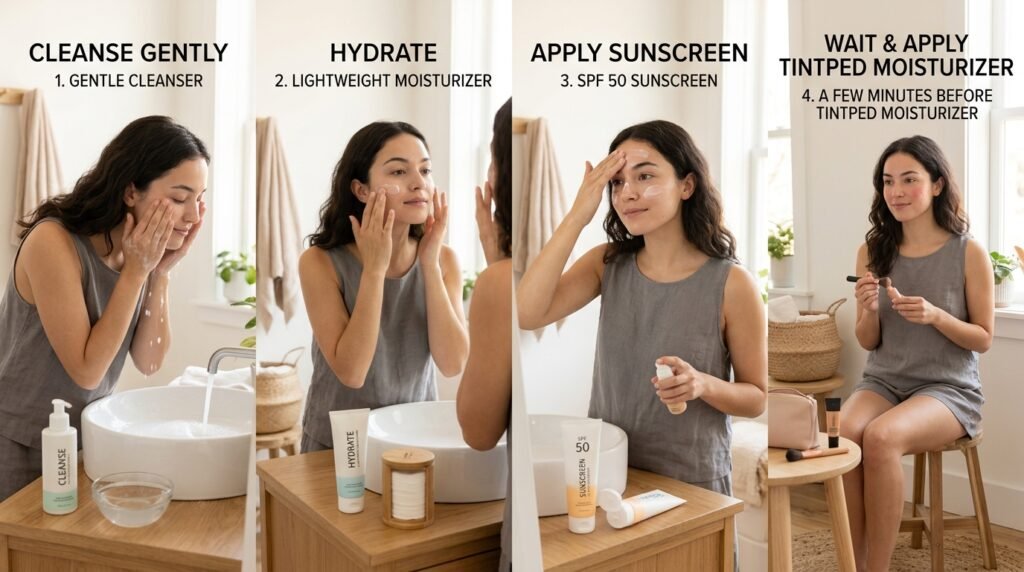
When there’s no foundation to smooth things over, dry patches, flaking, and an overly shiny T-zone show up more. A simple prep routine does most of the heavy lifting.
A Simple 4-Step Skin Prep
- Cleanse gently. Overly stripping cleansers can leave skin tight, which makes makeup look uneven.
- Hydrate. A lightweight moisturizer works for oily skin. Dry skin usually benefits from something richer.
- Apply sunscreen. Daily SPF is good practice, and many people choose a formula that sits well under makeup.
- Wait a few minutes. Letting products absorb before adding color helps prevent pilling and patchiness.
Common Prep Mistakes
- Skipping moisturizer on oily skin, which can lead to overcompensating with oil
- Applying too many layers at once, which can cause products to ball up
- Exfoliating right before makeup, which can leave skin irritated or blotchy
If you’re adding a new skincare product, patch test it first and check the ingredient list, especially if your skin is sensitive or reactive.
7 Trendy No-Foundation Makeup Looks
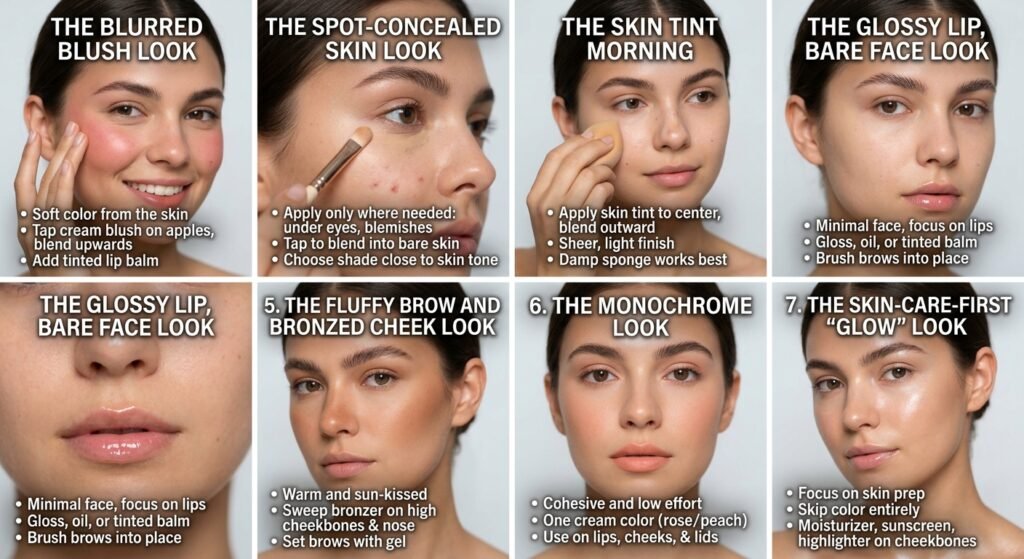
1. The Blurred Blush Look
The vibe: Soft color that looks like it comes from your skin.
How to do it: After skincare, tap a cream or liquid blush onto the apples of the cheeks and blend it upward toward the temples. Use a finger or damp sponge, and build in thin layers. Add a touch of tinted lip balm and you’re done.
Why it works: Color on the cheeks draws attention to your face and away from minor uneven tone.
2. The Spot-Concealed Skin Look
The vibe: Your real skin, just a little more even.
How to do it: Use a small amount of concealer only where you want it: under the eyes, around the nostrils, over a blemish. Tap it in with a fingertip or small brush so the edges blend into bare skin.
Tip: Choose a shade close to your skin tone. Overly light concealer can look like a patch when there’s no foundation around it.
3. The Skin Tint Morning
The vibe: Sheer, light, and wearable.
How to do it: Apply a small amount of skin tint or tinted moisturizer to the center of the face and blend outward, leaving the perimeter lighter. Many people find a damp sponge gives the sheerest finish.
4. The Glossy Lip, Bare Face Look
The vibe: Effortless, a little editorial.
How to do it: Keep everything else minimal and let a lip oil, gloss, or tinted balm be the focus. Brush your brows into place so the face still looks finished.
5. The Fluffy Brow and Bronzed Cheek Look
The vibe: Warm and sun-kissed without a base.
How to do it: Sweep a cream bronzer high on the cheekbones and across the bridge of the nose, then set your brows with a clear or tinted brow gel. Keep the bronzer shade within a tone or two of your skin.
6. The Monochrome Look
The vibe: Cohesive and low effort.
How to do it: Use one cream color, such as a soft rose or peach, on the lips, cheeks, and a sheer wash on the lids. Blending with fingertips keeps it fast.
7. The Skin-Care-First “Glow” Look
The vibe: Healthy, hydrated skin as the main feature.
How to do it: Skip color entirely and focus on prep. A hydrating moisturizer, a thin layer of sunscreen, and a small touch of highlighter on the high points of the cheekbones is all it takes.
Product Types That Make No-Foundation Looks Easier
The right tools help, but you don’t need all of them. Below are product categories worth considering and what to weigh before you buy. Because prices, formulas, and shade ranges change often, check the current Amazon listing for details before purchasing.
Skin Tint or Tinted Moisturizer

Best For: Anyone who wants sheer, evening coverage without the weight of foundation.
Why Consider It: Skin tints are designed to be buildable and lightweight, so you can keep the look fresh while softening redness or uneven tone.
Pros:
- Light feel on the skin
- Easy to apply with fingers or a sponge
- Many options combine skincare-style ingredients or SPF
Cons:
- Limited coverage for blemishes or dark circles
- Shade ranges vary widely between brands
What to Consider Before Buying: Check the shade range, finish (dewy versus matte), and whether it contains SPF. If you have sensitive skin, look at the ingredient list for fragrance or other known irritants.
Verdict for This Specific Use: A good fit if you want a gentle step up from bare skin. If you want zero base, you can skip it. If you need more coverage, pair it with a concealer.
Lightweight Concealer

Best For: People who want to correct just a few areas.
Why Consider It: Concealer lets you target what bothers you while leaving the rest of your skin visible.
Pros:
- Precise, spot-corrects only where needed
- Small amount goes a long way
- Can double as a brightener under the eyes
Cons:
- Can crease on dry or textured under-eyes if over-applied
- Shade matching takes some trial and error
What to Consider Before Buying: Look for a texture suited to your skin (creamy for dry skin, a thinner liquid for oily skin) and a shade range that includes your undertone. Check the listing for application tool details.
Verdict for This Specific Use: One of the most useful items for a no-foundation routine. If you have very little to cover, a skin tint alone may be enough.
Cream or Liquid Blush

Best For: Anyone who wants a natural, skin-like flush.
Why Consider It: Cream and liquid formulas tend to melt into the skin, which suits the blurred, no-base aesthetic better than some powders.
Pros:
- Blends easily with fingers
- Gives a fresh, dewy finish
- Works on lips and cheeks
Cons:
- Can slide on very oily skin if not set
- Very pigmented formulas are easy to overapply
What to Consider Before Buying: Start with a color close to your natural flush. Check how pigmented the formula is, since you’ll want a small amount to go a long way.
Verdict for This Specific Use: A strong choice for beginners who want one product that does a lot. If you have very oily skin, you may prefer a powder blush or a light dusting of translucent powder on top.
Tinted Brow Gel

Best For: Anyone who wants a polished look without much makeup.
Why Consider It: Defined brows frame the face and make a minimal look feel finished.
Pros:
- Quick to apply
- Adds shape and hold
- Available in clear and tinted options
Cons:
- Can feel stiff if overapplied
- Shade matching matters, especially for lighter brows
What to Consider Before Buying: Pick a shade close to your brow color, and check whether you prefer a flexible hold or a stronger one.
Verdict for This Specific Use: Worth considering if you tend to feel “unfinished” without a base. If you like your brows as they are, you may not need it.
Tinted Lip Balm or Lip Oil

Best For: Adding color and hydration without a full lip routine.
Why Consider It: A little tint on the lips balances a bare face and keeps the look from feeling washed out.
Pros:
- Hydrating and comfortable
- Easy to reapply without a mirror
- Gives a sheer wash of color
Cons:
- Wears off quickly
- Glossy formulas may feel sticky to some
What to Consider Before Buying: Check the finish and ingredients, particularly if you have sensitivities to fragrance or flavoring.
Verdict for This Specific Use: A low-commitment way to add color. If you want longer wear, a lip stain may suit you better.
Translucent Setting Powder (Optional)

Best For: Oily or combination skin that gets shiny.
Why Consider It: A tiny amount in the T-zone can reduce shine so your look lasts longer.
Pros:
- Helps control shine
- A small amount is enough
- Can help cream products last longer
Cons:
- Too much can look dry or flat
- Not necessary for dry skin
What to Consider Before Buying: Look for a finely milled formula, and check the listing for whether it suits your skin tone and type.
Verdict for This Specific Use: Useful for shine control, but optional. If your skin is dry, you can skip it.
Quick Product Comparison
| Product Type | Best For | Key Feature | Main Advantage | Potential Drawback |
|---|---|---|---|---|
| Skin tint | Sheer evening of tone | Lightweight coverage | Natural look | Limited coverage |
| Concealer | Spot-correcting | Targeted coverage | Precise control | Can crease if overapplied |
| Cream/liquid blush | Natural flush | Blendable texture | Multi-use, easy | Can slide on oily skin |
| Brow gel | Polished finish | Shapes and tints | Fast, frames the face | Shade matching |
| Tinted lip balm/oil | Color plus hydration | Sheer wash | Comfortable | Fades quickly |
| Translucent powder | Shine control | Fine texture | Helps look last | Can look dry if overused |
How to Adjust for Your Skin Type
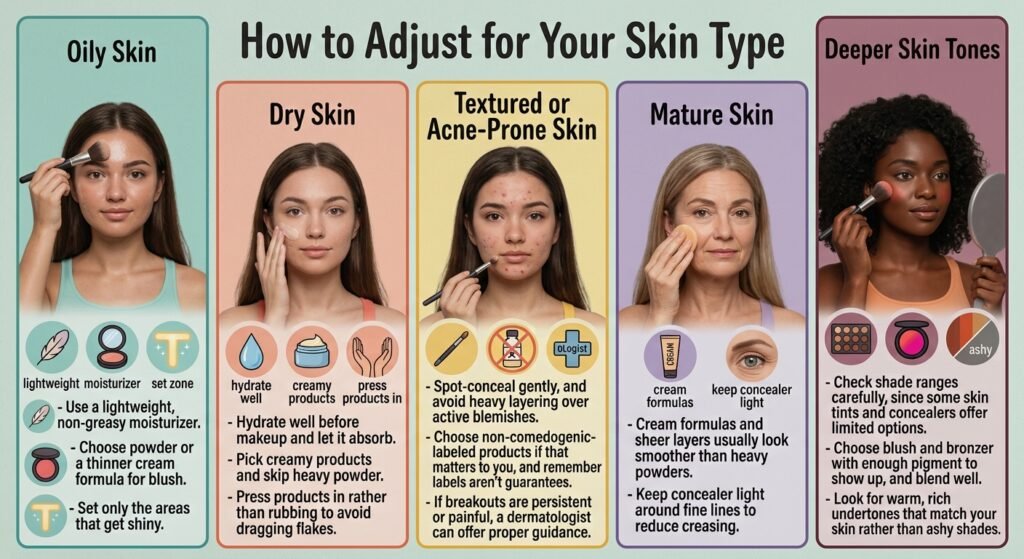
Oily Skin
- Use a lightweight, non-greasy moisturizer.
- Choose powder or a thinner cream formula for blush.
- Set only the areas that get shiny.
Dry Skin
- Hydrate well before makeup and let it absorb.
- Pick creamy products and skip heavy powder.
- Press products in rather than rubbing to avoid dragging flakes.
Textured or Acne-Prone Skin
- Spot-conceal gently, and avoid heavy layering over active blemishes.
- Choose non-comedogenic-labeled products if that matters to you, and remember labels aren’t guarantees.
- If breakouts are persistent or painful, a dermatologist can offer proper guidance.
Mature Skin
- Cream formulas and sheer layers usually look smoother than heavy powders.
- Keep concealer light around fine lines to reduce creasing.
Deeper Skin Tones
- Check shade ranges carefully, since some skin tints and concealers offer limited options.
- Choose blush and bronzer with enough pigment to show up, and blend well.
- Look for warm, rich undertones that match your skin rather than ashy shades.
A Simple 5-Minute No-Foundation Routine
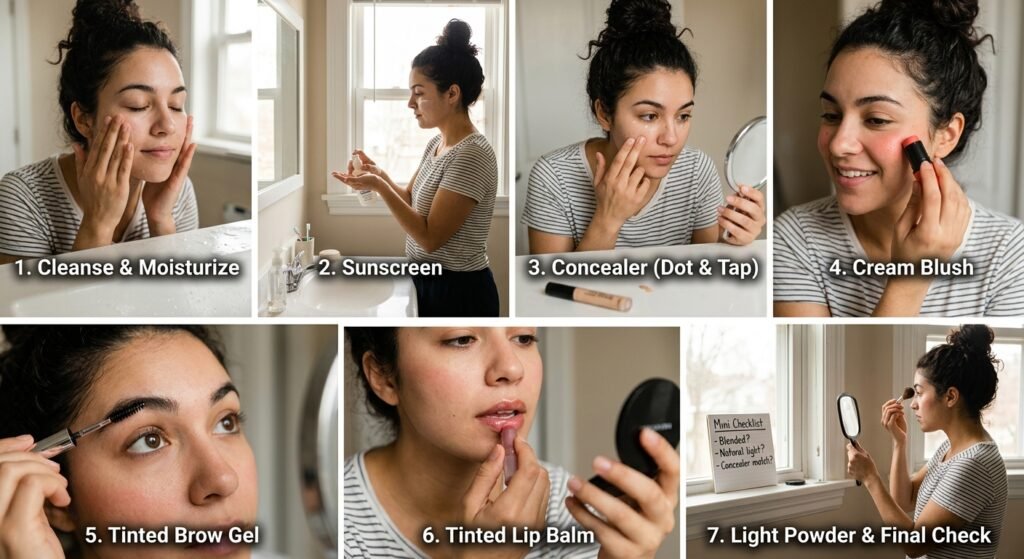
- Cleanse and moisturize.
- Apply sunscreen and let it settle.
- Dot concealer only where needed and tap to blend.
- Add cream blush to the cheeks.
- Brush up brows with a gel.
- Finish with a tinted lip balm.
- Dust a little powder on shiny areas, if needed.
Mini checklist before you leave the house:
- Is everything blended at the edges?
- Did you check your face in natural light?
- Does your concealer match your neck?
Common Mistakes to Avoid
- Using too much product. A no-foundation look is meant to be light.
- Skipping blending. Visible edges stand out more without a base.
- Matching the wrong shade. Test products on your jawline and check in daylight.
- Expecting full coverage. Decide ahead of time what you want to cover and what you’re happy to leave.
- Ignoring skincare. Makeup works with your skin, not instead of it.
FAQ
Can I wear no-foundation makeup if I have acne?
Yes, many people do. Gentle spot-concealing can cover what bothers you. Keep products clean, avoid picking, and see a dermatologist if breakouts are a concern.
Will concealer alone look natural?
It can, as long as the shade matches and you blend the edges. Use less than you think you need.
Do I need sunscreen under a skin tint?
Sunscreen is generally recommended as part of daily skincare. Some skin tints include SPF, but check the product label for details, and don’t assume coverage is enough without confirming.
How do I keep cream blush from sliding off?
Apply in thin layers and lightly set oily areas with powder. Moisturizer that has fully absorbed also helps.
What if I don’t like how bare my skin looks?
Start with a sheer skin tint and work toward less over time. Defined brows and a bit of color on the lips can make a bare face feel intentional.
Conclusion
No-foundation makeup works best when it’s built on a few simple choices:
- Prep your skin well, since it’s the foundation of the whole look.
- Use targeted products like concealer, cream blush, and brow gel only where they help.
- Match textures to your skin type, and blend edges thoroughly.
- Start small. One look from the list above is enough to try this week.
Next, pick one look that fits your routine and one product category you’re missing. Check current Amazon listings for shade ranges, ingredient lists, and recent reviews before you buy, and patch test anything new for your skin.