Standing in the hair color aisle with three boxes in your hand, trying to guess which one won’t turn your hair orange, is its own special kind of stressful. Every box promises “salon results,” every bottle claims to be “gentle,” and somehow you still end up googling “how to fix bad hair dye job” at 11 p.m.
Here’s the thing most articles won’t tell you: the product matters less than matching the product to your specific hair and goal. A brassy blonde and a stubborn gray coverage problem don’t call for the same formula, even if both boxes are sitting on the same shelf. This guide breaks down the actual products worth buying, how to tell them apart, and how to use them so the color survives more than three washes.
How to Choose the Right Formula for Your Hair Type
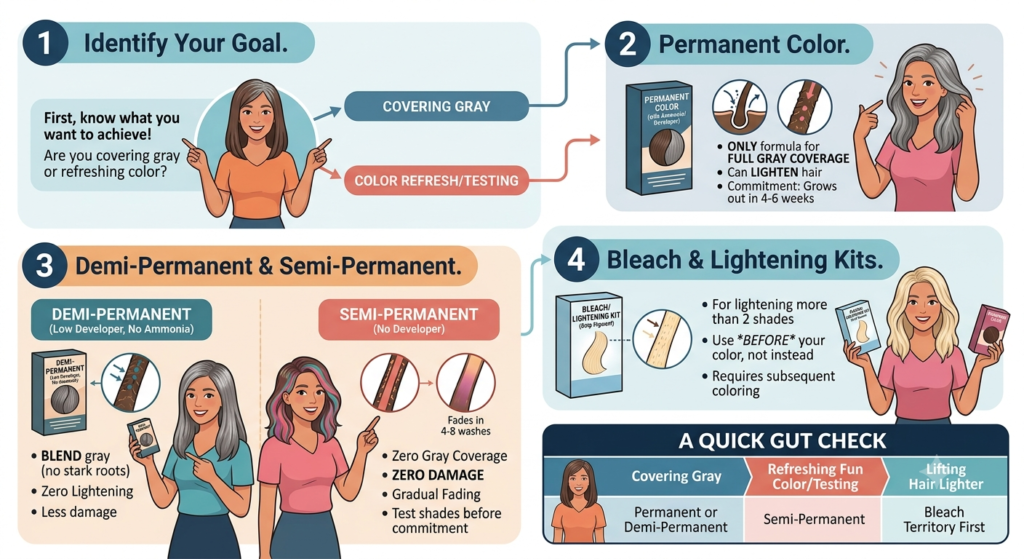
Before you even look at color names or brands, you need to know what category of product you’re dealing with. Hair coloring products fall into four main formulas, and picking the wrong one is the single biggest reason people end up unhappy with a $9 box of dye.
Permanent color uses ammonia (or an ammonia substitute) and a developer to open the hair cuticle and deposit color deep inside the strand. It’s the only option that fully covers gray and can lighten hair, not just tint it. The tradeoff is commitment — it grows out visibly at the root line within 4–6 weeks.
Demi-permanent color skips the ammonia and uses a low-volume developer instead. It deposits color into the hair without lifting your natural pigment, which means it can’t lighten hair but it also does far less damage. It’s the best middle ground for blending gray without a stark regrowth line.
Semi-permanent color has no developer at all. It coats the hair shaft and fades gradually over 4–8 washes. Zero damage, but also zero gray coverage and no lightening ability.
Bleach and lightening kits are their own category entirely, designed to strip pigment before a new color is applied. If you’re going more than two shades lighter, you’ll likely need one of these before your actual color product, not instead of it.
A quick gut check: if you’re covering gray, go permanent or demi-permanent. If you’re refreshing a fun color or testing a shade before committing, go semi-permanent. If you’re trying to lift your hair lighter, you’re in bleach territory first.
The Hair Coloring Kit Checklist Nobody Tells You About
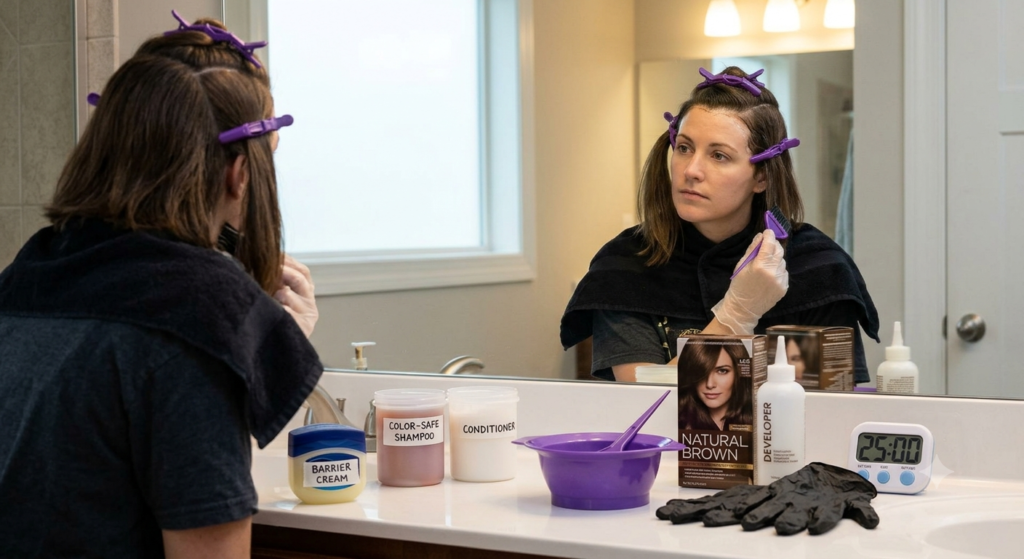
The box tells you what’s inside, but not what you’re missing. Most bad at-home color jobs happen because of a gap in supplies, not a bad formula. Here’s what an actual complete setup looks like:
- The color and developer (usually included in box kits, sold separately for salon-style tubes)
- A tinting brush and mixing bowl — the tiny applicator bottle that comes in most boxes is fine for all-over color, but useless for precision root touch-ups or dimension
- Sectioning clips — four is the minimum; more sections mean more even saturation
- An old towel and cape, not your favorite one — even “no-drip” formulas drip
- Petroleum jelly or a barrier cream for your hairline, ears, and neck to prevent staining
- Color-safe shampoo and conditioner — using regular clarifying shampoo the same week will strip color prematurely and undo the work you just did
- A timer — actually set one; guessing at “20-ish minutes” is how you end up with uneven, patchy results
- Gloves — the ones in the box are usually thin and tear easily; a second pair of nitrile gloves is worth having on hand
The barrier cream and color-safe shampoo are the two most commonly skipped items, and they’re also the two that most affect how “professional” the result looks and how long it lasts.
Box Dye vs. Semi-Permanent vs. Demi-Permanent (Compared)
Here’s a side-by-side so you’re not choosing blind:
| Factor | Permanent (Box Dye) | Demi-Permanent | Semi-Permanent |
|---|---|---|---|
| Gray coverage | Full | Partial to full, blended | None |
| Can lighten hair | Yes | No | No |
| Lasts | 4–8 weeks (root regrowth visible) | 4–6 weeks, fades gently | 4–8 washes |
| Damage level | Highest | Low | Lowest |
| Best for | Gray coverage, color change, going lighter | Blending grays, subtle tone shifts, gloss/refresh | Testing a color, fun/fashion shades, refreshing faded ends |
| Regret factor if wrong shade | Highest — stuck until it grows out or is corrected | Moderate — fades out in weeks | Lowest — washes out quickly |
If you’re brand new to coloring your own hair, starting with a demi-permanent gloss is genuinely the lowest-risk way to learn how color, timing, and application work before committing to permanent color. It behaves similarly to a permanent formula in the application process but won’t leave you stuck with a mistake for months.
Mistakes That Ruin an At-Home Color Job
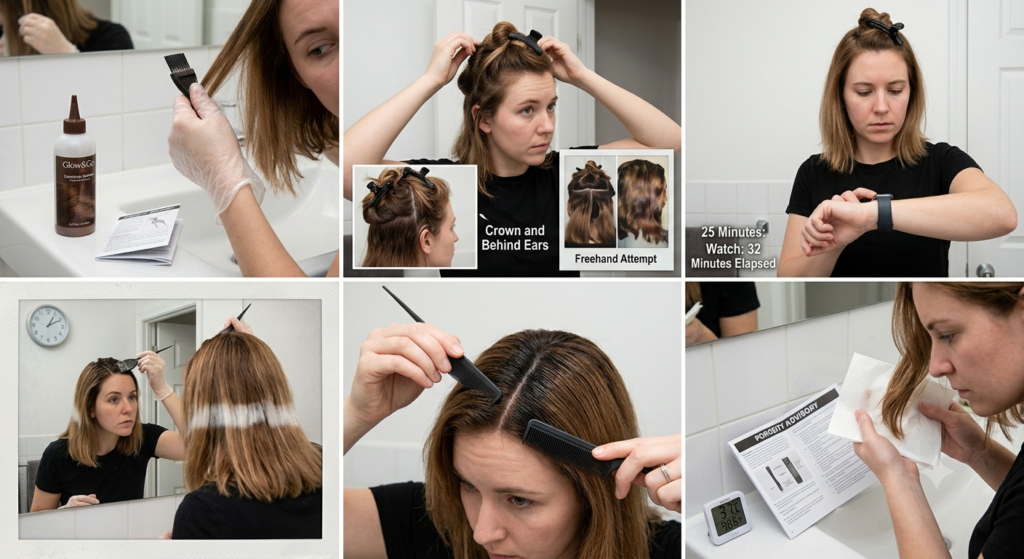
Most disappointing results trace back to one of these, not a defective product:
Skipping the strand test. The little “test strand” instructions on the box aren’t filler — they’re the only way to know how your specific hair will actually take the color before it’s on your whole head.
Applying color to dirty vs. freshly washed hair, incorrectly. Most permanent dyes actually work better on hair with a day or two of natural oil buildup, which protects the scalp. Washing your hair right before coloring is one of the most common unintentional mistakes.
Not sectioning the hair. Applying color freehand leads to missed spots, especially at the crown and behind the ears — the two areas people forget to check.
Guessing on timing. Leaving color on “a little longer to be safe” doesn’t deepen the color evenly — it often makes it patchy, especially near the scalp where body heat speeds up processing.
Overlapping previously colored hair with full-strength product during a touch-up. This is the single biggest cause of dark, damaged-looking bands where color overlaps at the mid-shaft. For touch-ups, color should be applied to new growth first, and only pulled through the ends in the last 5–10 minutes.
Ignoring porosity. Hair that’s been previously bleached or heat-damaged is more porous and grabs color faster and darker than virgin hair. If your hair has a color history, cut your processing time slightly and check it early.
How to Make Your Color Last Between Applications
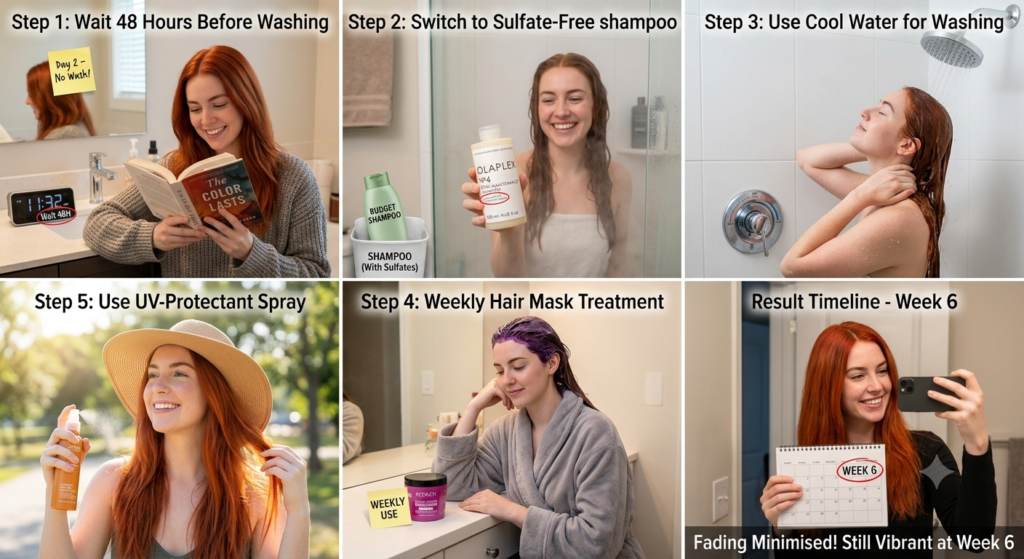
The product you use after coloring affects the result almost as much as the dye itself.
- Wait at least 48 hours before washing after a permanent or demi-permanent application. This gives the cuticle time to fully close around the color molecules.
- Switch to sulfate-free, color-safe shampoo. Sulfates are efficient at stripping oil, which also means they strip color. This is the single highest-impact swap for making color last.
- Use cool water, not hot, for washing. Hot water keeps the cuticle slightly raised, letting color leach out faster.
- Add a weekly hair mask or gloss treatment, especially for warm or fashion tones that fade faster (reds and coppers fade quickest of all shades because the red pigment molecule is the largest and exits the hair shaft first).
- Use UV-protectant spray if you’re outdoors often. Sun exposure oxidizes and fades color noticeably faster than washing alone.
A realistic timeline: permanent color starts showing root regrowth around week 3–4 and noticeable fading around week 6–8. Demi-permanent softens gradually with no harsh regrowth line, usually needing a refresh around week 4–6. Semi-permanent is the shortest-lived by design, typically fading within 15–20 washes even with good care.
Frequently Asked Questions
Can I mix two box dyes to get a custom shade? You can, but only within the same brand and same formula type (both permanent, or both demi). Mixing across brands can produce unpredictable results because developer strengths and color bases differ.
Do I need a toner if I’m using a box kit? Only if you’re lightening your hair significantly. Toner neutralizes unwanted warmth (brassiness) after bleaching — it’s not necessary for standard permanent or demi-permanent color application.
Why did my gray hair turn out a different color than the box picture? Gray hair has little to no natural pigment, so it processes color differently than pigmented hair — often turning out slightly brighter or more true-to-tone than hair with a color base underneath. This is normal, not a product failure.
Is it bad to color over previously chemically treated hair (keratin, relaxer, perm)? It’s not off-limits, but it increases porosity and processing speed. Do a strand test and consider a demi-permanent formula, which is gentler on already-processed hair.
Key Takeaways
The right products for hair coloring aren’t about finding the “best” brand — they’re about matching the formula (permanent, demi, or semi) to your actual goal, having the full kit rather than just the box, and respecting timing and porosity instead of guessing. Get those three things right, and a $10–15 at-home kit can genuinely outperform a rushed salon visit.
If you’re coloring at home for the first time, start with a demi-permanent gloss to learn how your hair responds before committing to permanent color — it’s the lowest-risk way to build confidence before your next shade change.