Most men don’t have a skin care problem. They have an information problem.
Ask a guy why his face is dry, breaking out, or looking older than it should, and you’ll usually get one of two answers: “I don’t have time for that stuff” or “I just use whatever my girlfriend/wife has in the shower.” Neither is a routine. Both are guesses.
The good news is that men’s skin care isn’t actually complicated — it’s just been marketed as though it needs to be. You don’t need twelve products or a Korean 10-step routine to see real results. You need the right four or five products, used consistently, in the correct order, adjusted for your skin type and age. That’s the whole game.
This guide covers exactly that: the science of why men’s skin behaves differently, a routine you can realistically stick to, the mistakes that quietly sabotage most men’s efforts, and how the approach should shift for teenagers, guys over 50, and anyone comparing notes with the more minimalist, product-light philosophy common in places like Italy (“skin care uomo”).
Why Men’s Skin Actually Behaves Differently
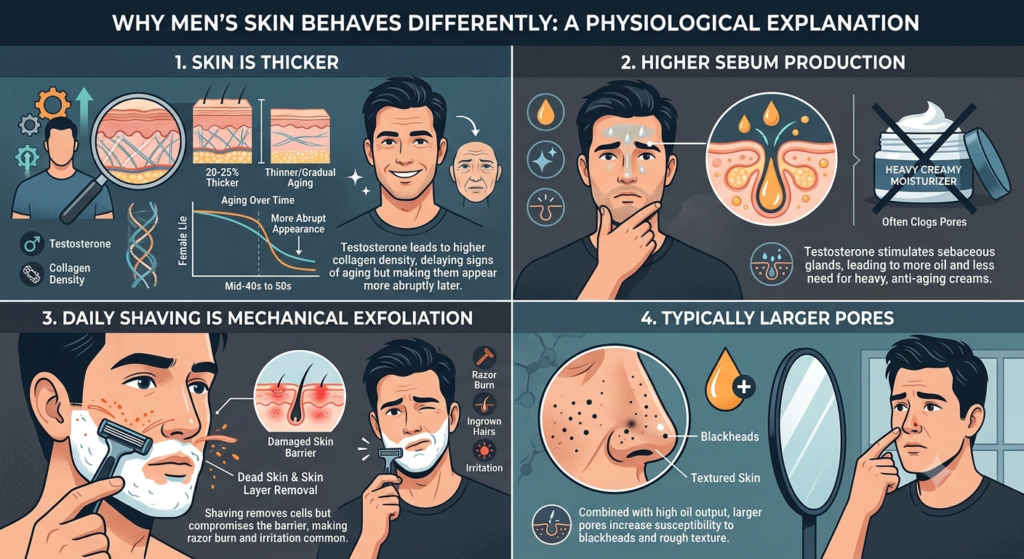
This isn’t marketing fluff — there are real physiological differences that change what a good routine looks like.
Men’s skin is thicker. On average, male skin is about 20-25% thicker than female skin, largely due to testosterone’s effect on collagen density. This is a double-edged sword: it means visible aging tends to show up later, but when it does show up (usually mid-40s to 50s), it can happen more abruptly rather than gradually.
Sebum production runs higher. Testosterone stimulates the sebaceous glands, so most men produce more oil than most women, especially through the T-zone. This is why so many men who think they have “normal” skin are actually oily, and why heavy, creamy moisturizers marketed as “anti-aging” often make things worse by clogging pores that are already producing plenty of their own oil.
Daily shaving is a mechanical exfoliant. If you shave, you’re already removing dead skin cells and a thin layer of skin most days. That’s not a bad thing, but it does mean your skin barrier takes more abuse than someone who doesn’t shave, which is part of why razor burn, ingrown hairs, and post-shave irritation are such common complaints.
Pores are typically larger. Combined with higher oil output, this makes men more prone to blackheads and textured skin, particularly on the nose and cheeks.
None of this means men need entirely different ingredients. It means the order of priorities is different: oil control and barrier repair (from shaving) usually matter more, upfront, than the anti-aging actives men’s products love to advertise.
The Skin Care Men Routine That Actually Works
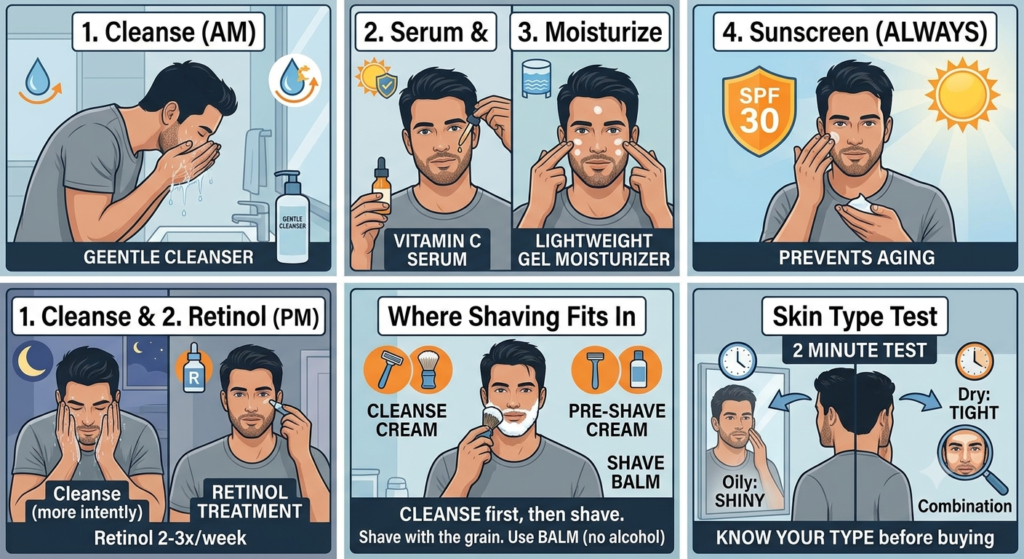
Here’s a routine built around consistency, not complexity. This is the version to actually follow — not an aspirational one you’ll abandon in nine days.
Morning Routine (4 steps, under 5 minutes)
- Cleanse with a gentle, non-stripping cleanser. Lukewarm water, not hot — hot water strips natural oils, which triggers your skin to overproduce even more oil to compensate.
- Apply an antioxidant serum (optional but worth it) — vitamin C is the standard choice and helps defend against daytime UV and pollution damage.
- Moisturize with something lightweight. Oily or combination skin does better with a gel-based moisturizer; dry skin can handle a richer cream.
- Sunscreen, always. SPF 30 minimum, reapplied if you’re outside for extended periods. This single step prevents more visible aging than every other product on this list combined.
Evening Routine (3–4 steps)
- Cleanse — this time it matters more, since you’re removing the day’s oil, sweat, and grime.
- Treatment step (2–3x per week): a retinol or retinoid product. This is the single most effective over-the-counter ingredient for both acne and early signs of aging, but it needs to be introduced slowly (start twice a week, increase gradually) or it will cause peeling and redness.
- Moisturize again, slightly richer than your morning formula if your skin runs dry.
- Eye cream — optional, but if you’re noticing puffiness or dark circles, this is where it goes.
Where Shaving Fits In
Shave after cleansing, never before — clean skin means the razor glides over less bacteria and buildup. Always use a pre-shave oil or lubricating cream, shave with the grain first, and follow immediately with a fragrance-free, alcohol-free balm. Alcohol-based aftershaves feel refreshing because they’re mildly damaging your skin barrier — that “tingle” is irritation, not effectiveness.
Figure Out Your Skin Type Before You Buy Anything
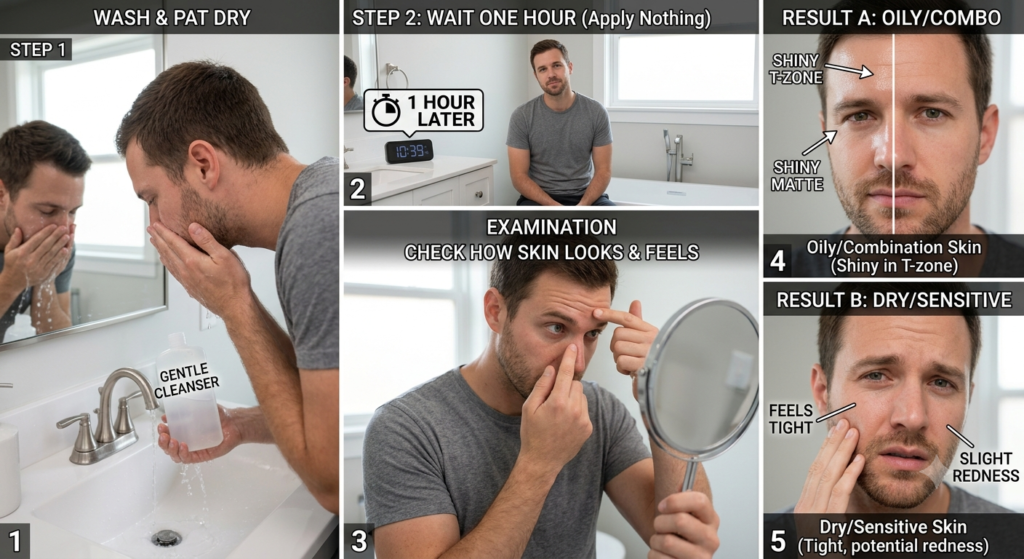
Most men skip this step entirely and end up buying products for skin they don’t actually have. Here’s a two-minute way to check:
Wash your face with a gentle cleanser, pat dry, and don’t apply anything for an hour. Then check how your skin feels and looks:
- Shiny across the whole face, especially forehead and nose → oily skin. Prioritize gel cleansers and oil-free moisturizers.
- Tight, flaky, or slightly rough, with no shine anywhere → dry skin. You can tolerate richer creams and should avoid foaming cleansers, which strip further.
- Shiny in the T-zone (forehead, nose, chin) but normal or tight on the cheeks → combination skin, which is the most common type in men. This usually means using a lighter moisturizer overall, with a slightly richer one applied only to the cheeks if needed.
- No tightness, no obvious shine, no flaking → normal skin, which has the most flexibility in product choice.
- Redness, stinging with new products, or reacting to fragrance → sensitive skin, regardless of oil level. Look for “fragrance-free” specifically, not just “unscented,” since unscented products can still contain masking fragrance.
This matters because a lot of men with combination or sensitive skin buy products marketed generically as “for men,” which tend to be formulated for oily skin by default (heavier on mattifying and oil-control claims) and end up making tightness or irritation worse.
Building the Routine: What Each Product Actually Does
| Product | Purpose | Skip if… |
|---|---|---|
| Cleanser | Removes oil, sweat, dirt | Never skip — this is non-negotiable |
| Moisturizer | Maintains barrier, prevents overcompensating oil | You have very oily skin and it’s midday (a light gel still helps) |
| Sunscreen | Prevents UV aging and sun damage | Never skip, even on cloudy days or if you’re indoors near windows |
| Retinol | Speeds cell turnover, reduces fine lines and acne | You’re pregnant partner-adjacent — not applicable to men, but do avoid combining with strong exfoliants |
| Exfoliant (chemical, not scrub) | Clears clogged pores, smooths texture | You already use retinol — doubling up on actives causes irritation |
| Eye cream | Targets thinner under-eye skin | Budget is tight — this is the most skippable product here |
A note on physical scrubs: the gritty, “deep cleaning” scrubs marketed heavily to men (charcoal grains, walnut shell exfoliants) are one of the most common mistakes in men’s skin care. They create micro-tears in the skin. A chemical exfoliant with salicylic acid or lactic acid does the same job without the damage.
A Quick Ingredient Glossary (So Labels Stop Being a Mystery)
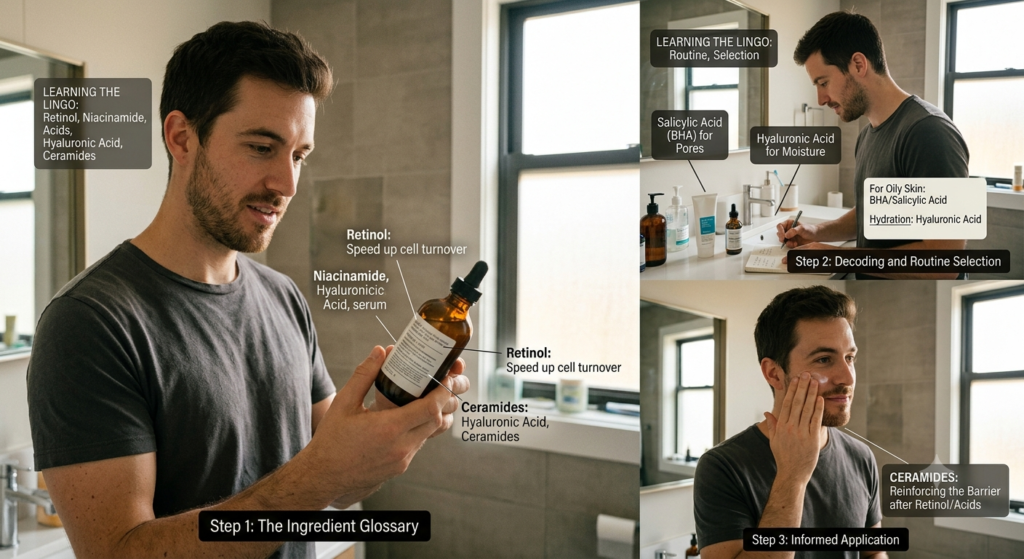
Product marketing throws around a lot of terms that don’t mean much unless someone explains them once:
- Retinol / retinoid — a vitamin A derivative that speeds up cell turnover. Retinol is the over-the-counter version; “retinoid” often refers to stronger prescription forms like tretinoin.
- Niacinamide — a form of vitamin B3 that helps regulate oil production and calm redness. Good for oily or reactive skin, and gentle enough to pair with almost anything.
- Salicylic acid (BHA) — oil-soluble, so it gets into pores and is particularly effective on blackheads and body acne. Best for oily or acne-prone skin.
- Lactic or glycolic acid (AHA) — surface-level exfoliation, better suited to dry or normal skin since it’s less likely to over-dry than salicylic acid.
- Hyaluronic acid — a humectant that pulls water into the skin. It’s not an oil, so it works across every skin type, including oily.
- Ceramides — lipids that reinforce the skin’s barrier. Worth looking for in a moisturizer if you’re using retinol or acids, since those ingredients can weaken the barrier over time.
Knowing these five or six terms is usually enough to read almost any product label and understand what it actually does, rather than relying on marketing claims on the front of the bottle.
What to Spend Money On (and Where to Save)

Not every product benefits equally from a higher price tag:
- Worth spending more on: sunscreen (texture and finish matter enough that you’ll actually use it daily) and retinol (formulation and stability vary more than people expect between cheap and mid-range versions).
- Fine to buy budget: cleanser, since its job — removing dirt and oil without stripping skin — doesn’t require expensive ingredients to do well.
- Depends on your skin: moisturizer. Dry or sensitive skin often benefits from a more thoughtfully formulated (and pricier) option; normal or oily skin can usually get away with a basic drugstore version.
A realistic starting routine — cleanser, moisturizer, sunscreen, and a retinol — can be built for well under the cost of a single dinner out, which is worth mentioning since the perception that skin care is expensive is one of the more common reasons men avoid starting at all.
Common Mistakes Men Make (And Why They Backfire)
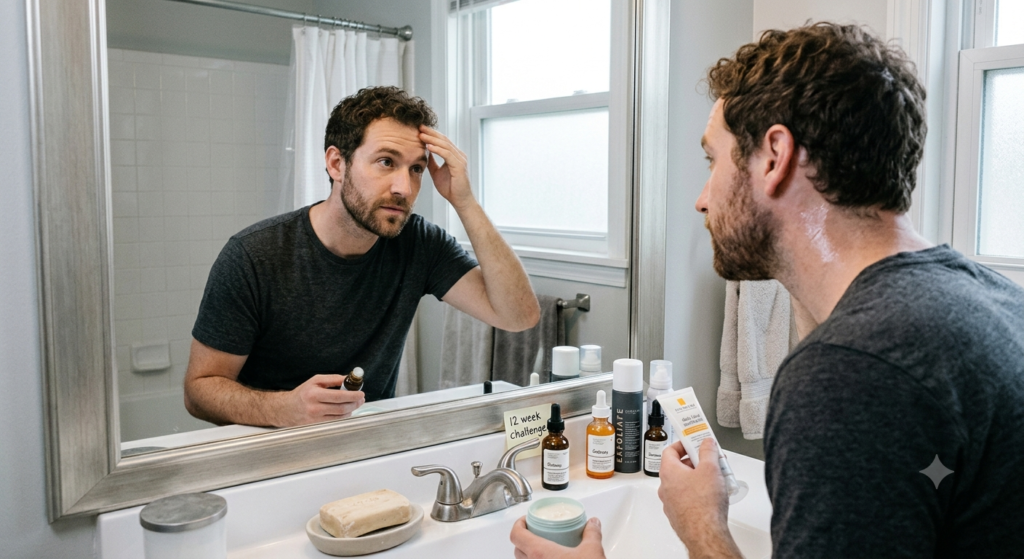
Using bar soap on the face. Regular bar soap is formulated for the body and has a pH that’s too alkaline for facial skin, stripping it and triggering rebound oiliness.
Skipping moisturizer because skin feels oily. This is the single most common error. Oily skin still needs hydration — dehydrated skin actually produces more oil to compensate, creating a frustrating cycle.
Only fixing skin after a problem shows up. Most men start a routine the week before a wedding or big event, expecting overnight results. Retinol takes 8-12 weeks to show visible improvement. Sunscreen prevents damage you can’t see accumulating for years. Skin care is preventative, not reactive.
Applying too many actives at once. Combining retinol, vitamin C, and a chemical exfoliant in the same routine without easing in is the fastest way to end up with red, peeling, irritated skin — and then conclude “skin care doesn’t work for me.”
Ignoring the neck and ears. Sunscreen and cleanser routines routinely stop at the jawline. Skin cancer doesn’t.
Skin Care for Boys: Building Habits Before They’re Needed
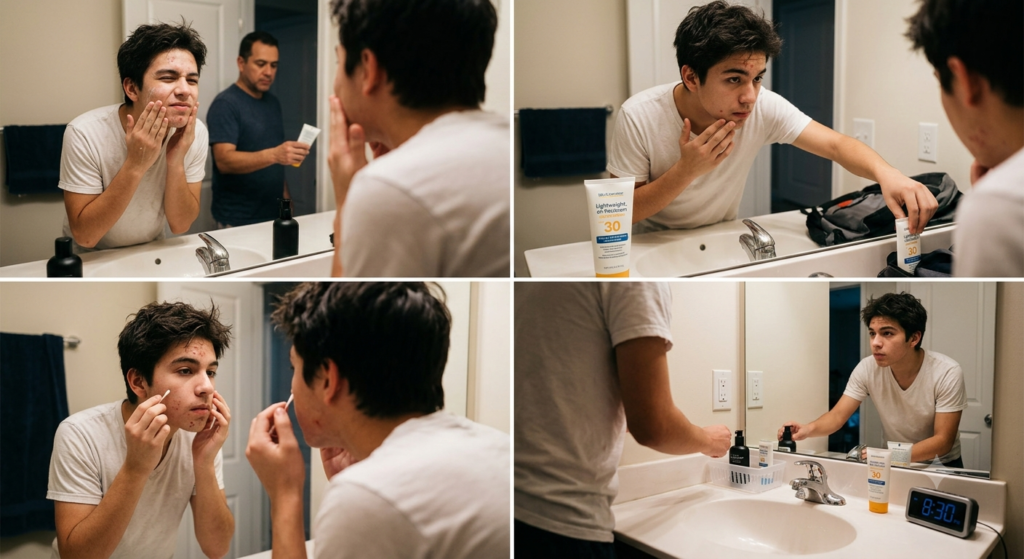
For teenage boys, the goal isn’t anti-aging — it’s establishing habits and managing the hormonal acne that comes with puberty, without overcomplicating things or overcorrecting with harsh products.
A Simple Starting Routine
- Cleanser — gentle, non-foaming if possible, used morning and night.
- Oil-free moisturizer — even breakout-prone skin needs this; skipping it tends to make acne worse, not better, for the same reason it does in adults.
- Sunscreen — the single habit most worth instilling early, since sun damage is cumulative and skipped years can’t be made up for later.
That’s the entire routine. Nothing else is necessary at this stage, and adding more tends to backfire.
Why Teenage Acne Needs a Different Approach Than Adult Acne
Puberty triggers a surge in androgen hormones, which ramps up oil production dramatically — often faster than a teenager’s skin has adjusted to. This is why acne at 14-17 is frequently more widespread (forehead, cheeks, chest, back) than the more localized, stress- or hormone-cycle-linked breakouts adults tend to get.
The instinct for a lot of teenagers (and honestly, a lot of parents) is to hit it hard: harsh scrubbing, strong benzoyl peroxide washes used daily, or aggressive over-the-counter acne systems advertised on TV. This usually backfires, because it strips the skin barrier, which then overproduces oil to compensate — making breakouts worse within a few weeks rather than better.
A more effective approach:
- Use a benzoyl peroxide (2.5-5%) or salicylic acid spot treatment on active breakouts, rather than a full-face wash with the same ingredient.
- Give any new product 4-6 weeks before judging it — teenage skin often gets slightly worse before improving as it adjusts.
- If acne is cystic, painful, or leaving scars, that’s a signal to see a dermatologist rather than keep experimenting with drugstore products. This is genuinely common and very treatable, but it needs a prescription-strength approach, not more over-the-counter products.
A Note for Parents
Teenagers are more likely to actually follow a routine when they understand the reasoning rather than being handed a product with instructions to “just use it.” Framing sunscreen around preventing damage that shows up at 35, or explaining why a spot treatment beats a full-face wash, tends to land better than a flat instruction — partly because it treats them as capable of understanding the reasoning, which matters more at this age than it might seem.
It’s also worth keeping expectations realistic: a consistent basic routine will meaningfully improve most teenage acne, but it won’t necessarily eliminate it entirely, since hormonal fluctuations are still the primary driver. That’s normal, not a sign the routine isn’t working.
The habit matters more than the product at this age. A 16-year-old who washes his face every night and wears sunscreen will be ahead of most 40-year-olds who never started.
Skin Care Routine for Men Over 50: What Actually Changes
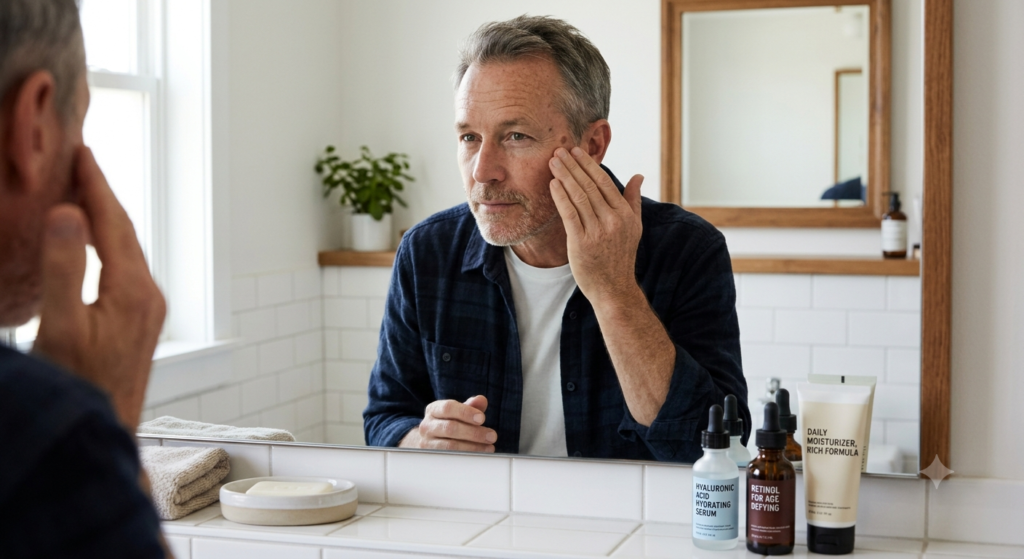
Skin over 50 has different needs than skin at 25, and the routine should shift accordingly rather than just adding more products.
Oil production slows down. The higher-oil assumptions built into most men’s skin care marketing stop applying as reliably after 50. Richer moisturizers and, in some cases, a hydrating serum with hyaluronic acid become more useful than the oil-control formulas aimed at younger men.
Skin becomes thinner and less elastic. This is when sun damage from decades earlier starts showing up as visible sun spots, deeper wrinkles, and looser skin texture, even in men who felt like their skin barely changed through their 30s and 40s.
Retinol still matters — arguably more. Cell turnover slows with age, so retinol’s job of encouraging new skin cell production becomes more valuable, not less. Men who’ve never used it before can still start in their 50s and see meaningful improvement in texture and tone.
Consider a dermatologist check-in. Any new spot, mole change, or rough patch that doesn’t heal is worth a professional look. Skin cancer risk increases with age and cumulative sun exposure, and it’s far more treatable when caught early.
Don’t overcorrect with aggressive products. Thinner, more fragile skin tolerates strong actives less well. This is a moment to be more careful with exfoliants and stronger retinoid concentrations, not less.
Adjusting Your Routine for the Season
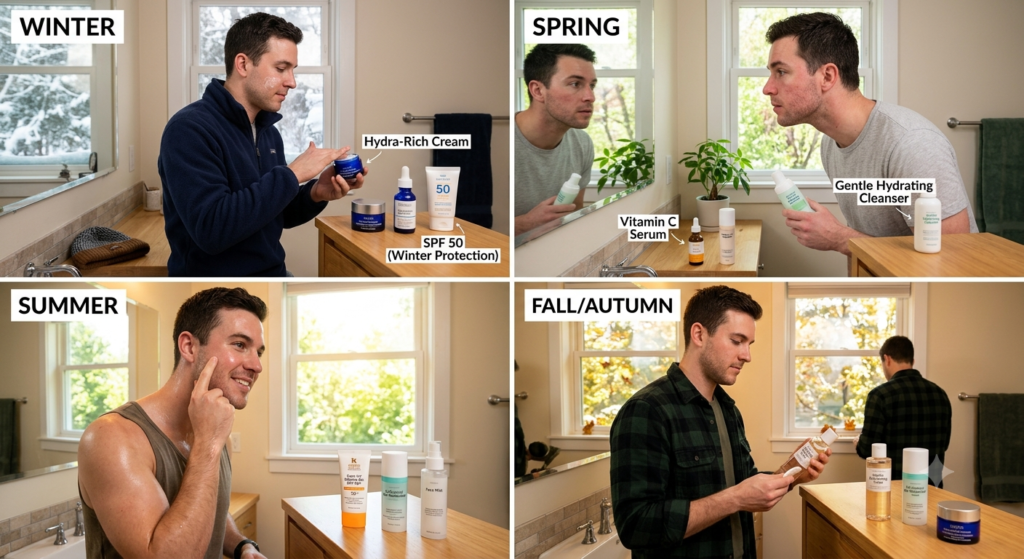
Skin needs change enough across the year that the same routine you run in July shouldn’t be identical to what you run in January, especially in climates with real seasonal swings.
Winter: Indoor heating and cold, dry outdoor air both pull moisture from skin. Switch to a richer moisturizer, consider adding a hydrating serum with hyaluronic acid underneath it, and ease off exfoliating acids slightly since skin is already more prone to dryness and irritation. Sunscreen still matters — UV rays reflect off snow and remain present on cloudy days.
Summer: Higher heat and humidity mean more oil production for most men, so a lighter, gel-based moisturizer usually works better than a winter cream. Sunscreen becomes non-negotiable rather than just important, and reapplication during the day (something most men skip entirely) actually matters here, particularly if you’re outdoors for sports, yard work, or commuting on foot.
Shoulder seasons (spring/fall): This is often when men notice breakouts or irritation for no obvious reason — it’s usually the product mismatch from not adjusting between winter and summer routines catching up. If your skin seems “off” and nothing else changed, check whether it’s just time to swap moisturizer weight.
Skin Care Uomo: What the Italian Approach Gets Right
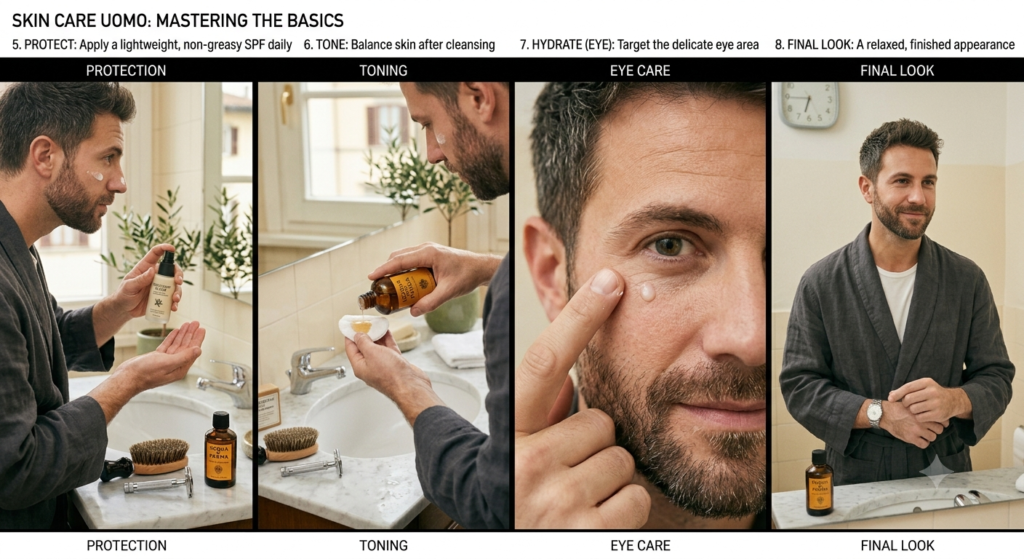
Search interest in “skin care uomo” (Italian for “men’s skin care”) reflects a grooming philosophy that’s worth borrowing from regardless of where you live. Traditional Italian men’s grooming tends to favor fewer, higher-quality products over an expansive routine — a well-made bar of soap-free cleanser, a solid moisturizer, and meticulous attention to the shaving ritual, often using a proper razor and pre-shave oil rather than disposable multi-blade cartridges and canned foam.
The underlying principle translates well: consistency and quality matter more than quantity. A man using three good products correctly every day will get better results than one cycling through ten products inconsistently. If there’s one lesson worth taking from this approach, it’s to stop chasing new products and instead master the basics.
Frequently Asked Questions
Do I really need a separate face moisturizer, or can I use body lotion? Body lotion is usually too heavy and often contains fragrance that can irritate facial skin, which is thinner and more exposed than skin elsewhere. A dedicated facial moisturizer is worth the extra product.
How long before I see results from a new routine? Hydration and texture improvements can show up within 1-2 weeks. Acne treatments and retinol typically need 8-12 weeks of consistent use before real change is visible. Give any new routine a full quarter before judging it.
Is it too late to start skin care in my 50s or 60s? No. Retinol, sunscreen, and proper hydration all still produce visible improvement regardless of when you start. Earlier is better, but “later” still works.
What’s the single highest-impact product if I can only afford one? Sunscreen. It’s the one product with decades of research showing it prevents visible aging and reduces skin cancer risk — nothing else on this list comes close in terms of proven, cumulative impact.
Can I use my partner’s skin care products instead of buying my own? Often, yes — cleansers, sunscreens, and many moisturizers work fine across genders since skin type matters more than gender for most formulations. The exception is heavily fragranced products or anything specifically marketed around estrogen-sensitive concerns (some anti-aging lines), which aren’t relevant to male skin and aren’t worth paying for either way.
Why does my skin look fine now but I’m being told to start a routine anyway? Sun damage and collagen loss accumulate for years before becoming visible, then often seem to “appear overnight” in a man’s 40s or 50s. Skin that looks fine at 28 isn’t evidence that no damage is occurring — it’s evidence that the damage hasn’t surfaced yet. Prevention is the entire reason dermatologists recommend starting sunscreen and basic care early rather than waiting for a visible problem.
Key Takeaways
Skin care for men isn’t about following a trend or buying an expensive kit — it’s a short list of habits, done consistently, adjusted as your skin and age change. Start with a cleanser, moisturizer, and sunscreen. Add retinol once that’s a habit. Adjust the routine as a teenager builds early habits, as an adult manages oil and shaving irritation, and eventually as skin over 50 shifts toward needing more hydration and gentler actives.
The next step isn’t finding more products — it’s picking the four or five outlined here and giving them a real 90 days before changing anything.