Standing in the foundation aisle (or scrolling through fifty tabs of Amazon listings) trying to figure out the difference between a “dewy liquid” and a “cream-to-powder” formula is genuinely confusing. Brands use overlapping language, finishes look different on every skin tone, and what worked for your friend with dry skin can look completely wrong on combination skin.
This guide breaks down the actual differences between foundation types — not just marketing terms — so you can match a formula to your skin type, coverage needs, and daily routine before you spend money on something that ends up in a drawer.
Why Foundation Type Matters More Than Brand
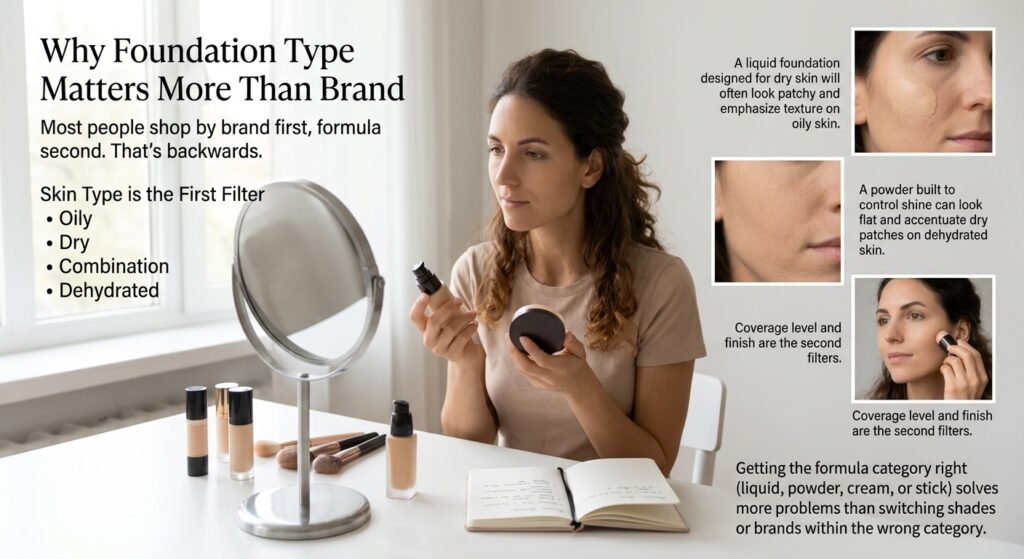
Most people shop by brand reputation first and formula second. That’s backwards. The base formula — liquid, powder, cream, or stick — determines how the product behaves on your specific skin far more than which brand made it.
A liquid foundation designed for dry skin will often look patchy and emphasize texture on oily skin by midday. A powder built to control shine can look flat and accentuate dry patches on someone with dehydrated skin. Getting the formula category right solves more problems than switching shades or brands within the wrong category.
Skin type is the first filter. Coverage level and finish are the second. Everything else — packaging, scent, price — is secondary to those two decisions.
The Main Foundation Types, Explained
Liquid Foundation
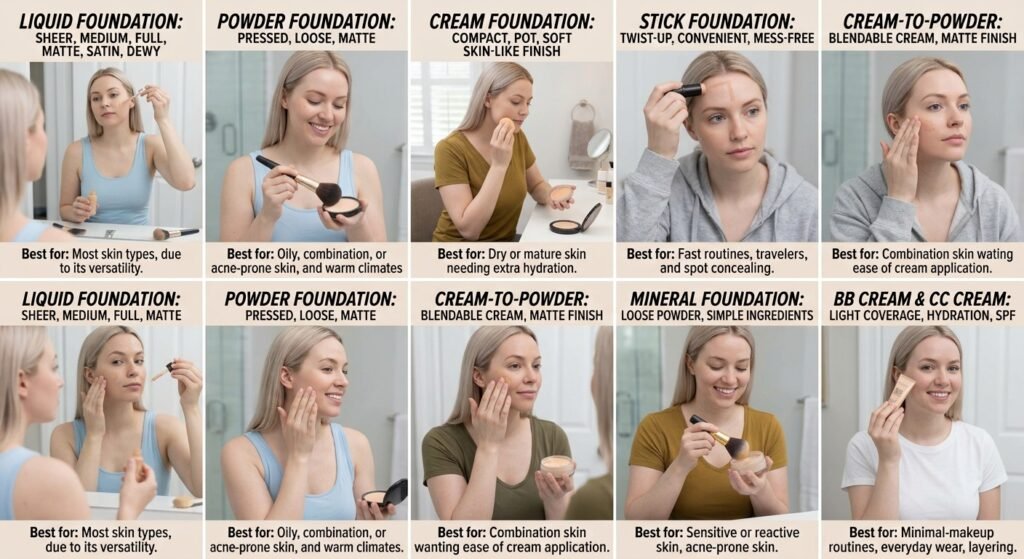
Liquid is the most common and versatile foundation type, ranging from sheer, serum-like tints to full-coverage formulas. Because the category is so broad, “liquid foundation” alone doesn’t tell you much — you also need to know its coverage level (sheer, medium, full) and finish (matte, satin, dewy).
Best for: Most skin types, since liquid formulas exist across every finish and coverage range.
Common mistake: Assuming all liquid foundations behave the same way. A dewy liquid on oily skin can slide by afternoon, while a matte liquid on dry skin can cling to flaky patches.
Powder Foundation
Powder foundations — pressed or loose — apply dry and are known for shine control and a soft, matte-leaning finish. They tend to build coverage in thin layers and work well as an all-over base or as a way to set and extend the wear of a liquid underneath.
Best for: Oily, combination, or acne-prone skin, and warm or humid climates where oil breakthrough is a bigger concern than dryness.
Trade-off: Powder can settle into fine lines or dry patches, so skin prep (moisturizer, primer) matters more with this type than with liquid.
Cream Foundation
Cream foundations are thicker and more emollient than liquid, usually housed in a compact or pot. They blend into a soft, skin-like finish and tend to offer fuller coverage with less product.
Best for: Dry or mature skin that needs extra hydration and a dewy-to-satin finish.
Trade-off: Can feel heavy on oily skin and may need a setting powder in the T-zone to avoid excess shine partway through the day.
Stick Foundation
A stick foundation is essentially a cream formula in a twist-up bullet. You draw it directly onto skin and blend with fingers, a brush, or a sponge. Because it’s solid, it’s mess-free and genuinely convenient for travel, touch-ups, or quick routines where you don’t want to deal with a pump or dropper.
Best for: People who want a fast, low-tool routine, travelers, and anyone who likes using one product as both foundation and spot concealer.
Trade-off: Sticks generally don’t build to the same heavy, full-coverage look that some liquid or cream formulas can reach, so if you need to conceal significant discoloration or texture, you may need a dedicated concealer on top.
Cream-to-Powder Foundation
This hybrid formula applies like a cream and sets to a powder-like matte finish. It’s designed to combine cream’s blendability with powder’s longevity and shine control.
Best for: Combination skin, or anyone who wants the ease of a cream application without the extra shine that some cream formulas leave behind later in the day.
Mineral Foundation
Mineral foundations (usually loose powders) are formulated with a shorter ingredient list built around finely milled minerals rather than synthetic fillers, fragrance, or oils. They’re often marketed toward sensitive or reactive skin.
Best for: Sensitive skin, acne-prone skin, or anyone trying to simplify their ingredient exposure. “Mineral” isn’t automatically hypoallergenic, though — always check the specific ingredient list if you have known sensitivities.
BB Cream and CC Cream
These are lighter-coverage hybrids that blend skincare benefits (hydration, SPF, sometimes color-correcting pigments) with a sheer tint. They’re not a substitute for full-coverage foundation, but they’re a good option for low-maintenance days.
Best for: Minimal-makeup routines, everyday wear, or layering under a slightly heavier foundation on days you need more coverage in specific areas.
Matching Formula to Skin Type: A Quick Framework

- Oily or acne-prone skin: Powder, matte liquid, or cream-to-powder formulas tend to hold up best.
- Dry or mature skin: Cream or dewy liquid formulas add moisture instead of emphasizing dry patches.
- Combination skin: A satin-finish liquid, or a matte liquid used only in the T-zone with a dewier product on the cheeks, usually works better than a single all-over formula.
- Sensitive or reactive skin: Mineral formulas with shorter ingredient lists are worth trying first, alongside patch testing any new product.
- Normal skin: You have the most flexibility — pick based on finish preference and coverage need rather than skin concerns.
Individual results vary based on your specific skin condition, climate, and how your skin reacts to particular ingredients, so treat this as a starting point rather than a guarantee.
Product Recommendations by Category
The formulas above are the foundation of a good decision — the products below are simply well-known, widely available examples within each category, not the only options. Always check the current Amazon listing for up-to-date shade ranges, ingredient lists, and pricing before buying, since these details can change.
Maybelline Fit Me Matte + Poreless Liquid Foundation

Best For: Combination to oily skin looking for an affordable, everyday matte liquid.
Why Consider It: It’s a widely available drugstore liquid foundation marketed specifically for oil control and a soft matte finish, with a broad shade range compared to many budget options.
Pros:
- Budget-friendly entry point into liquid foundation
- Wide shade range for a drugstore product
- Lightweight, buildable formula
Cons:
- Oxidation (shade shifting darker after application) is a common complaint for some skin chemistries
- Coverage is medium at most — not designed for heavy concealing
What to Consider Before Buying: Shade-match carefully and consider ordering a shade slightly lighter than you think you need if oxidation is a known issue for your skin type. Check the current listing for the full shade range and ingredients.
Verdict for This Specific Use: A reasonable starting point for someone new to matte liquid foundation who wants to test the format without a big investment.
e.l.f. Halo Glow Liquid Filter / Foundation Line
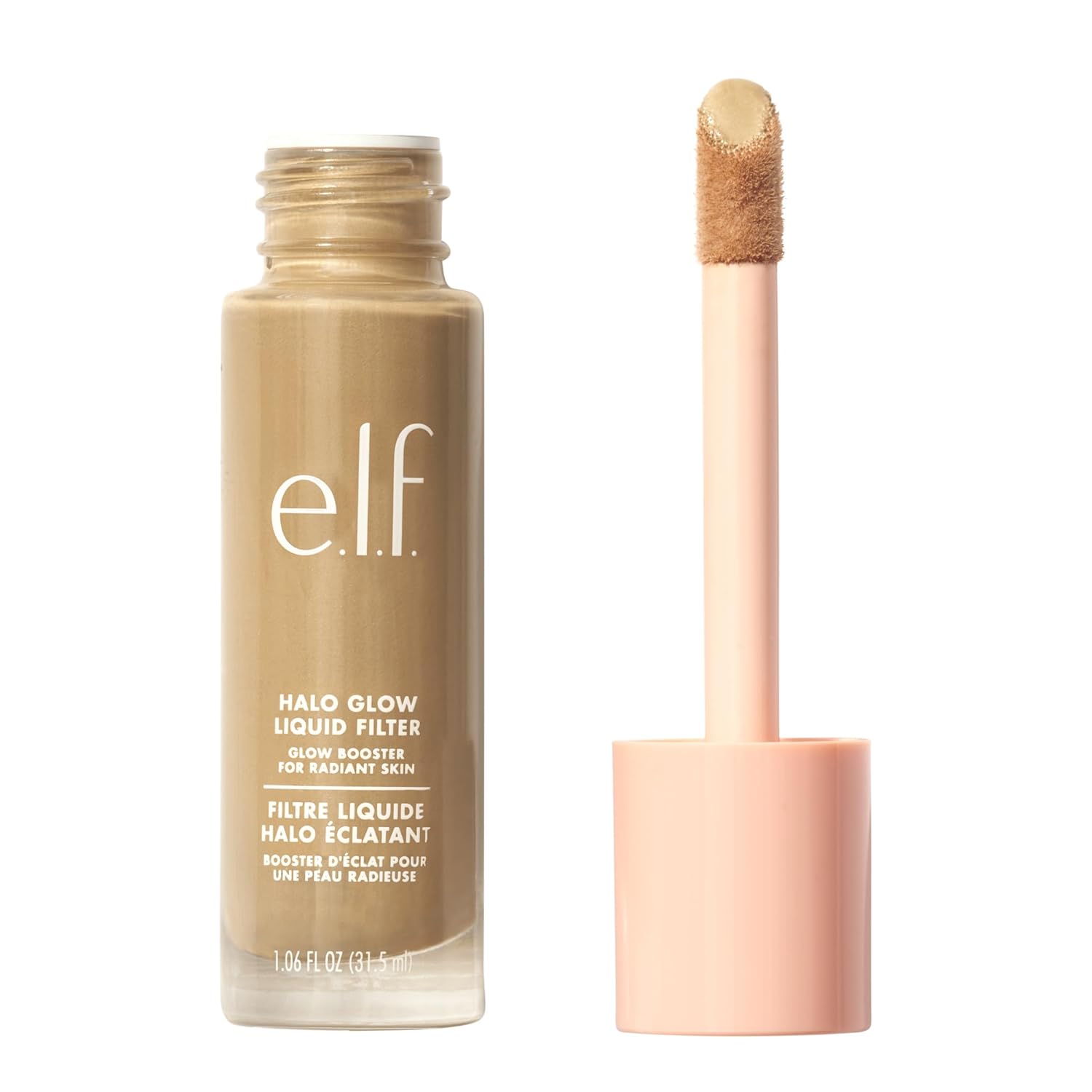
Best For: Normal to dry skin wanting a dewy, skin-like finish on a budget.
Why Consider It: e.l.f.’s complexion products are frequently cited for offering a lit-from-within finish at a lower price point than many prestige dewy foundations.
Pros:
- Sheer-to-medium buildable coverage suits a “your skin but better” look
- Generally accessible price point
- Popular for layering under or over other base products
Cons:
- Not built for full coverage on visible discoloration or texture
- Dewy finish may not suit oily skin without a setting powder
What to Consider Before Buying: If you have oily skin, plan to set it with a translucent powder in high-shine areas.
Verdict for This Specific Use: Better suited to someone prioritizing glow over heavy coverage.
bareMinerals Original Loose Powder Foundation

Best For: Sensitive or reactive skin, or anyone wanting to try a mineral formula.
Why Consider It: It’s one of the longer-standing, widely recognized mineral foundation lines, formulated as a loose powder with a shorter core ingredient list than many liquid formulas.
Pros:
- Minimal-ingredient approach may suit reactive skin
- Buildable, breathable coverage
- No need for a separate setting powder
Cons:
- Loose powder formats can be messy and have a learning curve to apply evenly
- Not ideal for very dry skin without a hydrating primer underneath
What to Consider Before Buying: Patch test first if you have known sensitivities, and check the current ingredient list on the Amazon listing since formulas can be updated over time.
Verdict for This Specific Use: Worth considering specifically for sensitive skin types rather than as a general-purpose pick.
NARS Sheer Glow Foundation

Best For: Normal to dry skin wanting a medium-coverage liquid with a natural, luminous finish.
Why Consider It: It’s a long-standing liquid foundation known for a skin-like finish rather than a heavy, “made-up” look, with buildable coverage.
Pros:
- Natural, radiant finish that doesn’t look heavy
- Broad shade range
- Buildable from sheer to medium-full coverage
Cons:
- Higher price point than drugstore alternatives
- Not the most oil-controlling option for very oily skin
What to Consider Before Buying: If you have oily skin, this may need a mattifying primer or setting powder to extend wear through the day.
Verdict for This Specific Use: A reasonable premium option for someone prioritizing a natural finish over strict shine control.
Product Comparison Table
| Product | Best For | Key Feature | Main Advantage | Potential Drawback |
|---|---|---|---|---|
| Maybelline Fit Me Matte + Poreless | Combination/oily, budget shoppers | Matte liquid formula | Affordable, wide shade range | Possible oxidation on some skin types |
| e.l.f. Halo Glow line | Normal/dry, dewy-finish fans | Sheer-medium buildable liquid | Budget-friendly glow | Limited coverage for texture/discoloration |
| bareMinerals Original | Sensitive/reactive skin | Mineral loose powder | Short ingredient list | Application learning curve |
| NARS Sheer Glow | Normal/dry, natural finish | Medium-buildable liquid | Natural, radiant look | Higher price, less oil control |
Check the current Amazon listing for each product to confirm shade availability, ingredients, and pricing before purchasing.
Common Mistakes When Choosing a Foundation
- Shade-matching in artificial store lighting only. Check a swatch in natural daylight and against your jawline, not your hand.
- Ignoring finish when buying based on coverage alone. A “full coverage” product in the wrong finish (dewy on very oily skin, for example) can still look wrong even with good coverage.
- Skipping skin prep. Powder and matte formulas especially will emphasize dry patches or texture without proper moisturizing beforehand.
- Assuming one foundation works everywhere on your face. Combination skin often benefits from using a slightly different finish or product in the T-zone versus the cheeks.
- Not patch testing new formulas, especially mineral or fragrance-free products marketed toward sensitive skin — “gentle” formulation claims aren’t a guarantee against individual reactions.
Tips for Longer Wear, Whatever Formula You Choose
- Prime skin according to your main concern — hydrating primer for dry skin, mattifying primer for oily skin.
- Apply foundation in thin layers and build up only where needed, rather than one heavy all-over layer.
- Set with translucent powder only in areas prone to shine, not the entire face, if you have combination or dry skin.
- Use a setting spray as a final step if you need extended wear through a long day.
FAQ
Do I need different foundations for summer and winter?
Many people do adjust — a slightly dewier or more hydrating formula in colder, drier months and a more oil-controlling formula in warmer, humid months — though this depends on how your individual skin responds to seasonal changes.
Can I mix foundation types, like liquid and powder?
Yes, layering a powder over a liquid base (or vice versa) is a common technique to combine coverage with longer wear, particularly for combination skin.
Is a higher price always better coverage or longer wear?
Not necessarily. Price often reflects ingredient sourcing, packaging, and marketing rather than a guaranteed performance difference. Some drugstore formulas perform comparably to prestige options for many skin types.
How do I know if a foundation formula is right for my skin type?
Individual results can vary, but a good sign after a full day of wear is minimal patchiness, no unexpected irritation, and a finish that still looks the way it did after application. If a formula consistently breaks down, oxidizes, or causes irritation, it’s worth trying a different category rather than just a different shade.
Conclusion
The biggest factor in finding a foundation that actually works isn’t the brand — it’s matching the formula category (liquid, powder, cream, stick, or mineral) to your skin type and desired finish first. From there, coverage level and specific product choice become much easier decisions.
If you’re not sure where to start, pick one formula category that matches your skin type from the framework above, try a single product in that category, and pay attention to how it wears over a full day before committing to a full routine built around it. That’s a more reliable path to a good match than trying to chase whichever product is trending.