Hair changes with age, and for many women, those changes become noticeable after 50. Hair may become finer, drier, less dense, or lose its natural shine. Gray or silver strands often have a different texture, while hormonal shifts during menopause can affect both the scalp and hair growth.
The good news is that healthy hair after 50 isn’t about chasing your younger hair—it’s about caring for the hair you have today. A thoughtful routine can improve softness, reduce breakage, add volume, and keep your hair looking vibrant at every stage of life.
Whether you’re embracing your natural silver, coloring your hair, or searching for styles that are easier to maintain, this guide covers everything you need to know about hair care for women over 50.
Why Hair Changes After 50
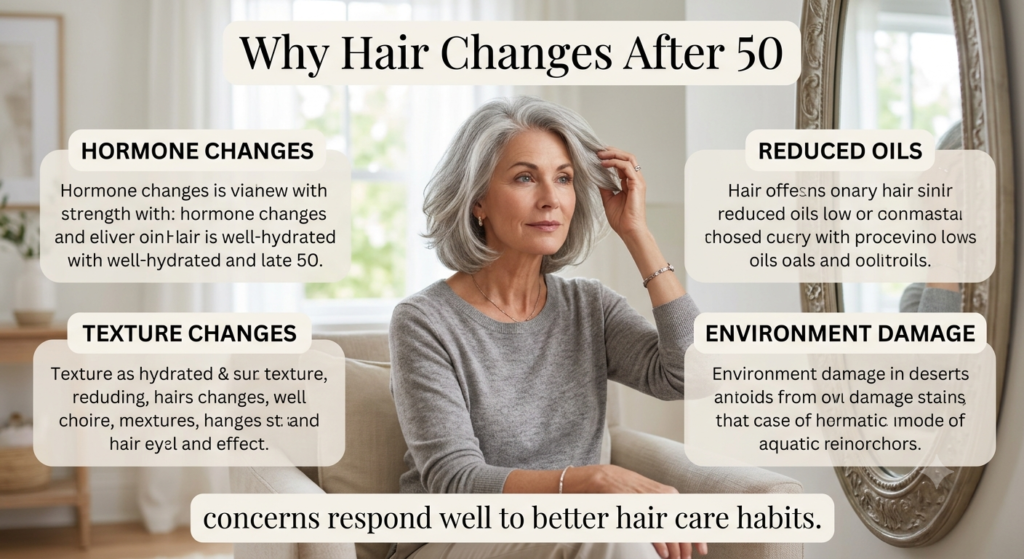
Several factors work together to change hair over time.
Hormonal Changes
Declining estrogen levels during menopause can cause hair to become thinner and grow more slowly. Many women also notice increased shedding around the crown or widening of the hair part.
Reduced Natural Oils
The scalp produces less oil with age, making hair feel rougher, drier, and more prone to split ends.
Texture Changes
Gray hair often has a coarser texture because it lacks melanin, making it feel wiry or difficult to manage.
Environmental Damage
Years of sun exposure, heat styling, coloring, and chemical treatments gradually weaken the hair cuticle.
The encouraging part is that many of these concerns respond well to better hair care habits.
Signs Your Hair Care Routine Needs an Update
If any of these sound familiar, your current routine may no longer fit your hair’s changing needs.
- Hair feels dry even after conditioning
- Increased shedding or breakage
- Flat roots with little volume
- Frizz that won’t stay under control
- Yellowing silver hair
- Sensitive or itchy scalp
- Split ends appearing more frequently
Small adjustments often produce noticeable improvements within a few weeks.
The Best Daily Hair Care Routine for Women Over 50
A consistent routine is more effective than using dozens of products.
Step 1: Wash Only When Needed
Daily washing can strip away the limited natural oils your scalp now produces.
A better schedule for most women is:
| Hair Type | Washing Frequency |
|---|---|
| Fine hair | Every 2 days |
| Normal hair | 2–3 times weekly |
| Curly hair | Once or twice weekly |
| Very dry hair | Every 4–5 days |
Use lukewarm rather than hot water to help preserve moisture.
Step 2: Choose a Gentle Shampoo
Look for shampoos that:
- Are sulfate-free
- Contain moisturizing ingredients
- Support scalp health
- Protect color if you dye your hair
Helpful ingredients include:
- Argan oil
- Glycerin
- Aloe vera
- Keratin
- Biotin
- Hyaluronic acid
Avoid shampoos that leave hair feeling squeaky clean—that often means they’re removing too much moisture.
Step 3: Never Skip Conditioner
Conditioner becomes even more valuable as hair ages.
Apply mainly from mid-length to the ends, where dryness is usually worst.
A richer conditioner can:
- Reduce tangles
- Increase shine
- Improve softness
- Protect against breakage
Step 4: Add a Weekly Deep Conditioning Treatment
Think of this as a reset for aging hair.
Once each week:
- Apply a nourishing hair mask.
- Leave it on for 10–20 minutes.
- Rinse thoroughly.
Hair masks containing shea butter, avocado oil, or ceramides can noticeably improve moisture levels.
Step 5: Protect Hair Before Styling
Heat styling isn’t off-limits after 50—but protection is essential.
Before blow drying or using hot tools:
- Apply a heat protectant.
- Keep temperatures moderate.
- Avoid repeatedly passing the iron over the same section.
Many women notice smoother, healthier hair simply by lowering their styling temperature.
Hair Care at 40: Building Habits Before Major Changes
Many women begin noticing subtle hair changes during their 40s.
Common early signs include:
- Less volume
- Slight thinning
- More dryness
- Increased frizz
Starting healthier habits during this decade often makes the transition into your 50s much easier.
Good practices include:
- Prioritizing scalp care
- Limiting excessive bleaching
- Using weekly conditioning masks
- Reducing unnecessary heat styling
- Eating enough protein and iron
Healthy hair is easier to maintain than damaged hair.
Silver Hair Care
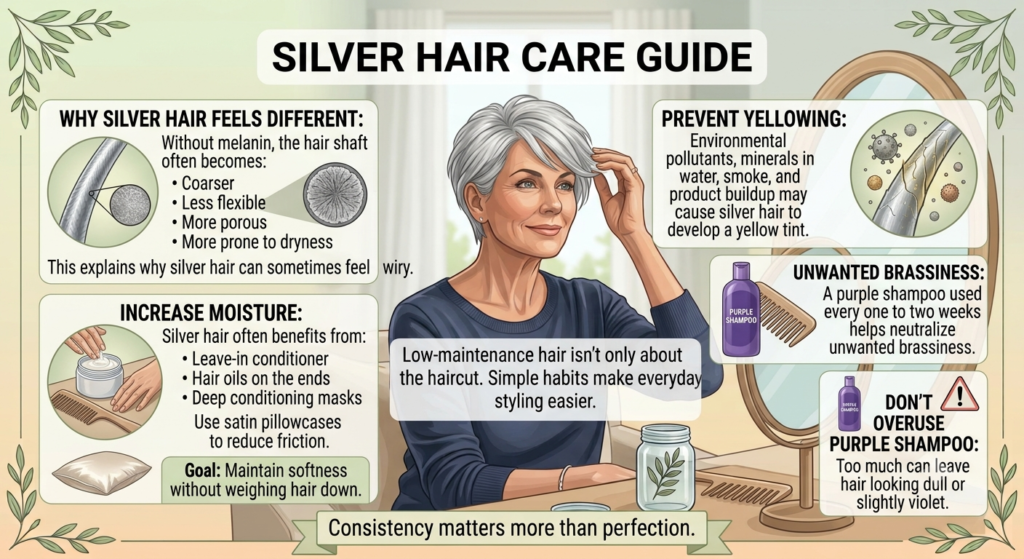
Gray and silver hair require a slightly different approach than pigmented hair.
Why Silver Hair Feels Different
Without melanin, the hair shaft often becomes:
- Coarser
- Less flexible
- More porous
- More prone to dryness
This explains why silver hair can sometimes feel wiry.
Prevent Yellowing
Environmental pollutants, minerals in water, smoke, and product buildup may cause silver hair to develop a yellow tint.
A purple shampoo used every one to two weeks helps neutralize unwanted brassiness.
Don’t overuse purple shampoo, though. Too much can leave hair looking dull or slightly violet.
Increase Moisture
Silver hair often benefits from:
- Leave-in conditioner
- Hair oils on the ends
- Deep conditioning masks
- Satin pillowcases to reduce friction
The goal is to maintain softness without weighing the hair down.
Nutrition That Supports Healthy Hair
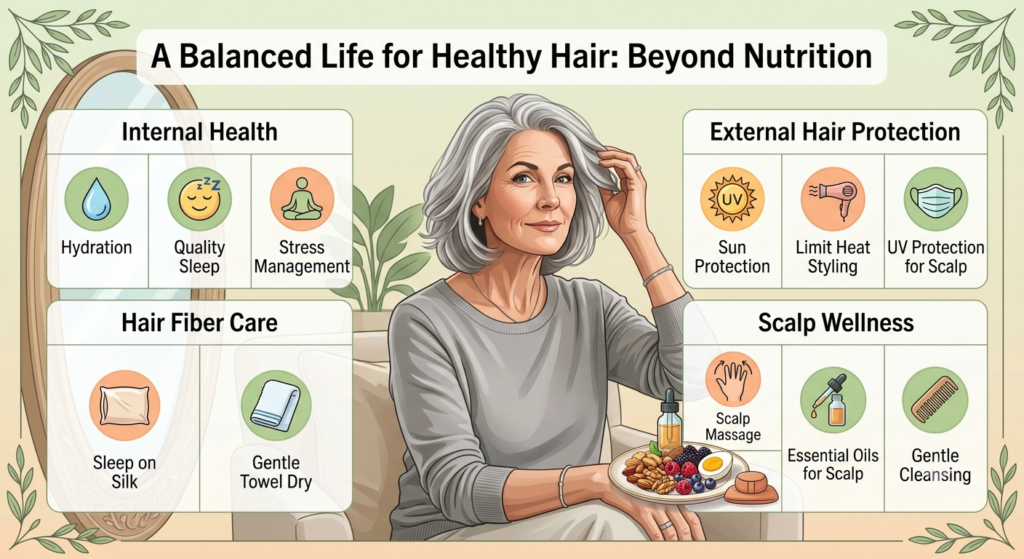
Hair health starts inside the body.
A balanced diet supports stronger strands over time.
Key nutrients include:
- Protein
- Iron
- Zinc
- Vitamin D
- Omega-3 fatty acids
- Vitamin C
- Biotin (only if deficient)
Foods that support healthy hair include:
- Eggs
- Salmon
- Greek yogurt
- Lentils
- Spinach
- Berries
- Walnuts
- Sweet potatoes
If you’re experiencing sudden or significant hair loss, speak with your healthcare provider before starting supplements, as deficiencies and medical conditions can contribute.
Common Hair Mistakes Women Over 50 Should Avoid
Even expensive products can’t compensate for damaging habits.
Washing Too Often
Frequent washing can worsen dryness.
Using High Heat Daily
Repeated heat exposure weakens already fragile strands.
Skipping Haircuts
Regular trims prevent split ends from traveling upward.
Ignoring Scalp Health
Healthy hair grows from a healthy scalp.
Overloading Products
Using too many creams, oils, and sprays may flatten fine hair.
Sometimes simplifying your routine gives better results.
Easy Care Hair Styles for Women Over 60
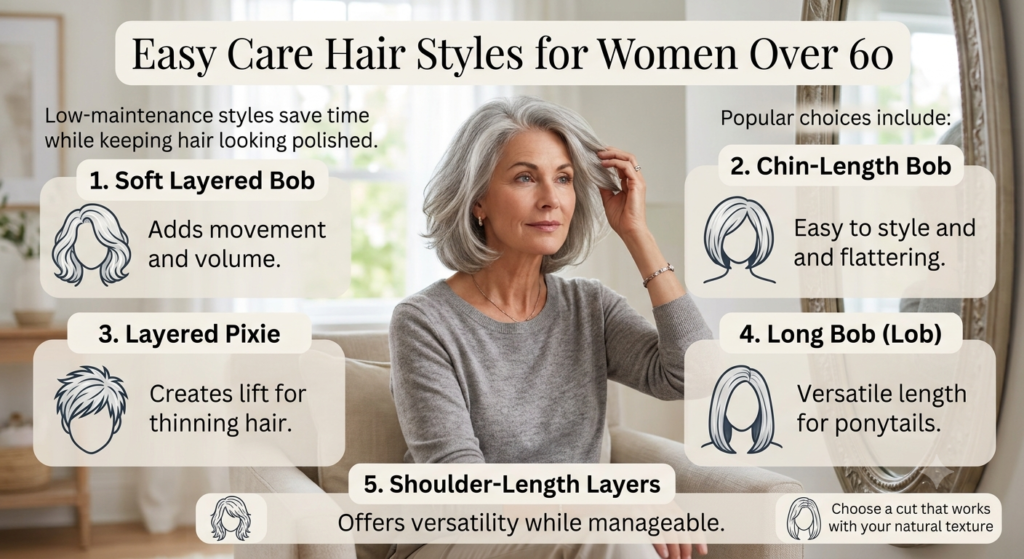
Low-maintenance styles save time while keeping hair looking polished.
Popular choices include:
Soft Layered Bob
Adds movement and volume.
Chin-Length Bob
Easy to style and flattering for many face shapes.
Layered Pixie
Creates lift for thinning hair.
Shoulder-Length Layers
Offers versatility while remaining manageable.
Long Bob (Lob)
Provides enough length for ponytails without requiring extensive styling.
Choose a cut that works with your natural texture rather than fighting it.
Easy Care Short Hair Cuts for Women Over 60
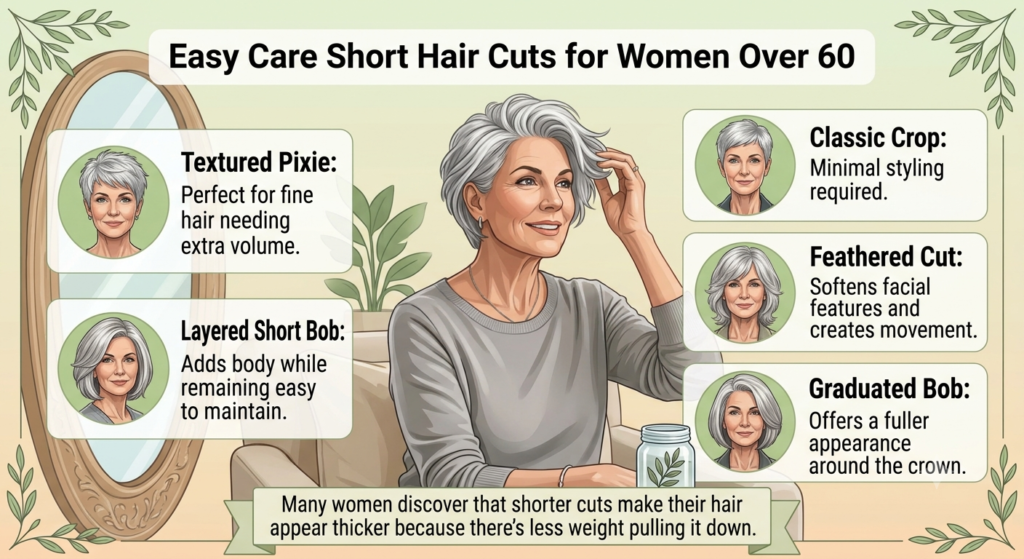
Short hairstyles can reduce styling time while adding fullness.
Excellent options include:
Textured Pixie
Perfect for fine hair needing extra volume.
Classic Crop
Minimal styling required.
Layered Short Bob
Adds body while remaining easy to maintain.
Feathered Cut
Softens facial features and creates movement.
Graduated Bob
Offers a fuller appearance around the crown.
Many women discover that shorter cuts make their hair appear thicker because there’s less weight pulling it down.
Easy Care Hair for Women Over 60
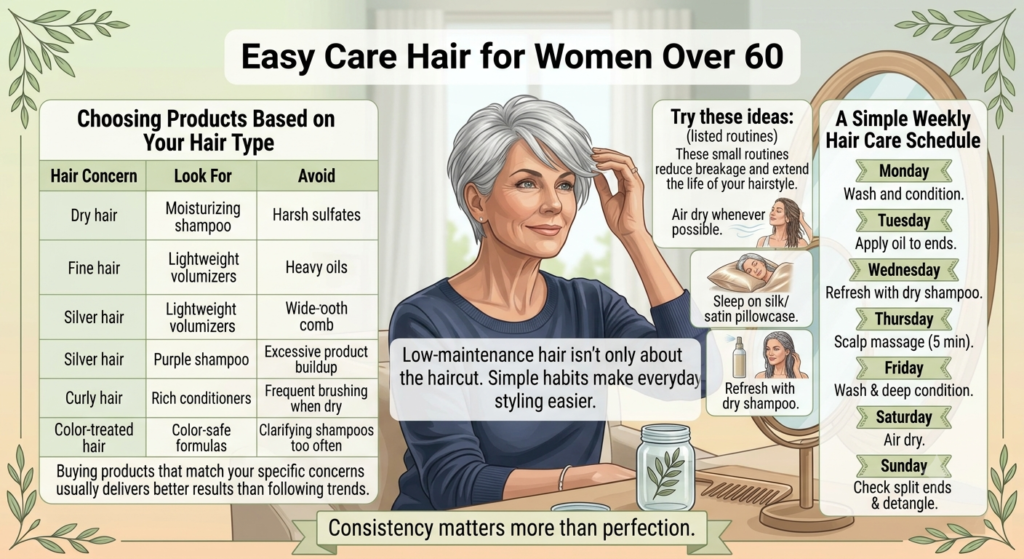
Low-maintenance hair isn’t only about the haircut.
Simple habits make everyday styling easier.
Try these ideas:
- Air dry whenever possible.
- Sleep on a silk or satin pillowcase.
- Use a wide-tooth comb.
- Apply leave-in conditioner after washing.
- Refresh hair with dry shampoo between washes.
- Trim every 8–10 weeks.
These small routines reduce breakage and extend the life of your hairstyle.
Choosing Products Based on Your Hair Type
| Hair Concern | Look For | Avoid |
|---|---|---|
| Dry hair | Moisturizing shampoo | Harsh sulfates |
| Fine hair | Lightweight volumizers | Heavy oils |
| Silver hair | Purple shampoo | Excessive product buildup |
| Curly hair | Rich conditioners | Frequent brushing when dry |
| Color-treated hair | Color-safe formulas | Clarifying shampoos too often |
Buying products that match your specific concerns usually delivers better results than following trends.
A Simple Weekly Hair Care Schedule
Monday
Wash and condition.
Tuesday
Apply a lightweight hair oil to the ends if needed.
Wednesday
Refresh with dry shampoo.
Thursday
Scalp massage for five minutes.
Friday
Wash and deep condition.
Saturday
Air dry whenever possible.
Sunday
Check for split ends and gently detangle.
Consistency matters more than perfection.
Frequently Asked Questions
What is the best hair care routine for women over 50?
A gentle shampoo, moisturizing conditioner, weekly deep conditioning treatment, heat protection, regular trims, and healthy nutrition create a strong foundation for healthier hair.
How often should women over 50 wash their hair?
Most women benefit from washing two to three times per week, although oily scalps or frequent exercise may require more frequent washing.
Why does hair become thinner after menopause?
Hormonal changes, particularly lower estrogen levels, can shorten the hair growth cycle and increase shedding. Genetics, nutrition, and overall health also play a role.
Is silver hair naturally drier?
Yes. Silver hair often produces less natural moisture and has a more porous texture, making regular conditioning especially helpful.
Conclusion
Beautiful hair after 50 isn’t about trying to reverse aging—it’s about adapting your routine to your hair’s changing needs. Gentle cleansing, regular conditioning, scalp care, heat protection, and nourishing your body from within can make a noticeable difference in softness, shine, and manageability.
Whether you’re embracing silver strands, managing menopausal hair changes, or searching for easy care hair styles for women over 60, the most effective routine is one you can maintain consistently. Focus on healthy habits instead of quick fixes, and your hair will reward you with strength, movement, and confidence for years to come.