Few hair concerns are as frustrating as dandruff. One day your hair looks healthy, and the next you’re brushing white flakes off your shoulders before an important meeting. Beyond the visible flakes, dandruff often comes with itching, irritation, excess oil, and discomfort that can affect your confidence.
The good news is that dandruff is usually manageable with the right hair care routine. Instead of constantly switching shampoos or trying viral DIY remedies, understanding what’s causing your flakes can help you choose treatments that actually work.
Whether you have an oily scalp, dry scalp, curly hair, straight hair, or color-treated hair, this guide explains how to build an effective hair care routine for dandruff while keeping your hair healthy, strong, and free from recurring flakes.
What Is Dandruff?
Dandruff is a common scalp condition that causes dead skin cells to shed more quickly than normal. While everyone naturally sheds skin cells, dandruff becomes noticeable when the flakes are larger, more frequent, and often accompanied by itching.
Many people assume dandruff means a dry scalp, but that’s only one possible cause. In fact, an oily scalp is one of the most common reasons dandruff develops. Excess oil can feed naturally occurring yeast on the scalp, triggering irritation and causing skin cells to shed faster than usual.
Common Symptoms of Dandruff
- White or yellow flakes on your scalp or shoulders
- Persistent itching
- Greasy-looking roots
- Mild redness or irritation
- Tight or uncomfortable scalp
- Flakes that worsen during colder months or stressful periods
The condition often comes and goes, becoming worse during stress, seasonal weather changes, hormonal shifts, or inconsistent hair care habits.
What Causes Dandruff?
Understanding the root cause of dandruff makes it much easier to treat effectively.
Excess Oil Production
An oily scalp creates an environment where naturally occurring yeast can multiply more rapidly. This often leads to irritation, inflammation, and increased skin cell turnover.
Product Buildup
Dry shampoo, styling creams, hairspray, waxes, and heavy oils can accumulate on the scalp if they aren’t washed away thoroughly. This buildup traps dead skin cells and contributes to itching and flakes.
Infrequent Washing
Many people avoid washing oily hair frequently because they fear it will become even greasier. However, allowing oil and sweat to build up often makes dandruff significantly worse.
Sensitive Skin
Some individuals naturally have sensitive skin that reacts to fragrances, preservatives, or harsh cleansing ingredients found in hair products.
Seasonal Changes
Cold, dry weather can dry out the scalp, while heat and humidity often increase oil production. Both situations may trigger dandruff depending on your scalp type.
Stress and Lifestyle
High stress levels don’t directly cause dandruff, but they can weaken the skin’s natural barrier and worsen existing scalp conditions.
Hair Care for Dandruff: A Step-by-Step Routine
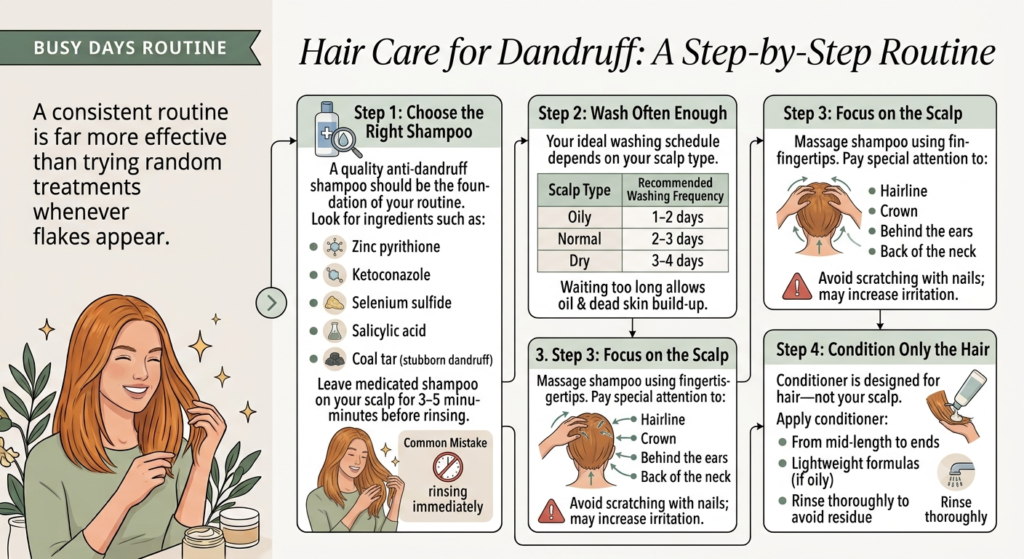
A consistent routine is far more effective than trying random treatments whenever flakes appear.
Step 1: Choose the Right Shampoo
A quality anti-dandruff shampoo should be the foundation of your routine.
Look for ingredients such as:
- Zinc pyrithione
- Ketoconazole
- Selenium sulfide
- Salicylic acid
- Coal tar (for stubborn dandruff)
Leave medicated shampoo on your scalp for three to five minutes before rinsing so the active ingredients have time to work.
Common Mistake
Many people rinse immediately after applying shampoo, reducing its effectiveness.
Step 2: Wash Often Enough
Your ideal washing schedule depends on your scalp type.
| Scalp Type | Recommended Washing Frequency |
|---|---|
| Oily Scalp | Every 1–2 days |
| Normal Scalp | Every 2–3 days |
| Dry Scalp | Every 3–4 days or as directed |
Waiting a full week between washes often allows oil, dead skin, and product residue to build up.
Step 3: Focus on the Scalp
Massage shampoo into your scalp using your fingertips.
Pay special attention to:
- Hairline
- Crown
- Behind the ears
- Back of the neck
Avoid scratching with your nails, which may damage the skin and increase irritation.
Step 4: Condition Only the Hair
Conditioner is designed for your hair—not your scalp.
Apply conditioner:
- From mid-length to ends
- Using lightweight formulas if you have oily hair
- Rinse thoroughly to avoid residue
Hair Care Oily Scalp: Finding the Right Balance
Managing an oily scalp doesn’t mean trying to eliminate oil completely. Your scalp naturally produces sebum to protect your skin and hair. The goal is to control excess oil without stripping away the moisture your scalp needs to stay healthy.
Tips for Managing an Oily Scalp
- Wash consistently instead of waiting until your hair feels greasy.
- Avoid applying oils directly to your scalp unless recommended by a professional.
- Rinse shampoo thoroughly.
- Clean your brushes every week.
- Avoid touching your scalp throughout the day.
- Use lightweight styling products whenever possible.
Signs Your Routine Is Working
After several weeks, you should notice:
- Less itching
- Fewer flakes
- Fresher roots
- Reduced oil production
- Improved scalp comfort
Hair Care Oily Hair: Keeping Hair Fresh Longer
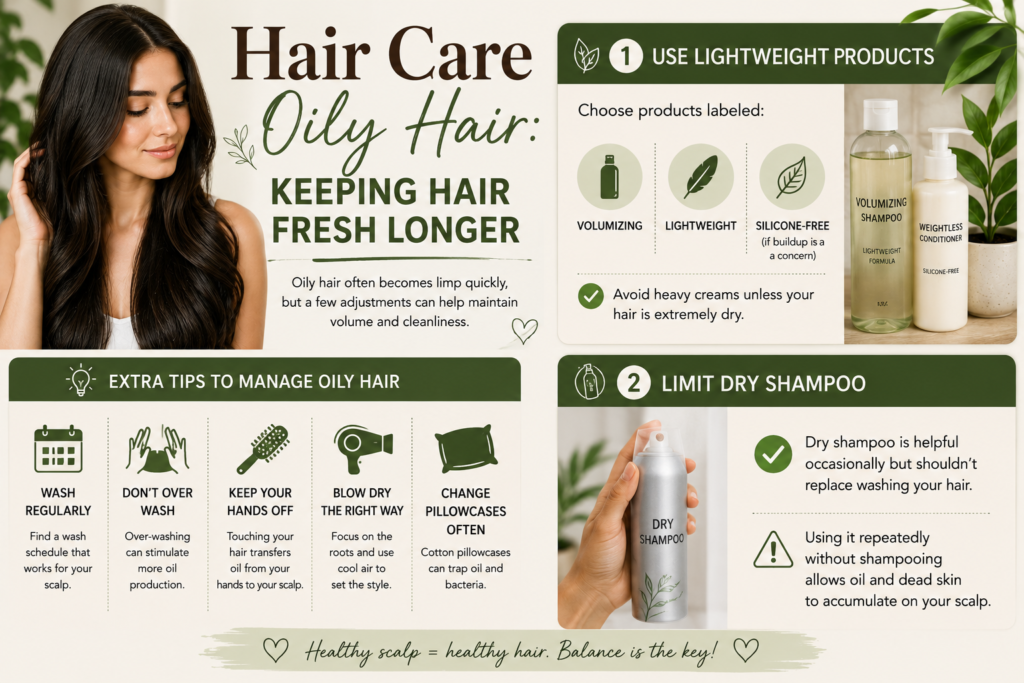
Oily hair often becomes limp quickly, but a few adjustments can help maintain volume and cleanliness.
Use Lightweight Products
Choose products labeled:
- Volumizing
- Lightweight
- Silicone-free (if buildup is a concern)
Avoid heavy creams unless your hair is extremely dry.
Limit Dry Shampoo
Dry shampoo is helpful occasionally but shouldn’t replace washing your hair.
Using it repeatedly without shampooing allows oil and dead skin to accumulate on your scalp.
Clean Hair Tools
Hair brushes and combs collect:
- Oils
- Dust
- Dead skin
- Product residue
Wash them weekly to prevent transferring buildup back onto freshly cleaned hair.
Hair Care Scalp: Building Long-Term Scalp Health
Healthy hair begins with a healthy scalp. Even after dandruff improves, maintaining good scalp care helps prevent future flare-ups.
Weekly Scalp Care Checklist
- Wash hair consistently.
- Exfoliate gently once every one to two weeks if recommended for your scalp type.
- Avoid heavy product buildup.
- Stay hydrated.
- Eat a balanced diet rich in vitamins and minerals.
- Replace old hair brushes if they become difficult to clean.
- Protect your scalp from excessive sun exposure when outdoors.
Taking care of your scalp regularly is much easier than treating severe dandruff after it develops.
Common Hair Care Mistakes That Make Dandruff Worse
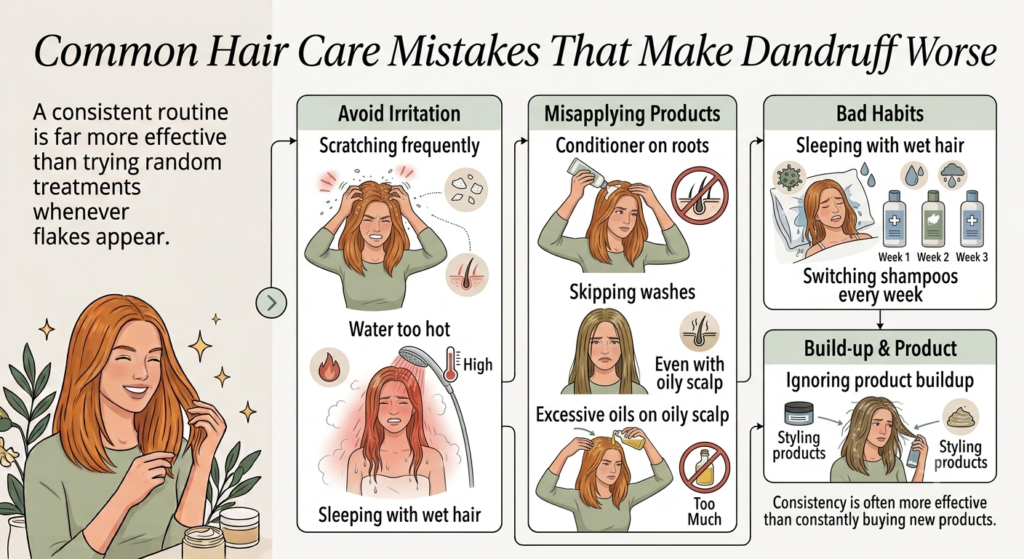
Even the best shampoo won’t help if everyday habits continue to irritate your scalp.
Avoid these common mistakes:
- Scratching your scalp frequently
- Applying conditioner directly to the roots
- Sleeping with wet hair regularly
- Using water that’s too hot
- Skipping washes despite having an oily scalp
- Switching shampoos every week before giving them time to work
- Applying excessive oils to an already oily scalp
- Ignoring product buildup from styling products
Consistency is often more effective than constantly buying new products.
Natural Ways to Support a Healthy Scalp
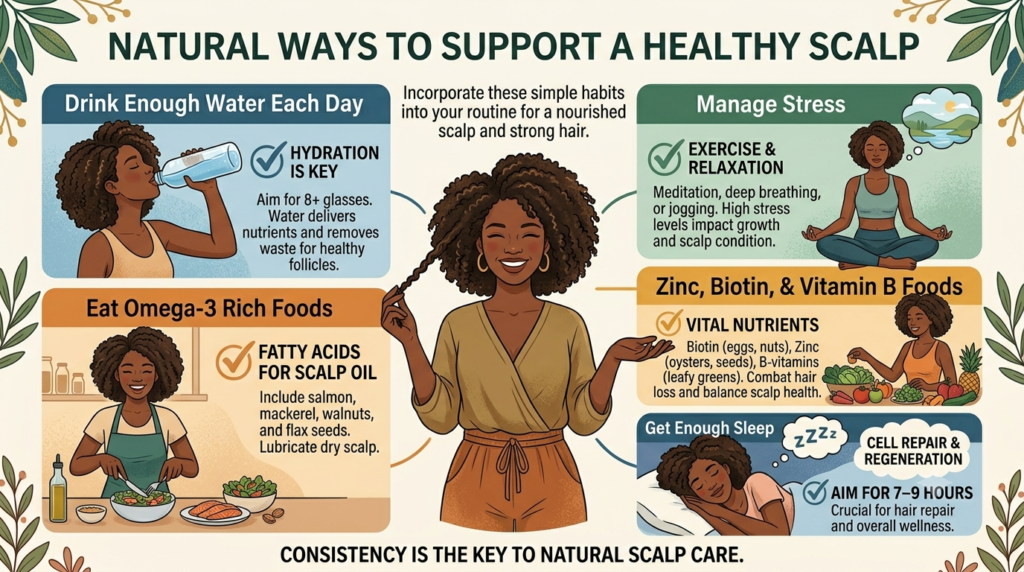
While medicated shampoos remain the most effective treatment for persistent dandruff, healthy lifestyle habits can support overall scalp health.
Helpful habits include:
- Drinking enough water each day
- Eating foods rich in omega-3 fatty acids
- Including zinc, biotin, and vitamin B-rich foods in your diet
- Managing stress through exercise or relaxation techniques
- Getting enough sleep
Natural remedies may soothe mild irritation, but they shouldn’t replace proven treatments if dandruff is persistent or severe.
Frequently Asked Questions
Is dandruff caused by poor hygiene?
No. Although infrequent washing can worsen dandruff for some people, dandruff is usually related to scalp oil, yeast, skin sensitivity, or underlying scalp conditions—not simply being “dirty.”
Can oily hair make dandruff worse?
Yes. Excess oil creates an environment where yeast can thrive, increasing irritation and visible flakes.
How long does it take to get rid of dandruff?
Most people notice improvement within two to four weeks of consistently using an appropriate anti-dandruff shampoo and following a healthy scalp care routine.
Should I oil my scalp if I have dandruff?
Not always. If your dandruff is linked to an oily scalp, applying additional oils may worsen the problem. It’s better to identify the underlying cause before using scalp oils.
Conclusion: Healthy Hair Starts with a Healthy Scalp
Dandruff can be frustrating, but it doesn’t have to be something you simply live with. While flakes may seem like a hair problem, they’re usually a sign that your scalp needs a little more attention. The good news is that most cases of dandruff improve significantly with a consistent hair care routine, the right products, and a better understanding of your scalp’s unique needs.
If you have an oily scalp, focus on regular cleansing with a dandruff shampoo formulated to control excess oil without stripping your hair. If your scalp tends to be dry or sensitive, choose gentle, moisturizing products that support your skin barrier while still addressing flakes. Remember that treating dandruff isn’t about washing more aggressively—it’s about creating balance. Overwashing with harsh products or underwashing to “protect” your scalp can both make the problem worse.
Small, consistent habits can make a noticeable difference over time. Washing your hair on a schedule that suits your scalp type, avoiding heavy product buildup, cleaning your hair tools regularly, and limiting unnecessary scratching all contribute to a healthier scalp environment. Pair these habits with a balanced diet, proper hydration, and stress management, and you’ll be supporting your scalp from the inside out as well.
It’s also important to be patient. Dandruff treatments rarely produce overnight results. Most medicated shampoos require several weeks of consistent use before you see a significant reduction in flakes and itching. Switching products too quickly or stopping treatment as soon as symptoms improve can allow dandruff to return. Sticking with a routine gives your scalp time to recover and maintain its natural balance.
If you’ve followed a consistent routine for several weeks and your dandruff remains severe, becomes painful, or is accompanied by redness, swelling, thick scales, or hair loss, it’s a good idea to consult a dermatologist. Persistent dandruff may be caused by an underlying scalp condition that requires a different treatment approach.
Healthy, beautiful hair starts with a healthy scalp. Rather than chasing quick fixes or every trending remedy you see online, focus on building a simple, sustainable hair care routine that works for your scalp type and lifestyle. By cleansing consistently, using proven dandruff treatments, minimizing product buildup, and supporting your overall health, you can keep flakes under control and enjoy stronger, shinier, and healthier-looking hair.
The key isn’t finding a miracle product—it’s creating habits you can stick with. Over time, those daily and weekly routines will not only reduce dandruff but also improve the overall appearance, comfort, and health of your hair. Stay consistent, listen to your scalp’s needs, and you’ll be well on your way to long-lasting, flake-free confidence.