A foundation that looks great at 8 a.m. can look patchy by your 2 p.m. meeting. A formula that photographs well at a wedding can feel heavy by the third hour of the reception.
Professional and special-occasion foundation has to do different jobs than everyday base makeup. It needs to last through long stretches, hold up to close conversation or flash photography, and look like skin rather than a mask. That’s a narrow target, and it depends on your skin type, the lighting you’ll be in, and how long you’ll be wearing it.
This guide covers what to look for, how to match a formula to the occasion, how to apply it so it lasts, and which types of foundation suit which readers.
Professional vs. Special-Occasion Foundation: What’s Actually Different?
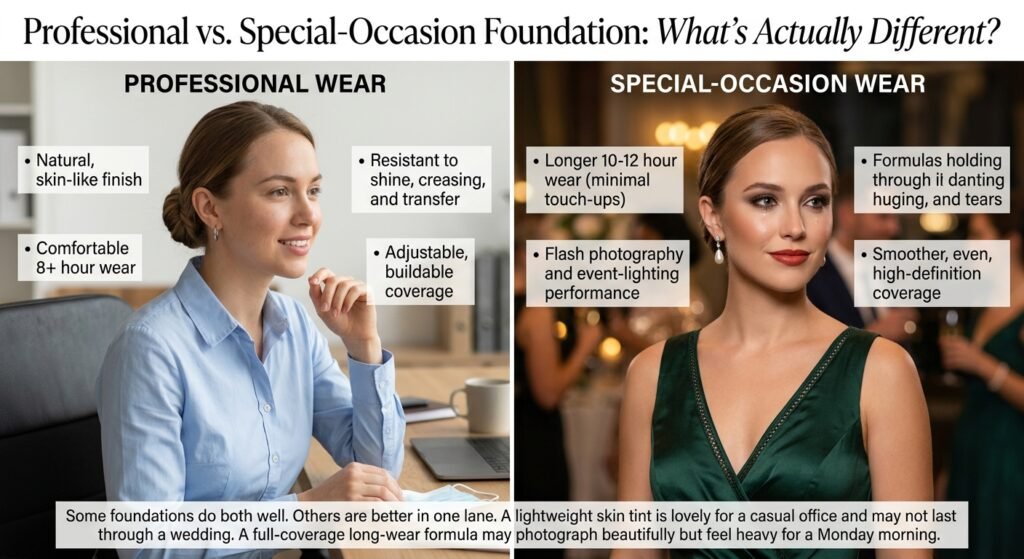
The two situations overlap, but the priorities differ.
Professional wear usually calls for:
- A natural, skin-like finish that doesn’t draw attention
- Comfortable wear for 8+ hours
- Resistance to shine, creasing, and transfer onto collars and masks
- Coverage you can adjust, since you may want it lighter in a casual office than in a client presentation
Special-occasion wear usually calls for:
- Longer wear, sometimes 10 to 12 hours with little chance to touch up
- Better performance under flash photography and stage or event lighting
- Smoother, more even coverage, since people see you up close and in photos
- Formulas that hold through heat, dancing, hugging, and the occasional happy tear
Some foundations do both well. Others are better in one lane. A lightweight skin tint is lovely for a casual office and may not last through a wedding. A full-coverage long-wear formula may photograph beautifully but feel heavy for a Monday morning.
Start With Your Skin Type, Not the Product
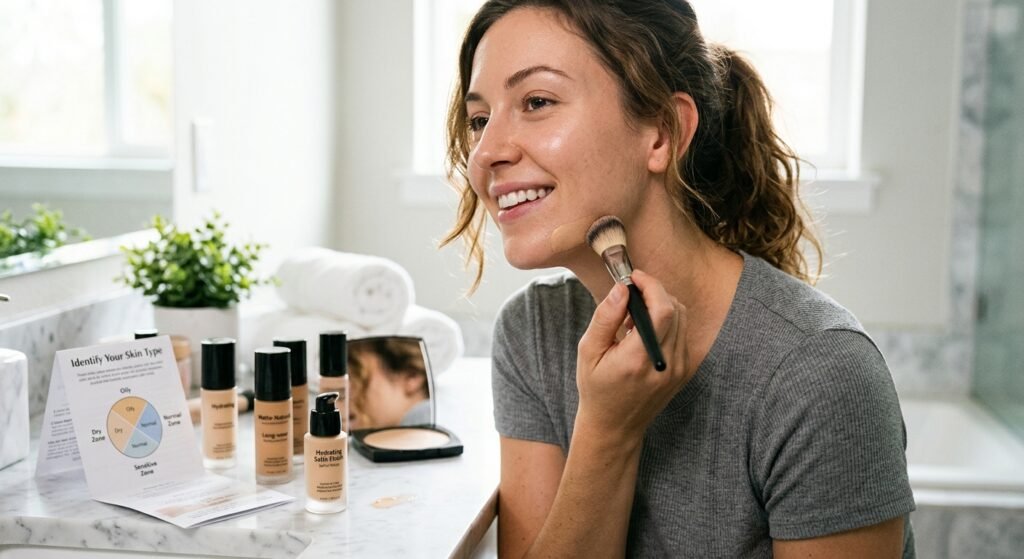
The most common reason a foundation fails is a mismatch with skin type. Before comparing products, identify where you land.
Oily or Combination Skin
Shine breaks through by midday, and some foundations slide or separate around the nose and chin. Look for oil-controlling or matte-to-natural finishes, formulas labeled long-wear or transfer-resistant, and lightweight textures that won’t sit heavily on top of oil.
Avoid heavy creams and very dewy formulas if shine already bothers you.
Dry or Dehydrated Skin
Foundation can cling to dry patches and emphasize texture, especially by evening. Look for hydrating or satin finishes and formulas that describe themselves as moisturizing or skin-conditioning. Prep matters more for you than for anyone else.
Avoid ultra-matte formulas unless your skin is well hydrated underneath.
Normal or Balanced Skin
You have the most flexibility and can choose primarily by finish and coverage.
Sensitive Skin
Check ingredient lists for fragrance, alcohol, and anything you’ve reacted to before. Patch test a new foundation on your jawline or behind your ear for a day or two before wearing it to an important event. Individual reactions vary, and no product is right for everyone. If you have a skin condition, ask a dermatologist what suits it.
Mature Skin
Very matte, very full-coverage formulas can settle into fine lines. Many people prefer medium coverage with a satin or natural finish, layered only where needed.
The Four Things That Matter Most When Choosing
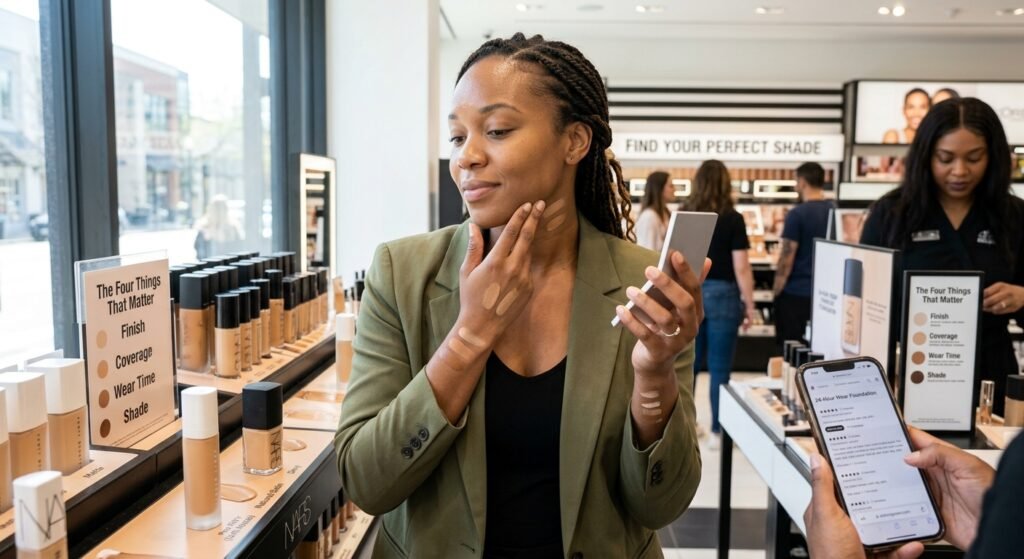
1. Finish
- Matte: Controls shine, but can look flat or emphasize dry texture.
- Natural or satin: A middle ground that looks like healthy skin. Often the safest choice for professional settings.
- Dewy or luminous: Fresh and glowy, but can look shiny in photos and may not last on oily skin.
2. Coverage
- Sheer or tint: Evens tone lightly. Good for relaxed offices.
- Medium: Covers redness and minor discoloration while still looking like skin. The most versatile option.
- Full: Covers more, and is often chosen for events, photography, or people who want a very even base.
Coverage is buildable in most formulas. It’s often smarter to buy medium coverage and add a second layer where you need it.
3. Wear Time
Look for terms like “long-wear,” “24-hour,” or “transfer-resistant,” but treat those numbers as marketing rather than promises. Real-world wear depends on your skin, your prep, the weather, and how much you touch your face. Reviews from people with your skin type are more informative than the label.
4. Shade Match
This matters more than any other factor. A good formula in the wrong shade looks worse than an average formula in the right one.
- Test on your jawline and neck, not the back of your hand.
- Check the shade in natural daylight before deciding.
- If you’re between shades, many people blend two or choose the slightly warmer one. It depends on your undertone.
- For events with photography, check the shade against your neck and chest so your face doesn’t look like a different color from your body.
Foundation Types Worth Considering (and Who They Suit)
The products below are widely available on Amazon and commonly discussed. Formulas, shade ranges, and packaging change, so check each current listing for ingredients, available shades, size, and price before buying.
Estée Lauder Double Wear Stay-in-Place Foundation

Best For: Long events, oily or combination skin, and people who want full-day wear with medium-to-full coverage.
Why Consider It: This is a long-wear formula that is widely known for staying put through long days. It suits weddings, photography, and other situations where touch-ups are hard.
Pros:
- Built for extended wear
- Buildable, fairly high coverage
- Commonly chosen by people with oily or combination skin
Cons:
- Can feel heavier than everyday formulas
- May look too matte or emphasize dryness on very dry skin without careful prep
- Takes a little practice to blend before it sets
What to Consider Before Buying: Check the shade range and undertone notes on the listing, and think about whether you want that much coverage for daily office wear. Some people keep it for special occasions and wear something lighter on weekdays.
Verdict for This Specific Use: A reasonable choice for wedding guests, brides, and event attendees with normal-to-oily skin. Less suited to those who prefer a fresh, barely-there office look.
[Check the current Amazon listing →]
Maybelline Fit Me Matte + Poreless Foundation

Best For: Budget-conscious readers with normal to oily skin who want a natural matte finish.
Why Consider It: It’s a drugstore option that aims to soften the look of shine and pores. It can be a practical choice for weekday professional wear.
Pros:
- Budget-friendly category
- Natural-looking matte finish
- Easy to find and replace
Cons:
- Matte formulas may not flatter dry skin
- Coverage and wear time are usually more moderate than premium long-wear foundations
- Shade range and undertone match should be checked carefully
What to Consider Before Buying: Read reviews from people with your skin type, and confirm your shade in daylight if possible. Consider pairing with primer and setting powder if you’ll be wearing it for a long event.
Verdict for This Specific Use: Well suited to everyday work wear if you want shine control at a modest price. It may need a little help to last through a long celebration.
[Check availability and current pricing →]
L’Oréal Paris Infallible 24H Fresh Wear Foundation

Best For: People who want long wear but dislike heavy-feeling makeup.
Why Consider It: It’s positioned as a lightweight, long-lasting formula, which is useful if you want more staying power than a skin tint without full-coverage weight.
Pros:
- Lighter feel than many long-wear formulas
- Medium buildable coverage
- More accessible price category
Cons:
- Finish may not suit those who prefer very dewy skin
- May show dryness on parched skin without moisturizer underneath
- Wear time varies by skin type
What to Consider Before Buying: Check the listing for the exact product version, size, and shade options, since similar-looking line extensions exist.
Verdict for This Specific Use: A flexible middle ground for professionals with long days and for guests at moderately long events.
[View the product on Amazon →]
NARS Light Reflecting Foundation

Best For: Readers who want a polished, skin-like finish with a bit of glow.
Why Consider It: It’s a premium option aimed at a soft, natural radiance, which often works well for photos and for people with normal, combination, or mature skin.
Pros:
- Skin-like, luminous look
- Suitable for photography-focused events
- Broad interest among users who want a refined finish
Cons:
- Higher price category
- May be too luminous for very oily skin
- Wear time depends heavily on prep and setting
What to Consider Before Buying: Because it’s a premium product, confirm shade and undertone carefully to avoid an expensive mismatch. Check return policy on the listing.
Verdict for This Specific Use: A good fit if your priority is a refined, radiant look for weddings and photos, and your budget allows for it.
[See the latest product details →]
e.l.f. Halo Glow or Flawless Finish-Style Foundations

Best For: Budget shoppers who want to try a new finish without a large investment.
Why Consider It: e.l.f. offers several foundation styles at a lower price point, which makes it easier to experiment with finish and coverage.
Pros:
- Low-risk price category for testing a look
- Multiple finish options across the range
- Good for building a backup or travel foundation
Cons:
- Formulas differ widely from product to product
- Wear time may not match premium long-wear options
- You’ll need to read the specific product description carefully
What to Consider Before Buying: Choose the specific product by finish and coverage, not just the brand name, and check the listing for shade range.
Verdict for This Specific Use: A sensible option for occasional events or as a second foundation if you want variety without a big spend.
[Check the current Amazon listing →]
Product Comparison Table
| Product | Best For | Key Feature | Main Advantage | Potential Drawback |
|---|---|---|---|---|
| Estée Lauder Double Wear | Long events, oily/combo skin | Long-wear, buildable coverage | Staying power | Can feel heavy |
| Maybelline Fit Me Matte + Poreless | Budget, normal-to-oily skin | Natural matte finish | Affordable and accessible | May not last through long events |
| L’Oréal Infallible 24H Fresh Wear | Lightweight long wear | Lighter feel with lasting power | Comfortable for long days | Finish may not suit very dry skin |
| NARS Light Reflecting | Photos, glowy finish | Skin-like radiance | Polished look | Premium price; may be too glowy for oily skin |
| e.l.f. foundations | Testing looks on a budget | Multiple styles and finishes | Low-cost experimentation | Varies by product |
Confirm current formulas, shades, and prices on Amazon before purchasing.
What to Choose If…
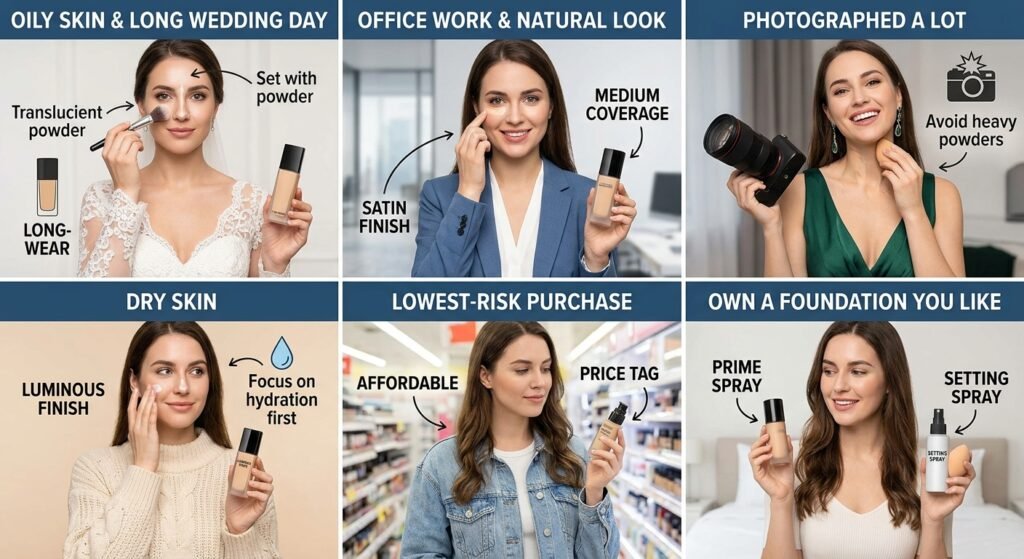
- You have oily skin and a long wedding day: Prioritize a long-wear formula, use primer where you get shiny, and set with powder in the T-zone.
- You work in an office and want a natural look: Choose medium coverage with a satin or natural finish, and use concealer only where needed.
- You’ll be photographed a lot: Choose a formula that blends well into your neck, and be cautious with heavy powders that can look chalky on camera.
- Your skin is dry: Focus on hydration first, choose a satin or luminous finish, and skip heavy powder.
- You want the lowest-risk purchase: Start with an affordable option, and reserve premium formulas for occasions where wear time or finish truly matters.
- You already own a foundation you like: You may not need another. A better primer, setting spray, or blending tool might improve wear more than a new base.
How to Apply Foundation So It Lasts
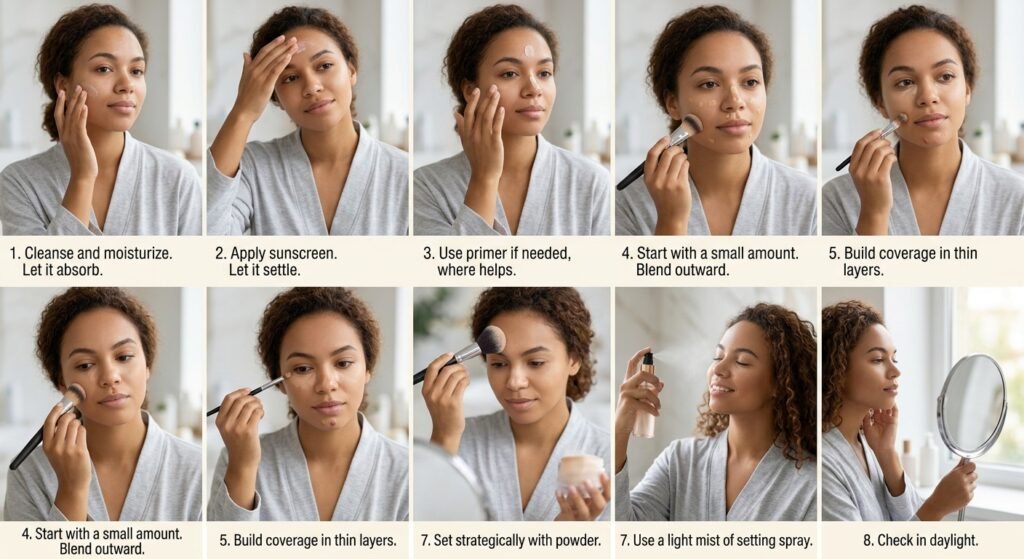
Application matters as much as product choice. This routine works for most formulas.
- Cleanse and moisturize. Give moisturizer a few minutes to absorb so foundation doesn’t slide.
- Apply sunscreen. Let it settle before makeup, and check that your sunscreen and foundation play well together.
- Use primer if needed. Choose a hydrating primer for dry skin or a mattifying one for oily areas, and apply it only where it helps.
- Start with a small amount. Apply foundation from the center of the face outward and blend into the hairline and jaw.
- Build coverage in thin layers. Two thin layers usually look better and last longer than one thick one.
- Conceal selectively. Add concealer only where you need extra coverage.
- Set strategically. Use powder where you get oily, and a light mist of setting spray if you like.
- Check in daylight. Look for hard lines at the jaw and hairline before you leave.
Common Mistakes to Avoid
- Choosing a shade under store lighting only. Stores can be misleading. Check in daylight.
- Skipping skincare prep. Foundation shows dryness and texture faster than most people expect.
- Applying too much at once. Heavy layers can crease and look cakey.
- Trying a new foundation on the day of the event. Test it a week or two ahead so you know how it wears and how your skin reacts.
- Ignoring your neck. A visible line between face and neck is more noticeable in photos.
- Using too much powder. Over-powdering can dull skin and emphasize fine lines.
- Assuming “24-hour” means 24 hours. Wear claims are guidelines, not guarantees.
Skin Safety Notes
- Check the ingredient list, especially if you have allergies or sensitive skin.
- Patch test new products before wearing them to an important event.
- Stop using any product that causes irritation.
- Follow product instructions, and replace foundation according to its packaging and hygiene guidance.
- Results and wear time vary from person to person.
FAQ
How far ahead should I test a new foundation for a wedding or event?
Ideally one to two weeks ahead. That gives you time to check the shade, see how it wears through a full day, and return it if it doesn’t work.
Should my foundation be different for daytime vs. evening events?
Not necessarily, but many people choose slightly more coverage for evening and photography. Natural daylight is more forgiving than flash, so a formula that blends well and doesn’t flash back white is worth prioritizing.
Can I wear the same foundation for work and special occasions?
Often yes, if you choose a buildable medium-coverage formula. Use a lighter application for work and add coverage, primer, and setting product for events.
Why does my foundation look different at the end of the day?
Skin oil, temperature, and moisture levels change, and these interact with the formula. Prep, product type, and setting steps all affect how foundation looks after several hours.
Is a premium foundation worth it?
It depends on what you need. Premium formulas may offer finish, shade range, or wear advantages, but there are strong budget options as well. Reviews from people with your skin type are a better guide than price alone.
Conclusion
The right foundation for professional or special-occasion wear comes down to four decisions: your skin type, the finish you want, how much coverage you need, and a shade that truly matches. Long-wear formulas can help for weddings and events, while natural, medium-coverage bases tend to work well for the office.
Here’s a practical next step:
- Identify your skin type and how long you’ll need the foundation to last.
- Choose one or two options from the categories above that fit both.
- Check each Amazon listing for current shades, ingredients, and return policy.
- Test the foundation at least a week before your event.
A little planning now saves you from a mismatched shade or a base that doesn’t last on the day it matters most.