Most people invest in expensive shampoos, conditioners, and styling products, yet overlook the eight hours when their hair has the perfect opportunity to recover.
A thoughtful hair care night routine can reduce tangles, minimize split ends, preserve hairstyles, improve moisture retention, and even help your scalp stay healthier. The best part? Most nighttime routines take less than ten minutes.
Whether your hair is straight, wavy, curly, coily, fine, thick, or color-treated, creating consistent bedtime habits can make your morning routine easier while improving your hair’s long-term health.
In this guide, you’ll learn:
- Why a nighttime routine matters
- The best hair care night routine step by step
- Hair care after wash tips
- How to build a hair care wash routine
- Weekly hair care habits that make a difference
- Common mistakes to avoid
Why a Hair Care Night Routine Matters
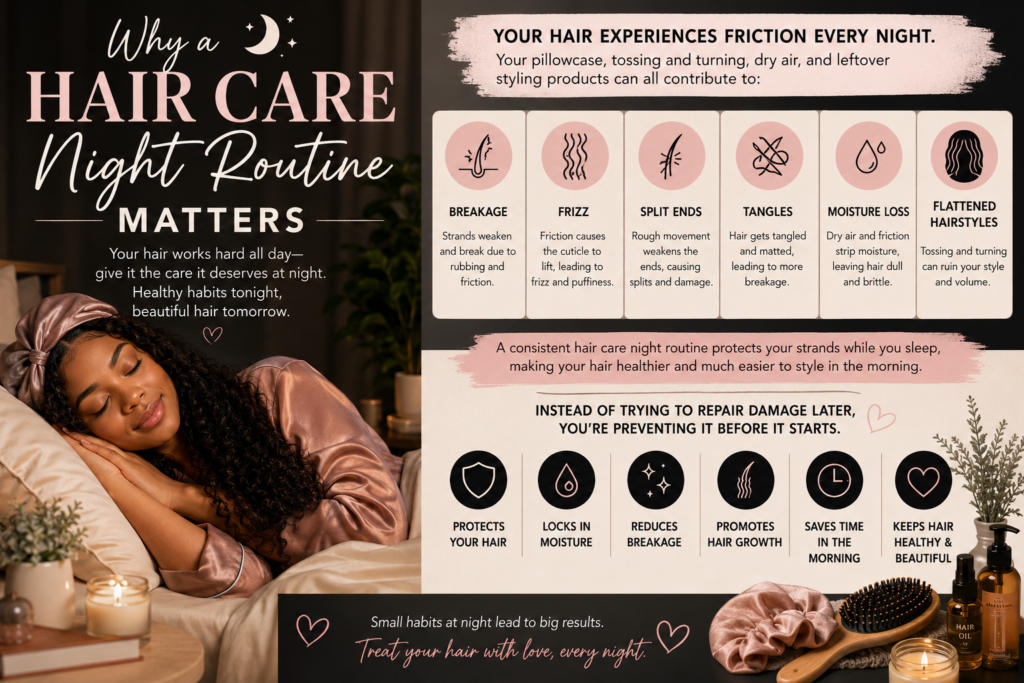
Your hair experiences friction every night. Your pillowcase, tossing and turning, dry air, and leftover styling products can all contribute to:
- Breakage
- Frizz
- Split ends
- Tangles
- Moisture loss
- Flattened hairstyles
A consistent hair care night routine protects your strands while you sleep, making your hair healthier and much easier to style in the morning.
Instead of trying to repair damage later, you’re preventing it before it starts.
The Best Hair Care Night Routine (Step by Step)
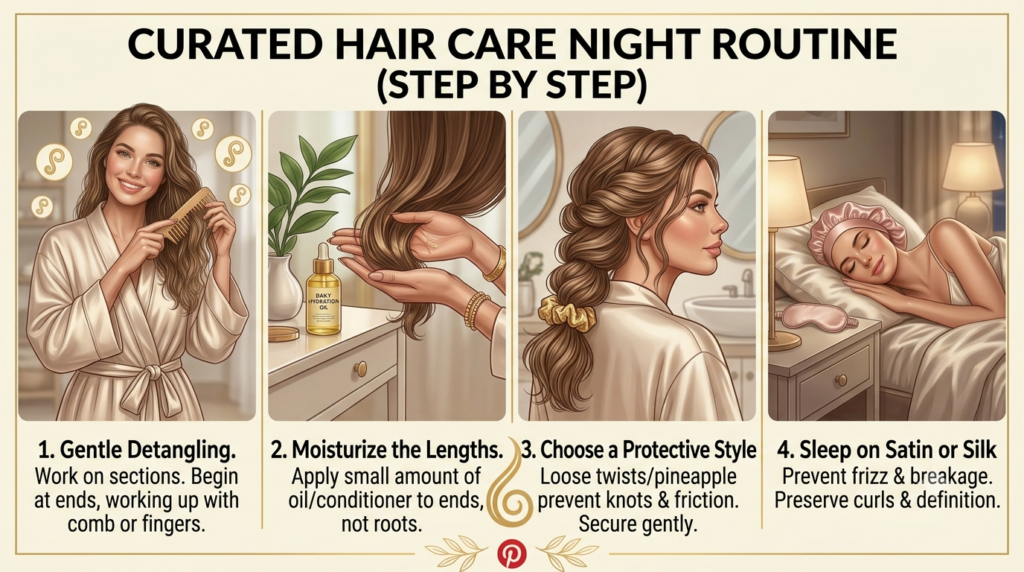
1. Gently Detangle Your Hair
Never go to bed with tangled hair.
Use a wide-tooth comb or detangling brush, beginning at the ends and gradually working upward toward the roots. Pulling through knots can cause unnecessary breakage.
If you have curly or coily hair, detangle according to your curl routine—often while slightly damp with a leave-in conditioner.
2. Moisturize the Ends
The oldest part of your hair is usually the ends, making them the driest and most fragile.
Apply a small amount of:
- Leave-in conditioner
- Hair serum
- Lightweight hair oil
- Curl cream
Focus on the mid-lengths and ends rather than the scalp unless you’re doing a scalp treatment.
3. Choose a Protective Hairstyle
Sleeping with loose hair can create knots and friction.
Try one of these protective styles:
- Loose braid
- Loose low ponytail
- Pineapple hairstyle for curls
- Two loose twists
- Soft bun secured without tight elastics
The goal is to protect your hair without pulling on the roots.
4. Sleep on Satin or Silk
Cotton pillowcases absorb moisture and create friction.
A satin or silk pillowcase helps:
- Reduce frizz
- Prevent breakage
- Preserve hairstyles
- Keep curls defined
- Reduce tangles
This small change often produces noticeable improvements.
5. Avoid Sleeping with Soaking Wet Hair
Wet hair is more fragile than dry hair.
Sleeping with very wet hair may lead to:
- More breakage
- Flat roots
- Scalp irritation
- Frizz
- Misshapen hairstyles
If you wash your hair at night, allow it to air dry partially or use a cool blow dryer before bed.
Hair Care After Wash
Your hair care after wash routine determines how healthy your hair stays throughout the week.
Follow these simple steps after every wash:
Step 1: Remove Excess Water
Instead of rubbing your hair with a regular towel, gently squeeze out excess water using:
- A microfiber towel
- A soft cotton T-shirt
This helps reduce frizz and breakage.
Step 2: Apply Leave-In Conditioner
Leave-in conditioners lock in moisture and improve manageability.
Step 3: Add Heat Protectant
If you’re using any heat styling tools, always apply heat protectant first.
Step 4: Detangle Carefully
Comb through your hair while it’s damp using a wide-tooth comb.
Step 5: Style Gently
Apply styling products evenly without overloading your hair.
Hair Care After Wash Checklist
✔ Blot hair gently
✔ Apply leave-in conditioner
✔ Use heat protectant if needed
✔ Detangle
✔ Style
✔ Let hair dry before sleeping
Hair Care Night Tips for Every Hair Type
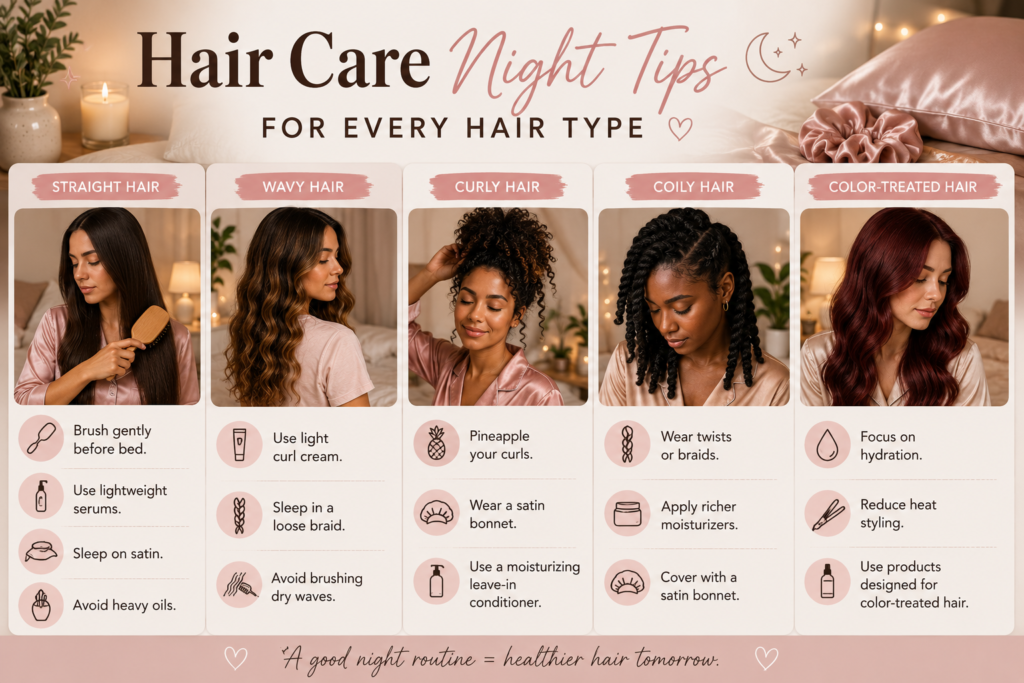
Straight Hair
- Brush gently before bed.
- Use lightweight serums.
- Sleep on satin.
- Avoid heavy oils.
Wavy Hair
- Use light curl cream.
- Sleep in a loose braid.
- Avoid brushing dry waves.
Curly Hair
- Pineapple your curls.
- Wear a satin bonnet.
- Use a moisturizing leave-in conditioner.
Coily Hair
- Wear twists or braids.
- Apply richer moisturizers.
- Cover with a satin bonnet.
Color-Treated Hair
- Focus on hydration.
- Reduce heat styling.
- Use products designed for color-treated hair.
Hair Care Wash Routine
A proper hair care wash routine lays the foundation for healthy hair.
Follow this order:
| Step | Purpose |
|---|---|
| Shampoo | Cleanses scalp |
| Conditioner | Restores moisture |
| Detangle | Prevents knots |
| Leave-in conditioner | Hydrates |
| Heat protectant | Prevents damage |
| Styling products | Defines style |
| Dry gently | Reduces breakage |
One common mistake is washing your hair too frequently.
Overwashing strips natural oils, while washing too little allows buildup to accumulate.
The right schedule depends on your scalp, hair type, and lifestyle.
Hair Care Weekly Routine
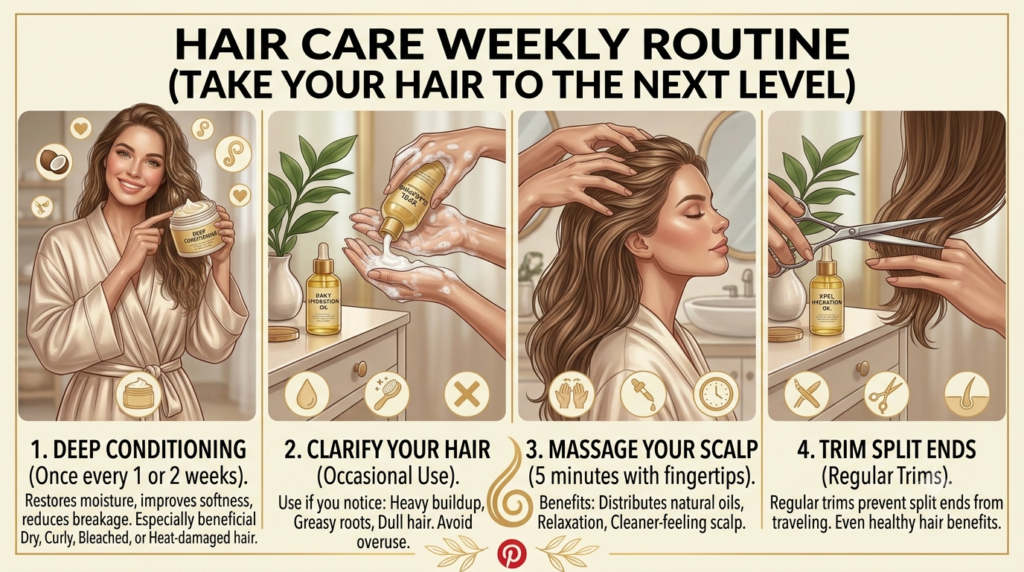
Daily care is important, but weekly treatments can improve your hair even more.
Deep Conditioning
Once every week or two:
- Restores moisture
- Improves softness
- Reduces breakage
- Improves elasticity
Especially beneficial for:
- Dry hair
- Curly hair
- Bleached hair
- Heat-damaged hair
Clarify Your Hair
Use a clarifying shampoo occasionally if you notice:
- Heavy buildup
- Greasy roots
- Dull hair
- Styling products no longer working
Avoid overusing clarifying shampoos, as they can dry out your hair.
Massage Your Scalp
Spend about five minutes massaging your scalp with your fingertips.
Benefits include:
- Better distribution of natural oils
- Relaxation
- Cleaner-feeling scalp
Trim Split Ends
Regular trims help prevent split ends from traveling farther up the hair shaft.
Even healthy hair benefits from occasional trims.
Common Hair Care Night Routine Mistakes
Avoid these habits:
- Sleeping with tight ponytails
- Using too much hair oil
- Skipping detangling
- Rubbing hair with rough towels
- Sleeping on cotton pillowcases
- Going to bed with dripping wet hair
- Ignoring scalp health
Correcting these simple habits can noticeably improve your hair over time.
Morning vs. Night Hair Care
| Morning Routine | Night Routine |
|---|---|
| Refresh hairstyle | Protect hair |
| Smooth flyaways | Prevent friction |
| Apply lightweight products | Restore moisture |
| Heat styling if needed | Protective hairstyle |
| Style for the day | Reduce overnight damage |
Both routines work together to keep your hair healthy.
Easy 10-Minute Hair Care Night Routine
If you’re short on time, try this simple routine:
- Detangle your hair.
- Apply leave-in conditioner to the ends.
- Add one or two drops of lightweight hair oil.
- Put your hair into a loose braid or pineapple.
- Sleep on a satin pillowcase.
Consistency matters more than having a complicated routine.
Signs Your Hair Care Night Routine Is Working
Within several weeks, you may notice:
- Less frizz
- Softer hair
- Fewer tangles
- Easier styling
- Better curl definition
- Less breakage
- Healthier-looking ends
Small nightly habits often produce significant long-term improvements.
Frequently Asked Questions
Should I oil my hair every night?
Not necessarily. Lightweight oils can benefit dry ends, but too much oil may cause buildup. Use only what your hair needs.
Is it okay to sleep with wet hair?
It’s better to let your hair dry at least partially before bed because wet hair is more prone to breakage.
How often should I wash my hair?
It depends on your hair type. Oily hair may need more frequent washing, while curly and coily hair often benefits from washing less often.
What is the best hairstyle for sleeping?
Loose protective styles such as braids, twists, or a pineapple help reduce friction and prevent tangles.
Conclusion
A good hair care night routine doesn’t require expensive products or hours of effort. Just a few consistent habits each evening can help reduce breakage, improve moisture retention, minimize frizz, and leave your hair healthier over time.
Pair your nighttime routine with a thoughtful hair care after wash process, a balanced hair care wash routine, and a regular hair care weekly routine for the best long-term results.
Remember, healthy hair is built through consistency rather than perfection. Start with one or two habits, stick with them, and gradually build a routine that fits your hair type and lifestyle. Your future self—and your hair—will thank you.