Hair Care Products: The Complete Guide to Building the Perfect Hair Care Routine for Every Hair Type
Beautiful hair rarely comes from using one miracle product. Instead, it results from choosing the right hair care products for your hair type, concerns, lifestyle, and budget—and using them consistently.
Walk into any beauty store, and you’ll find shelves filled with shampoos, conditioners, masks, oils, serums, leave-in treatments, scalp scrubs, and styling creams. Add social media recommendations, influencer favorites, and viral Korean hair care routines, and it’s easy to feel overwhelmed.
The good news? You don’t need dozens of products to achieve healthy-looking hair.
This guide breaks down everything you need to know—from everyday essentials to luxury splurges—so you can confidently build a routine that works for your hair. Whether you’re shopping on a tight budget or investing in salon-quality products, you’ll discover practical recommendations, common mistakes to avoid, and tips for making every product work harder.
How to Choose Hair Care Products
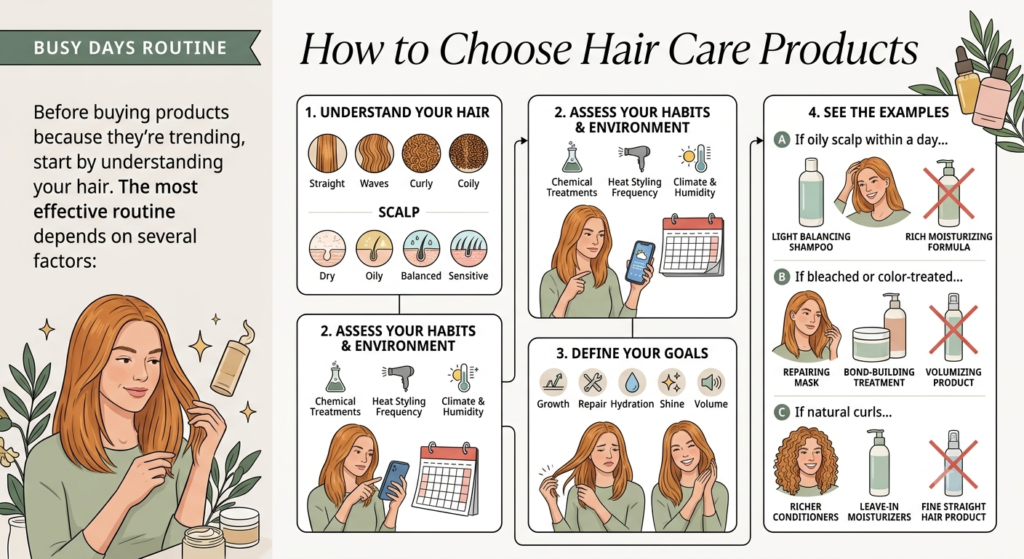
Before buying products because they’re trending, start by understanding your hair.
The most effective routine depends on several factors:
- Hair texture (straight, wavy, curly, coily)
- Hair thickness (fine, medium, thick)
- Scalp condition (dry, oily, balanced, sensitive)
- Chemical treatments
- Heat styling frequency
- Climate and humidity
- Personal goals (growth, repair, hydration, shine, volume)
For example:
If your scalp becomes oily within a day, a lightweight balancing shampoo will likely perform better than a rich moisturizing formula.
If your hair is bleached or color-treated, repairing masks and bond-building treatments are often more beneficial than volumizing products.
Someone with natural curls usually benefits from richer conditioners and leave-in moisturizers than someone with fine, straight hair.
Knowing your hair first saves both money and frustration.
Hair Care Must Haves
Every routine doesn’t need twenty products. Most people can build healthy hair using just a few essentials.
Your Core Routine
- Gentle shampoo
- Conditioner
- Weekly hair mask
- Hair oil or serum
- Heat protectant (if using hot tools)
- Wide-tooth comb
- Satin pillowcase
- Microfiber towel
These products cover cleansing, moisture, protection, and maintenance without overcomplicating your routine.
Hair Care Essentials List
Here’s a practical checklist you can use when building your collection.
| Product | Purpose | How Often |
|---|---|---|
| Shampoo | Cleans scalp | 2–4 times weekly |
| Conditioner | Restores moisture | Every wash |
| Hair Mask | Deep treatment | Weekly |
| Hair Oil | Adds shine & seals moisture | 2–4 times weekly |
| Leave-in Conditioner | Extra hydration | As needed |
| Heat Protectant | Prevents heat damage | Every styling session |
| Dry Shampoo | Refreshes roots | Between washes |
| Scalp Treatment | Supports scalp health | Weekly |
Start with these basics before investing in specialty treatments.
Hair Care Shampoo: Choosing the Right Formula
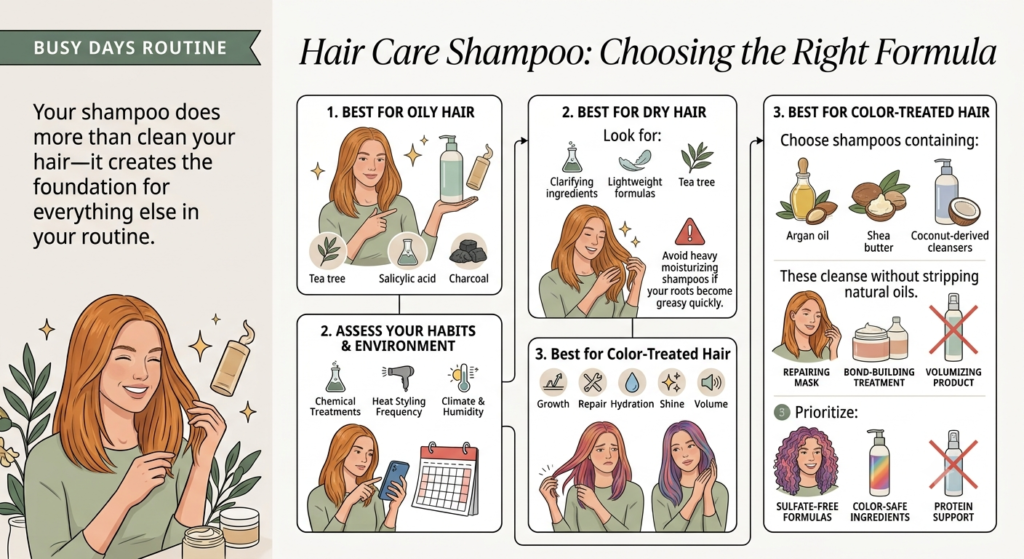
Your shampoo does more than clean your hair—it creates the foundation for everything else in your routine.
Best for Oily Hair
Look for:
- Clarifying ingredients
- Lightweight formulas
- Tea tree
- Salicylic acid
- Charcoal
Avoid heavy moisturizing shampoos if your roots become greasy quickly.
Best for Dry Hair
Choose shampoos containing:
- Argan oil
- Shea butter
- Glycerin
- Coconut-derived cleansers
These cleanse without stripping natural oils.
Best for Color-Treated Hair
Prioritize:
- Sulfate-free formulas
- Color-safe ingredients
- UV protection
- Protein support
Hair Care Mask: Why Weekly Treatments Matter
Hair masks provide intensive nourishment that everyday conditioners cannot.
Benefits include:
- Improved softness
- Reduced breakage
- Better elasticity
- Less frizz
- Enhanced shine
- Easier detangling
Apply masks from mid-length to ends and leave them on according to the instructions. Using too much or leaving them on far longer than recommended doesn’t necessarily improve results.
Hair Care Oil
Hair oils have become one of the most versatile products in modern routines.
Different oils serve different purposes.
Argan Oil
Best for:
- Shine
- Frizz reduction
- Daily finishing
Coconut Oil
Best for:
- Deep conditioning
- Reducing protein loss
- Overnight treatments
Jojoba Oil
Best for:
- Sensitive scalps
- Lightweight moisture
Rosemary Oil
Popular for scalp massages when diluted with a carrier oil. While many people enjoy using it as part of a scalp-care routine, it shouldn’t be viewed as a guaranteed solution for hair growth.
A common mistake is applying too much oil. A few drops are often enough for medium-length hair.
Hair Care Combo
Many brands sell coordinated hair care combos designed to work together.
These usually include:
- Shampoo
- Conditioner
- Hair mask
- Hair serum
Benefits include:
- Compatible formulas
- Easier shopping
- Better value than purchasing separately
- Simplified routines
Combos are especially useful if you’re just starting a routine.
Hair Care Collection
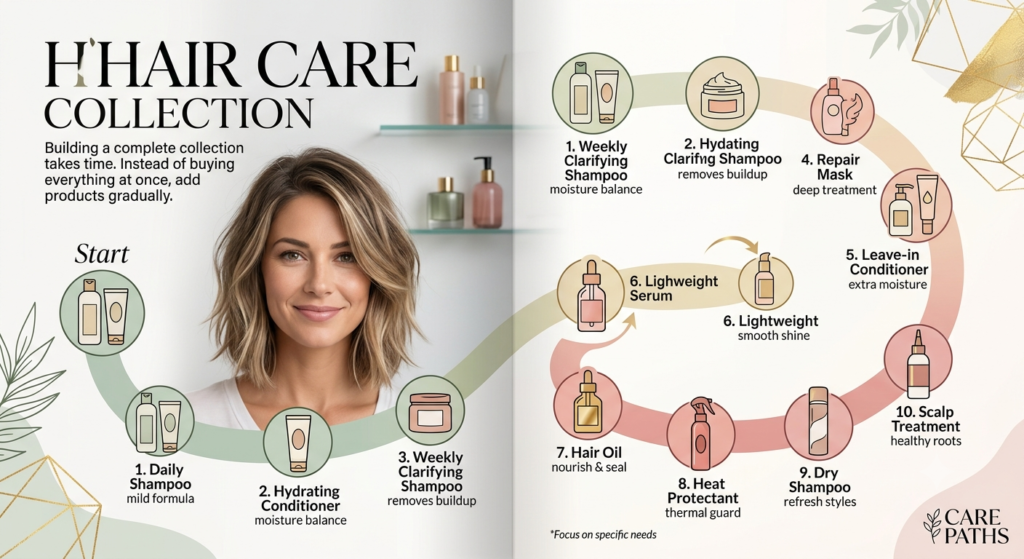
Building a complete collection takes time.
Instead of buying everything at once, add products gradually.
A balanced collection might include:
- Daily shampoo
- Weekly clarifying shampoo
- Hydrating conditioner
- Repair mask
- Leave-in conditioner
- Lightweight serum
- Hair oil
- Heat protectant
- Dry shampoo
- Scalp treatment
Each product should serve a clear purpose rather than duplicate another.
Hair Care Set
Hair care sets are excellent gifts and often provide better value than purchasing products individually.
Many sets are organized around specific concerns, such as:
- Repair
- Hydration
- Volume
- Curl definition
- Color protection
- Scalp care
Travel-sized sets are also ideal for testing products before investing in full sizes.
Hair Care Kit
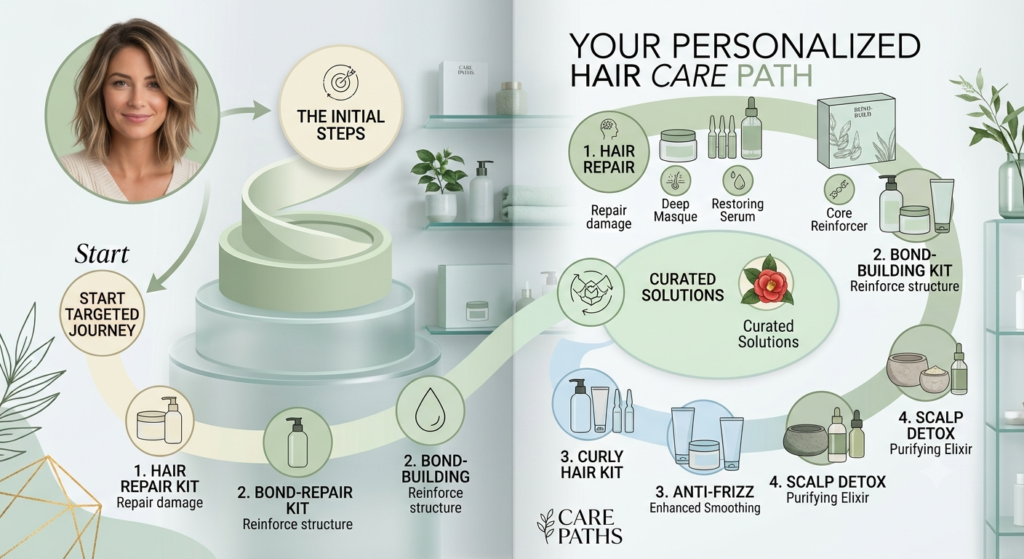
Unlike gift sets, a hair care kit often focuses on solving a particular issue.
Examples include:
- Hair repair kits
- Bond-building kits
- Curly hair kits
- Anti-frizz kits
- Scalp detox kits
Choose one based on your biggest concern rather than trying multiple kits simultaneously.
Hair Care Korean Products
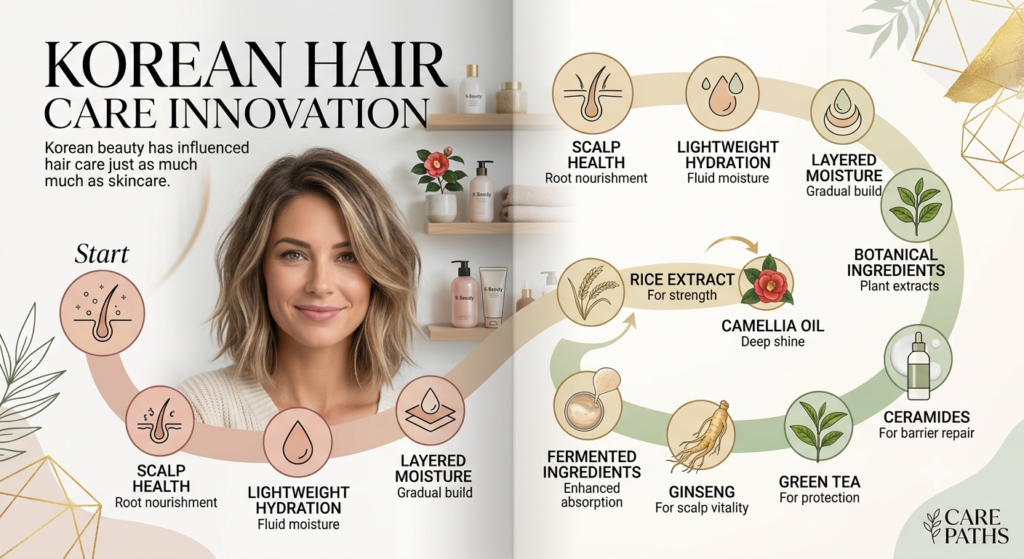
Korean beauty has influenced hair care just as much as skincare.
Many Korean hair care products emphasize:
- Scalp health
- Lightweight hydration
- Layered moisture
- Botanical ingredients
- Daily maintenance
Instead of relying on a single intensive treatment, Korean routines often focus on consistent care through gentle products.
Popular ingredients include:
- Rice extract
- Camellia oil
- Fermented ingredients
- Ginseng
- Green tea
- Ceramides
Xiaohongshu Hair Care Products
The Chinese lifestyle platform Xiaohongshu has become a major source of beauty inspiration worldwide.
Popular trends include:
- Glossy “glass hair”
- Overnight hair oiling
- Layered scalp treatments
- Heatless styling
- Silk bonnet routines
- Hair perfumes
- Hair essence sprays
While many of these trends can be helpful, remember that viral products don’t work equally well for everyone. Always consider your own hair type before following online recommendations.
Hair Care Gisou
Gisou has gained popularity for its honey-infused formulas and luxurious packaging.
Highlights include:
Pros
- Lightweight oils
- Pleasant fragrance
- Adds shine
- Attractive presentation
Considerations
- Premium pricing
- Best suited for finishing rather than repairing severely damaged hair
Hair Care Luxury
Luxury hair care often includes higher concentrations of conditioning ingredients, refined fragrances, elegant textures, and extensive research.
Luxury doesn’t automatically mean better for every person, but it can enhance the experience of caring for your hair.
Premium products often excel in:
- Texture
- Fragrance
- Packaging
- Salon-quality finish
- Advanced repair technologies
Best Hair Care Under 500
Great hair care doesn’t have to be expensive.
Shopping tips include:
- Buy larger bottles during sales.
- Look for value bundles.
- Compare cost per milliliter rather than shelf price.
- Prioritize shampoo and conditioner before specialty products.
- Use masks weekly instead of daily.
A thoughtful routine usually outperforms a shelf full of random purchases.
Hair Care Under 100
If your budget is extremely limited:
Focus on:
- One gentle shampoo
- One conditioner
- One affordable oil
Healthy habits matter just as much as products.
Protect your hair while sleeping, minimize excessive heat, and trim split ends regularly.
Hair Care Low Budget
Affordable routines often succeed because they’re consistent.
Budget priorities should be:
- Shampoo
- Conditioner
- Hair oil
- Weekly mask
- Heat protectant
Skip products that promise unrealistic overnight transformations.
Hair Care Garnier
Garnier is widely known for accessible, budget-friendly formulas.
Popular strengths include:
- Everyday hydration
- Easy availability
- Fruit-inspired ingredients
- Good value
Suitable for beginners looking to build a basic routine.
Hair Care L’Oréal Elseve
Elseve offers targeted collections for:
- Damaged hair
- Color-treated hair
- Long hair
- Dry hair
- Frizzy hair
Its broad range makes it easier to match products to specific concerns.
Hair Care Dove
Dove focuses on nourishment and softness.
Many people enjoy Dove products because they provide:
- Creamy textures
- Affordable pricing
- Gentle cleansing
- Moisture-focused formulas
They’re often a good choice for dry or damaged hair, though those with very oily scalps may prefer lighter alternatives.
Hair Care Kérastase
Kérastase is a salon-quality brand known for highly specialized collections.
Strengths include:
- Customized routines
- Advanced repair technologies
- Premium ingredients
- Professional reputation
The higher price may be worthwhile if your hair has significant damage or you’ve struggled to find effective products.
Hair Care OUAI
OUAI combines performance with modern aesthetics.
Known for:
- Lightweight formulas
- Signature fragrances
- Styling products
- Leave-in conditioners
- Detox shampoos
It’s particularly popular among people who frequently heat-style their hair.
Hair Care Makarizo
Makarizo has built a loyal following for treatments designed to nourish and strengthen hair.
Its product range includes:
- Hair creams
- Masks
- Vitamins
- Scalp treatments
Many users appreciate its focus on repairing dry and chemically treated hair.
Hair Care Yves Rocher
Yves Rocher emphasizes plant-based ingredients and botanical extracts.
Popular benefits include:
- Gentle cleansing
- Nature-inspired formulas
- Pleasant fragrances
- Eco-conscious positioning
These products often appeal to people looking for milder daily care.
Xpel Hair Care
Xpel offers affordable products that cover many everyday hair needs.
The lineup includes:
- Hair oils
- Masks
- Serums
- Conditioners
- Styling products
Many shoppers choose Xpel for its accessible pricing and wide availability.
Xpel Hair Care Shampoo
Xpel shampoos are designed for different hair concerns, including hydration, repair, and everyday cleansing.
When choosing one:
- Match it to your scalp type.
- Avoid selecting solely based on fragrance.
- Pair it with a compatible conditioner for better results.
Common Hair Care Mistakes
Even the best products can’t compensate for habits that damage hair.
Avoid these common mistakes:
- Washing with very hot water
- Applying conditioner directly to the scalp (unless directed)
- Skipping heat protectant
- Overusing dry shampoo
- Brushing soaking wet hair aggressively
- Constantly switching products before giving them time to work
- Using too much product, which can lead to buildup and weigh hair down
Consistency usually produces better long-term results than constantly chasing the latest trend.
Building Your Ideal Hair Care Routine
Morning
- Detangle gently.
- Apply a lightweight serum or oil if needed.
- Use heat protectant before styling.
- Protect hair from excessive sun exposure with a hat or UV-protective products if you’ll be outdoors for long periods.
Wash Day
- Shampoo your scalp thoroughly.
- Rinse completely.
- Apply conditioner to the mid-lengths and ends.
- Use a hair mask once a week in place of your regular conditioner if recommended.
- Finish with cool or lukewarm water to help smooth the hair cuticle.
Evening
- Brush gently to remove tangles.
- Apply a few drops of oil to dry ends if needed.
- Sleep on a satin or silk pillowcase to reduce friction and help minimize breakage.
Frequently Asked Questions
How many hair care products do I really need?
Most people can maintain healthy hair with five core products: shampoo, conditioner, a weekly mask, a lightweight oil or serum, and a heat protectant if they use hot tools.
Should I change my shampoo regularly?
Not necessarily. If your shampoo continues to clean your scalp effectively and your hair feels healthy, there’s no need to switch. You may choose a clarifying shampoo occasionally if you notice buildup from styling products.
Are expensive hair care products always better?
No. Many affordable products perform very well. The best product is the one that suits your hair type and is used consistently.
How often should I use a hair mask?
For most hair types, once a week is sufficient. Very dry, curly, or chemically treated hair may benefit from more frequent treatments, while fine hair may need them less often to avoid weighing it down.
Can hair oils make my hair greasy?
Yes, if you apply too much or use a heavy oil on fine hair. Start with just a few drops on the mid-lengths and ends, then adjust based on your hair’s needs.
Conclusion
Choosing the right hair care products doesn’t require following every trend or filling your bathroom with dozens of bottles. The most effective routine is one that’s tailored to your hair type, realistic for your lifestyle, and consistent over time.
Start with a solid foundation: a gentle shampoo, a nourishing conditioner, a weekly treatment, and a protective styling product if you use heat. As your needs change, you can add targeted products like scalp treatments, leave-in conditioners, or bond-repair masks. Whether you prefer affordable drugstore finds, Korean innovations, or luxury salon brands, remember that healthy hair is built through regular care—not overnight transformations.
Focus on products that solve your specific concerns, introduce new items one at a time, and give each product several weeks to show results. With a thoughtful routine and realistic expectations, you’ll be well on your way to stronger, shinier, and healthier-looking hair.