Somewhere between the ten-step Korean skincare routine and the $80 serum aisle, a lot of people forgot something simple: some of the most effective skin care ingredients are already sitting in the kitchen.
Rice water has been part of skin routines in parts of Asia for centuries — it’s not a TikTok invention, even though it trends there every few months. Coffee grounds are a byproduct that estheticians quietly repurpose into scrub bases rather than throwing away. Vaseline — plain, unglamorous petroleum jelly — is still recommended by dermatologists more often than most influencers admit, usually right after they’ve finished promoting a $60 moisturizer.
This guide isn’t a list of vague “try honey and yogurt!” tips you’ve read fifty times before. It’s a practical breakdown of how to actually use rice, coffee, Vaseline, and a few other pantry staples correctly — including the specific ratios, timing mistakes, skin-type considerations, and storage details that most articles skip entirely. By the end, you’ll have a working homemade skin care routine, not just a Pinterest board full of ideas you’ll never try.
One more thing before diving in: homemade skin care has real limits, and this guide won’t pretend otherwise. These recipes are best understood as supportive tools — things that improve texture, calm irritation, or add a boost between your regular cleanser, moisturizer, and SPF. They are not replacements for treating diagnosed skin conditions, and anything that doesn’t improve within a few weeks, or that gets worse, is worth a dermatologist visit rather than a new recipe.
Why Homemade Skin Care Actually Works (When Done Right)
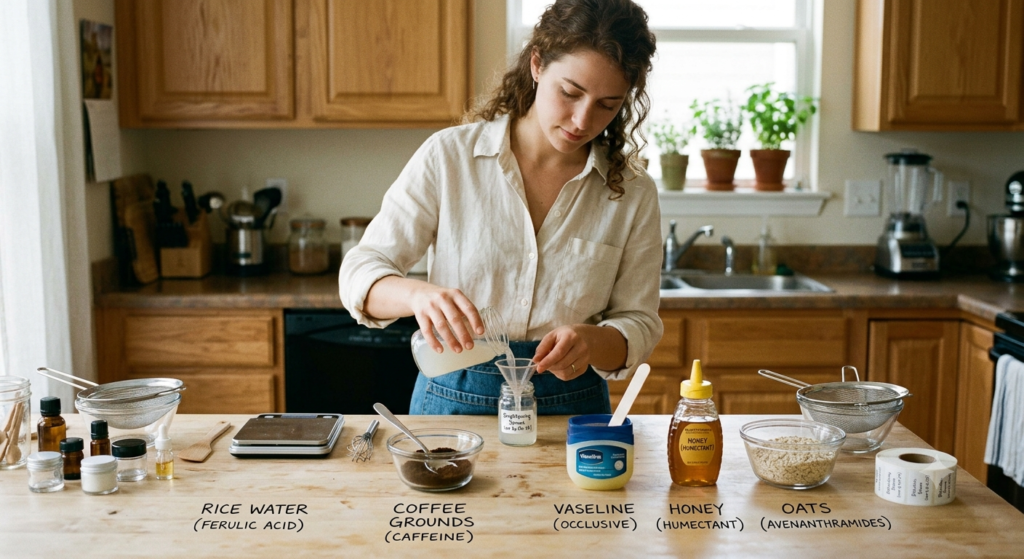
Homemade skin care isn’t magic — it works because several kitchen ingredients contain the same active compounds found in commercial products, just in less concentrated, less stable form.
- Rice contains ferulic acid and allantoin, both of which show up in brightening serums sold at a markup of ten times the cost of a bag of rice.
- Coffee grounds contain caffeine, which temporarily tightens blood vessels and reduces puffiness — the same reason caffeine shows up in eye creams and cellulite treatments.
- Petroleum jelly (Vaseline) doesn’t add moisture, but it locks existing moisture in by forming an occlusive barrier — which is exactly why dermatologists recommend it for eczema-prone skin, post-procedure healing, and even for treating diaper rash in infants.
- Honey has natural humectant properties, meaning it draws moisture into the skin, along with mild antibacterial qualities from its low water content and acidity.
- Oats contain avenanthramides, plant compounds studied specifically for their ability to calm itching and redness, which is why colloidal oatmeal appears in eczema creams.
The catch — and this is the part most homemade skincare content leaves out — is that these ingredients are unstable and unpreserved once mixed. A store-bought serum with 10% ferulic acid has been stabilized in a lab to stay active for months. A cup of rice water starts changing chemically within 48 hours at room temperature. That doesn’t make it useless; it just means homemade skin care rewards small, fresh batches and consistent use over trying to “stock up” the way you would with bottled products.
Skin Care With Rice: The Most Overhyped (and Underused) Ingredient
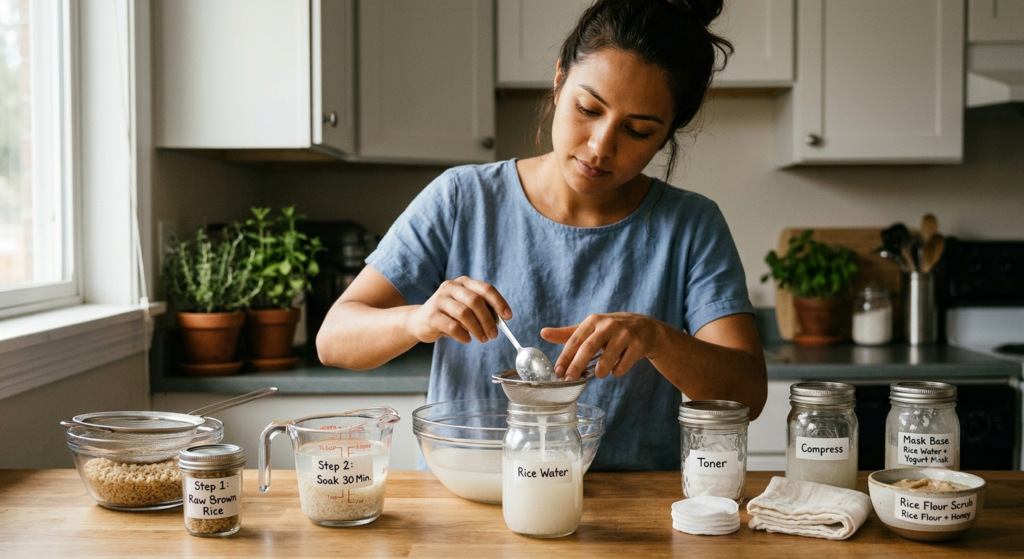
Rice water gets talked about constantly, but most people make it wrong, which is why they don’t see results — and then assume the ingredient doesn’t work rather than realizing the method was off.
How to Make Rice Water Correctly
- Rinse ½ cup of raw rice once to remove surface dust (don’t over-rinse — you’ll wash away the starch you actually want, which defeats the purpose entirely).
- Soak the rice in 2 cups of water for 30 minutes. White rice and brown rice both work, though white rice produces a slightly milkier, more concentrated liquid.
- Strain the water into a clean jar, pressing gently on the rice to release a bit more starch.
- Refrigerate and use within 3–4 days. It ferments and starts smelling sour after that point, which means it’s no longer suitable for your skin — a sour smell is your clearest signal to toss it and start a new batch.
Common mistake: People let rice water sit at room temperature for 24 or more hours to “ferment” it for extra benefits, then apply it directly to broken-out or sensitive skin. Fermented rice water is more potent — some traditions use it specifically for this reason — but it’s also more likely to irritate reactive skin because fermentation increases acidity. If you have sensitive or acne-prone skin, stick with fresh, unfermented rice water and save the fermented version for skin that already tolerates actives well.
How to Use It
- As a toner: Pat onto clean skin with a cotton pad before moisturizer, morning or night.
- As a rinse: Use as a final hair or face rinse for a subtle smoothing effect — this is actually the more traditional use, predating its popularity as a facial toner.
- As a mask base: Mix 2 tablespoons rice water with 1 tablespoon plain yogurt for a brightening mask, left on for 15 minutes.
- As a compress: Soak a clean cloth in chilled rice water and press over the face for 5–10 minutes for a cooling, de-puffing effect — especially useful in warmer climates or after sun exposure.
Rice Flour Scrub (For Texture, Not Rice Water)
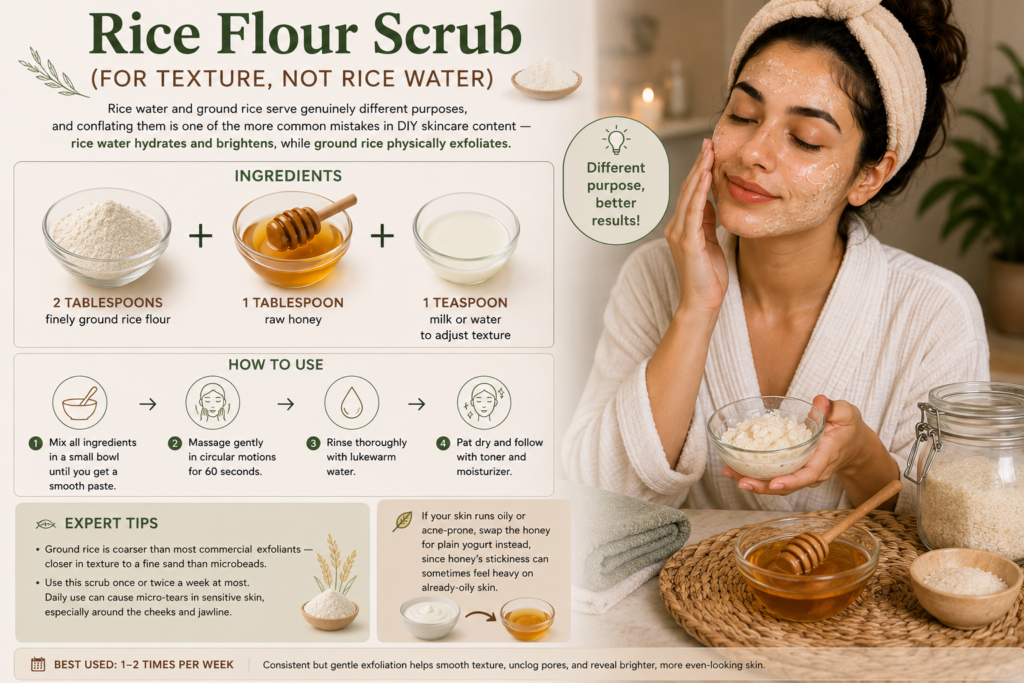
Rice water and ground rice serve genuinely different purposes, and conflating them is one of the more common mistakes in DIY skincare content — rice water hydrates and brightens, while ground rice physically exfoliates.
- 2 tablespoons finely ground rice flour
- 1 tablespoon raw honey
- 1 teaspoon milk or water to adjust texture
Massage gently in circular motions for 60 seconds, rinse with lukewarm water. Ground rice is coarser than most commercial exfoliants — closer in texture to a fine sand than the microbeads found in some scrubs — so use it once or twice a week at most. Daily use can cause micro-tears in sensitive skin, particularly around the cheeks and jawline where the skin is thinner than on the forehead or nose.
If your skin runs oily or acne-prone, swap the honey for plain yogurt instead, since honey’s stickiness can sometimes feel heavy on already-oily skin.
Skin Care With Coffee: Beyond the Basic Scrub

Coffee is the ingredient everyone’s tried once — usually as a body scrub gifted at a holiday party — and few people use correctly or consistently after that.
The Caffeine Effect (What It Actually Does)
Caffeine temporarily constricts blood vessels, which is why coffee-based treatments reduce the appearance of puffiness and redness. This effect is real but temporary, lasting a few hours at most — it’s cosmetic, not corrective, so don’t expect a coffee mask to permanently fix dark circles caused by genetics or lack of sleep. Where it does help meaningfully is short-term: before a photo, an event, or simply to look less tired first thing in the morning.
Coffee Scrub Recipe
- 2 tablespoons used coffee grounds (cooled completely — this matters more than people realize, since warm grounds can feel uncomfortably hot on skin)
- 1 tablespoon coconut oil or olive oil
- Optional: 1 teaspoon brown sugar for extra polish on rougher areas like heels
Mix into a paste, apply to damp skin, massage for 1–2 minutes focusing on rougher areas such as elbows, knees, and feet. Coffee grounds are generally too abrasive for daily facial use, and their irregular, jagged shape (compared to smooth commercial exfoliating beads) makes them more likely to cause micro-tears if overused.
Where people go wrong: Using coffee scrubs on the face more than once a week, or scrubbing too hard in an attempt to “really exfoliate.” Coffee grounds don’t need pressure to work — the friction from the grounds themselves is enough. Body use can be more frequent, around 2–3 times weekly, since skin on the body is generally thicker and more resilient than facial skin.
Coffee Under-Eye Treatment
Mix 1 teaspoon finely ground coffee with 1 teaspoon plain yogurt. Apply a very thin layer under the eyes, being careful to avoid direct contact with the eye itself, leave for 8–10 minutes, and rinse with cool water using your ring finger to pat rather than rub. This is a temporary de-puffing trick, not a wrinkle treatment — being upfront about what it can and can’t do is more useful than letting the “coffee cures dark circles” myth persist.
Coffee and Cocoa Body Scrub (An Underused Variation)
For a slightly more luxurious version suited to drier skin, combine 2 tablespoons coffee grounds, 1 tablespoon unsweetened cocoa powder, and 2 tablespoons melted coconut oil. The cocoa butter naturally present in cocoa powder adds a light moisturizing layer that plain coffee scrubs lack, making this version better suited for use in colder months or on already-dry skin types.
Skin Care Home Remedies: Face Masks That Are Actually Worth Making
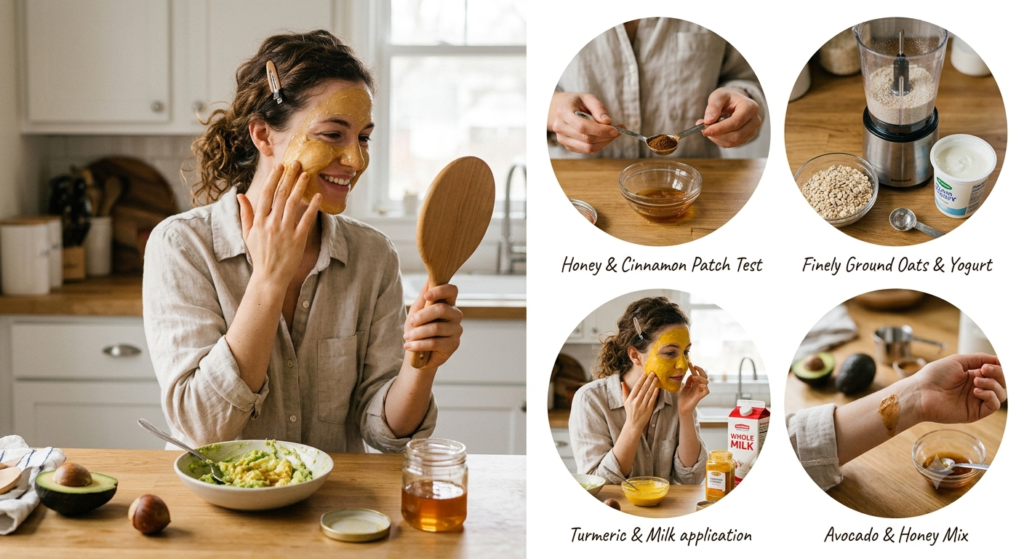
Not every homemade mask deserves the hype it gets online. Here are the ones that are worth your kitchen ingredients, organized by the specific skin concern each one addresses — because using the wrong mask for your skin type is one of the most common reasons people give up on DIY skincare altogether.
| Mask Type | Best For | Key Ingredients | Time |
|---|---|---|---|
| Honey + Cinnamon | Mild acne, dullness | Raw honey, ground cinnamon | 10–15 min |
| Oatmeal + Yogurt | Sensitive, irritated skin | Ground oats, plain yogurt | 15 min |
| Turmeric + Milk | Uneven tone, brightening | Turmeric, whole milk | 10 min max |
| Avocado + Honey | Dry, flaky skin | Ripe avocado, raw honey | 15–20 min |
| Egg White + Lemon | Temporary tightening, oil control | Egg white, lemon juice | 10 min |
Honey and Cinnamon Mask
Honey has mild antibacterial properties, and cinnamon has demonstrated some antimicrobial effect in studies — together they’re a reasonable, if not miraculous, option for occasional breakouts rather than a cure for chronic acne.
- 1 tablespoon raw honey
- ¼ teaspoon ground cinnamon (no more — cinnamon is one of the more common natural irritants, and more isn’t better here)
Patch test first, and don’t skip this step just because the ingredients are “natural.” Reactions to cinnamon aren’t always immediate; some people notice redness or a burning sensation only after 10–15 minutes, so testing on your inner wrist a full day ahead gives you a more accurate read than testing right before applying it to your face.
Oatmeal and Yogurt Mask
This is the one to reach for when skin feels tight, red, or reactive — arguably the most universally safe mask in this entire guide. Oats contain compounds that soothe irritation, and yogurt’s lactic acid gently exfoliates without the harshness of a physical scrub, making this combination well suited to skin that’s currently inflamed rather than skin that just needs general maintenance.
- 2 tablespoons finely ground oats (a coffee grinder or blender works well for this)
- 2 tablespoons plain, unsweetened yogurt
Leave on for 15 minutes, rinse with lukewarm, not hot, water to avoid stripping the skin further while it’s already sensitive. For an added calming boost, a few drops of plain aloe vera gel can be mixed in for skin that’s recently been sunburned or windburned.
Turmeric and Milk Mask
Turmeric can genuinely brighten skin over time thanks to curcumin, its primary active compound, but it stains — badly, and often unpredictably depending on your skin’s pH and oil levels. Two things most articles about this mask leave out entirely:
- Use whole milk, not water, to help dilute the pigment and reduce staining. The fat content in whole milk binds with turmeric slightly differently than water does, resulting in a less intense stain.
- Leave it on for no more than 10 minutes. Longer application dramatically increases the chance of a yellow tint that can take several days to fully fade, especially on fair or sensitive skin.
If staining does happen despite these precautions, a gentle cleanse followed by a light layer of oil-based makeup remover, then a regular face wash, tends to lift residual color faster than washing with water alone.
Avocado and Honey Mask
Avocado is genuinely rich in fatty acids and vitamin E, making it one of the better options for skin that’s dry, flaky, or feeling tight after sun or wind exposure — a mask this guide’s earlier version left out despite it being one of the more effective options for dry skin specifically.
- Half a ripe avocado, mashed until smooth
- 1 tablespoon raw honey
Apply a thick layer, leave for 15–20 minutes, and rinse with lukewarm water. Because avocado is rich and heavy, this mask isn’t ideal for oily or acne-prone skin, where it can feel greasy and potentially contribute to clogged pores.
Egg White and Lemon Mask
This one is more of a short-term “quick fix” than a long-term treatment, useful before an event when you want a temporary tightening effect and reduced shine.
- 1 egg white, whisked until slightly frothy
- A few drops of lemon juice
Apply a thin layer, avoiding the eye area, and let dry for about 10 minutes before rinsing. The tightening sensation is temporary — it comes from the egg white drying and contracting slightly on the skin’s surface, not from any lasting structural change. Anyone with an egg allergy should obviously skip this one, and citrus can increase sun sensitivity, so daytime use should always be followed with SPF.
Skin Care Vaseline Products: The Ingredient Dermatologists Actually Recommend
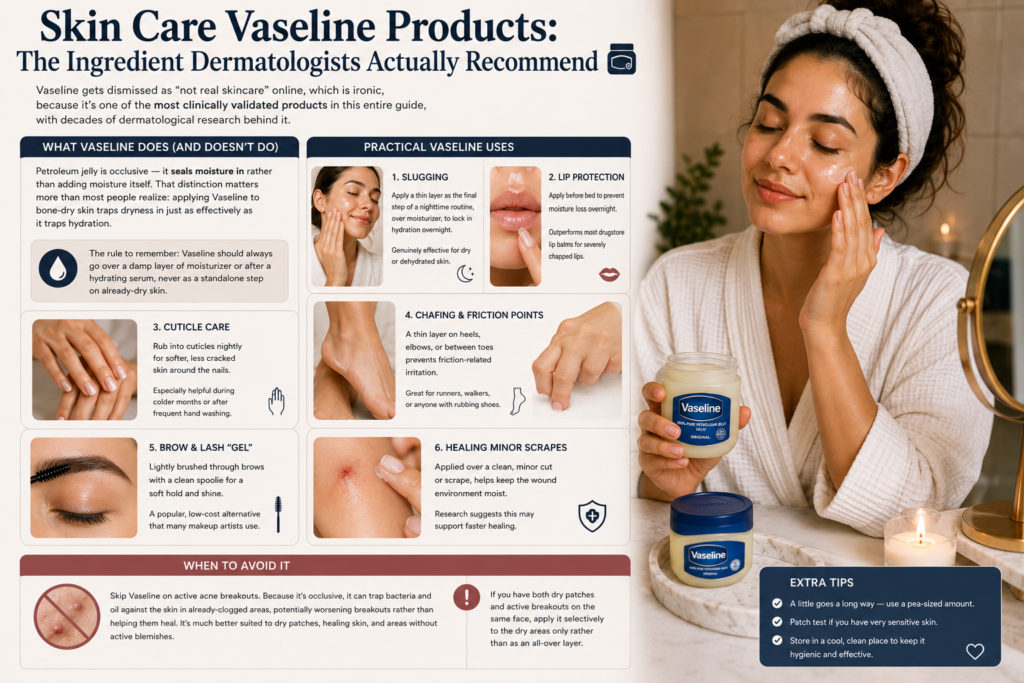
Vaseline gets dismissed as “not real skincare” online, which is ironic, because it’s one of the most clinically validated products in this entire guide, with decades of dermatological research behind it.
What Vaseline Does (and Doesn’t Do)
Petroleum jelly is occlusive — it seals moisture in rather than adding moisture itself. That distinction matters more than most people realize: applying Vaseline to bone-dry skin traps dryness in just as effectively as it traps hydration. The rule to remember is that Vaseline should always go over a damp layer of moisturizer or after a hydrating serum, never as a standalone step on already-dry skin.
Practical Vaseline Uses
- Slugging: Apply a thin layer as the final step of a nighttime routine, over moisturizer, to lock in hydration overnight. Popularized through Korean skincare routines, this is genuinely effective for dry or dehydrated skin, though it can feel too heavy for naturally oily skin types.
- Lip protection: Apply before bed to prevent moisture loss overnight — in practice, this tends to outperform most drugstore lip balms for severely chapped lips, since balms often contain menthol or camphor, which can actually worsen dryness for some people.
- Cuticle care: Rub into cuticles nightly for softer, less cracked skin around the nails, especially helpful during colder months or after frequent hand washing.
- Chafing and friction points: A thin layer on heels, elbows, or between toes prevents friction-related irritation, which is particularly useful for anyone who runs, walks long distances, or wears shoes that rub.
- Eyebrow and eyelash “gel”: Lightly brushed through brows with a clean spoolie for a soft hold and shine — a popular, low-cost alternative to brow gel that a surprising number of makeup artists actually use.
- Healing minor scrapes: Applied over a clean, minor cut or scrape, Vaseline can help keep the wound environment moist, which some research suggests supports faster healing than letting a wound dry out and scab.
When to Avoid It
Skip Vaseline on active acne breakouts. Because it’s occlusive, it can trap bacteria and oil against the skin in already-clogged areas, potentially worsening breakouts rather than helping them heal. It’s much better suited to dry patches, healing skin, and areas without active blemishes. If you have both dry patches and active breakouts on the same face, apply it selectively to the dry areas only rather than as an all-over layer.
Skin Care Recipes: A Quick-Reference Weekly Routine
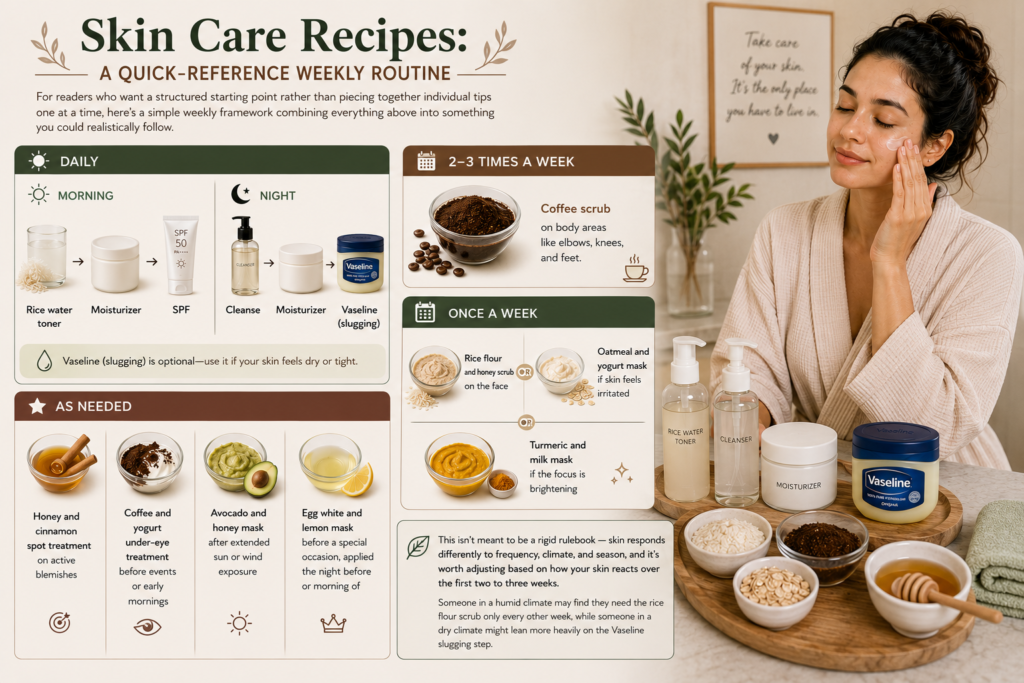
For readers who want a structured starting point rather than piecing together individual tips one at a time, here’s a simple weekly framework combining everything above into something you could realistically follow.
Daily
- Morning: Rice water toner, moisturizer, SPF
- Night: Cleanse, moisturizer, Vaseline (slugging) if skin feels dry
2–3 Times a Week
- Coffee scrub on body areas like elbows, knees, and feet
Once a Week
- Rice flour and honey scrub on the face
- Oatmeal and yogurt mask if skin feels irritated, or turmeric and milk mask if the focus is brightening
As Needed
- Honey and cinnamon spot treatment on active blemishes
- Coffee and yogurt under-eye treatment before events or early mornings
- Avocado and honey mask after extended sun or wind exposure
- Egg white and lemon mask before a special occasion, applied the night before or morning of
This isn’t meant to be a rigid rulebook — skin responds differently to frequency, climate, and season, and it’s worth adjusting based on how your skin reacts over the first two to three weeks. Someone in a humid climate may find they need the rice flour scrub only every other week, while someone in a dry climate might lean more heavily on the Vaseline slugging step.
Skin Care Home Tips: Mistakes That Undo Your Results
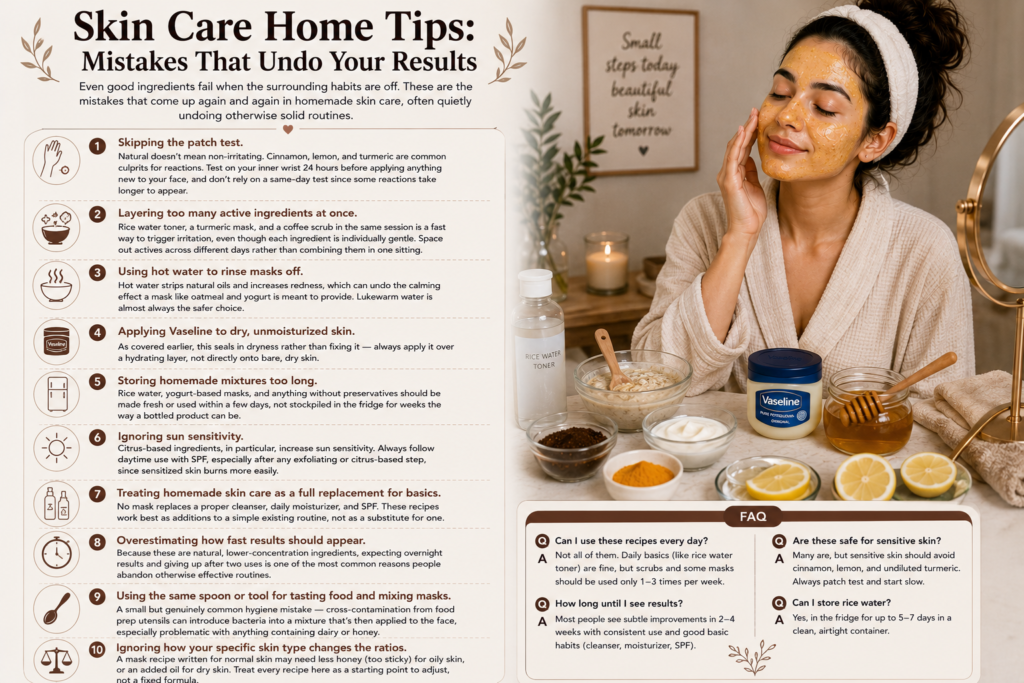
Even good ingredients fail when the surrounding habits are off. These are the mistakes that come up again and again in homemade skin care, often quietly undoing otherwise solid routines.
- Skipping the patch test. Natural doesn’t mean non-irritating. Cinnamon, lemon, and turmeric are common culprits for reactions. Test on your inner wrist 24 hours before applying anything new to your face, and don’t rely on a same-day test since some reactions take longer to appear.
- Layering too many active ingredients at once. Rice water toner, a turmeric mask, and a coffee scrub in the same session is a fast way to trigger irritation, even though each ingredient is individually gentle. Space out actives across different days rather than combining them in one sitting.
- Using hot water to rinse masks off. Hot water strips natural oils and increases redness, which can undo the calming effect a mask like oatmeal and yogurt is meant to provide. Lukewarm water is almost always the safer choice.
- Applying Vaseline to dry, unmoisturized skin. As covered earlier, this seals in dryness rather than fixing it — always apply it over a hydrating layer, not directly onto bare, dry skin.
- Storing homemade mixtures too long. Rice water, yogurt-based masks, and anything without preservatives should be made fresh or used within a few days, not stockpiled in the fridge for weeks the way a bottled product can be.
- Ignoring sun sensitivity. Citrus-based ingredients, in particular, increase sun sensitivity. Always follow daytime use with SPF, especially after any exfoliating or citrus-based step, since sensitized skin burns more easily.
- Treating homemade skin care as a full replacement for basics. No mask replaces a proper cleanser, daily moisturizer, and SPF. These recipes work best as additions to a simple existing routine, not as a substitute for one.
- Overestimating how fast results should appear. Because these are natural, lower-concentration ingredients, expecting overnight results and giving up after two uses is one of the most common reasons people abandon otherwise effective routines.
- Using the same spoon or tool for tasting food and mixing masks. A small but genuinely common hygiene mistake — cross-contamination from food prep utensils can introduce bacteria into a mixture that’s then applied to the face, especially problematic with anything containing dairy or honey.
- Ignoring how your specific skin type changes the ratios. A mask recipe written for normal skin may need less honey (too sticky) for oily skin, or an added oil for dry skin. Treat every recipe here as a starting point to adjust, not a fixed formula.
FAQ
Can I use rice water and coffee scrub on the same day? It’s better to space them out. Rice water is gentle enough for daily use, but pairing it with an exfoliating coffee scrub on the same day can be too much for sensitive skin. Use the coffee scrub on non-toner days, or apply it in the evening while keeping rice water as a morning-only step.
Is Vaseline comedogenic, meaning does it clog pores? Pure petroleum jelly is actually non-comedogenic on its own — it’s the occlusion effect on already-oily or acne-prone areas that causes issues, not the ingredient itself directly clogging pores. This is a nuance that gets lost in a lot of skincare content, where Vaseline is sometimes blamed for breakouts it didn’t actually cause.
How long do homemade skin care recipes actually take to show results? Most people see subtle changes, such as softness, reduced puffiness, or mild brightening, within 2 to 3 weeks of consistent use. Homemade recipes are lower concentration than commercial products, so patience matters more here than it would with a prescription-strength treatment.
Can I make these recipes in bulk to save time? Rice flour scrub and coffee scrub bases can be mixed in slightly larger batches and stored in an airtight container for about a week, since they don’t contain dairy. Anything containing yogurt, milk, egg, or rice water should be made fresh each time, since dairy and starch-based mixtures spoil quickly even when refrigerated.
Is it safe to combine several masks from this list into one custom recipe? Generally yes, as long as you’re not layering multiple exfoliants or multiple potential irritants like cinnamon and lemon together. A safe example would be combining oatmeal with a small amount of honey for a calming-and-hydrating hybrid mask, since both ingredients are gentle.
Conclusion
Homemade skin care isn’t about replacing your entire routine with things from the pantry — it’s about knowing which kitchen staples genuinely earn a place in your skincare cabinet, and using them correctly and consistently. Rice water works best fresh and gentle, not fermented and forgotten in the back of the fridge. Coffee is a tool for puffiness and texture, not a daily face scrub. Vaseline is a legitimate barrier repair tool when it’s layered over moisture, not applied straight onto dry skin as a shortcut.
Start small: pick one recipe from this guide — rice water toner or a Vaseline slugging routine are the easiest entry points for most people — and give it two full weeks before adding anything else. Homemade skin care rewards consistency far more than variety, and the biggest, most noticeable results usually come from doing one or two things correctly and repeatedly, rather than trying every recipe in this guide at once.