Somewhere between “I just want more volume” and “I need a completely new hair color by Friday,” most people hit the same wall: there are too many options, too much conflicting advice, and no clear starting point.
Clip-ins, tape-ins, sew-ins, lace fronts, synthetic wigs, human hair units, wig grips, extension hair care kits — the hair world has quietly built an entire ecosystem, and almost none of it is explained in plain language anywhere.
This guide fixes that. Whether you’re trying to add length for a wedding, cover thinning spots, experiment with a new color without commitment, or just want a low-maintenance way to switch up your look on busy mornings, you’ll walk away knowing exactly which method fits your life, what accessories actually matter, and which mistakes cost people the most money and the most hair damage.
No fluff. No “it depends on your preference” cop-outs. Just the real breakdown.
Hair Extensions vs. Wigs: Which One Actually Fits Your Life?
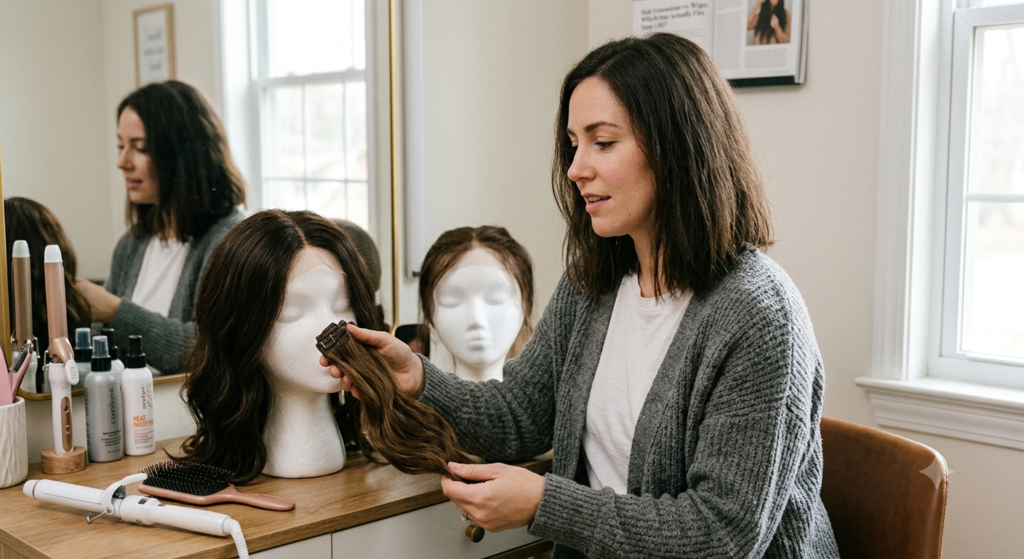
This is the first fork in the road, and most guides skip it entirely by assuming you already know which one you want. You probably don’t — and that’s fine.
Choose hair extensions if:
- You have hair you like the base texture of, and you just want more of it (length, volume, or both)
- You want a natural blend with your own scalp showing through the part
- You’re comfortable with a 30–90 minute install or clip-in routine
- You want the option to style your real roots and the extensions together (curling, straightening, updos)
Choose a wig if:
- You’re dealing with significant hair loss, alopecia, thinning, or post-chemo regrowth
- You want a dramatic color or length change without touching your natural hair at all
- You want a “put it on and go” routine most mornings
- You’re protecting your natural hair from heat and chemical styling long-term (a very underrated reason people choose wigs even with a full head of healthy hair)
A situational example that trips people up constantly: someone with fine, thin hair buys clip-in extensions expecting instant volume, but clip-ins actually need a decent amount of your own hair to hide the wefts (the fabric strip the hair is sewn onto). Thin hair often can’t camouflage them well, and the person ends up disappointed — when a volumizing wig topper or a halo extension (no clips, sits like a headband) would have solved the actual problem.
The lesson: match the method to your hair’s current condition, not just your end goal.
The Main Types of Hair Extensions (And Who Each One Is Actually For)
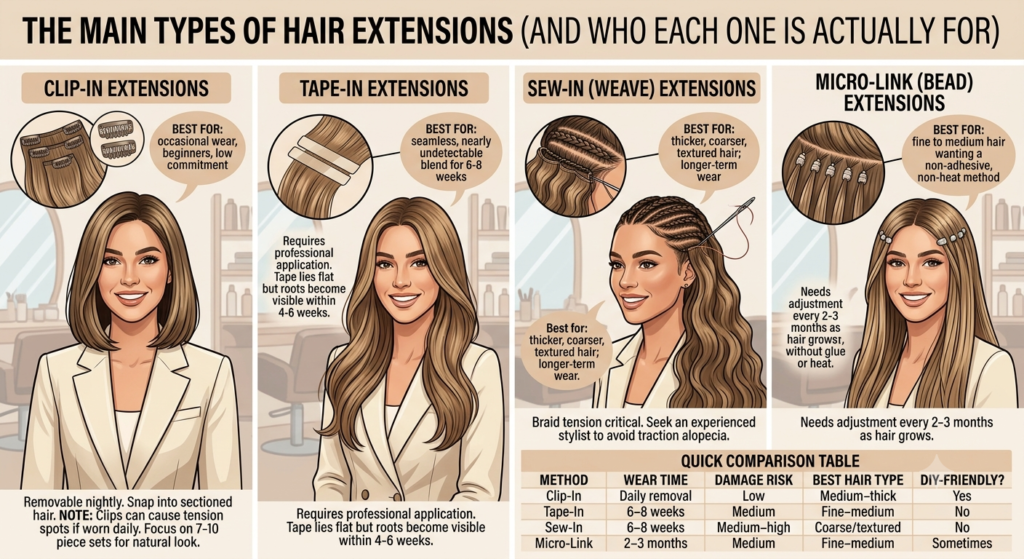
Not all extensions work the same way, and the differences matter more than most sellers admit.
Clip-In Extensions
Best for: occasional wear, beginners, low commitment.
Clip-ins are wefts with small metal clips sewn on, and you snap them into sectioned hair yourself. They’re removable every night, which is their biggest selling point and also their biggest limitation — because they’re not meant for daily wear, the clips can create tension spots if worn constantly.
Overlooked detail: the number of wefts in a set matters more than the brand name. A “full head” set with only 4–5 wefts will look thin on medium-to-thick hair. Look for 7–10 piece sets if your hair is medium density or thicker.
Tape-In Extensions
Best for: people wanting a seamless, nearly undetectable blend for 6–8 weeks at a time.
Thin polyurethane tape sandwiches your natural hair between two wefts. They lie flatter than clip-ins and move naturally, but they require professional application and reapplication as your hair grows out — the tape doesn’t move with your hair, so roots become visible at the base within 4–6 weeks.
Sew-In (Weave) Extensions
Best for: thicker, coarser, or textured hair types; longer-term wear (6–8 weeks).
Your natural hair is braided into cornrows, and wefts are sewn directly onto the braids. This method distributes tension well but requires a stylist experienced in braid tension — too tight, and it causes traction alopecia, a real and common issue that’s frequently downplayed by extension sellers focused on the “wow” factor of the after-photo.
Micro-Link (Bead) Extensions
Best for: fine to medium hair wanting a non-adhesive, non-heat method.
Small silicone-lined beads clamp individual sections of extension hair to your natural hair — no glue, no heat, no sewing. They typically need to be moved up every 2–3 months as hair grows, and if beads are applied too tight, they can cause the same tension issues as sew-ins.
Quick Comparison Table
| Method | Wear Time | Damage Risk | Best Hair Type | DIY-Friendly? |
|---|---|---|---|---|
| Clip-In | Daily removal | Low | Medium–thick | Yes |
| Tape-In | 6–8 weeks | Medium | Fine–medium | No |
| Sew-In | 6–8 weeks | Medium–high | Coarse/textured | No |
| Micro-Link | 2–3 months | Medium | Fine–medium | Sometimes |
Choosing the Right Wig: Lace Front, Full Lace, and Synthetic vs. Human Hair
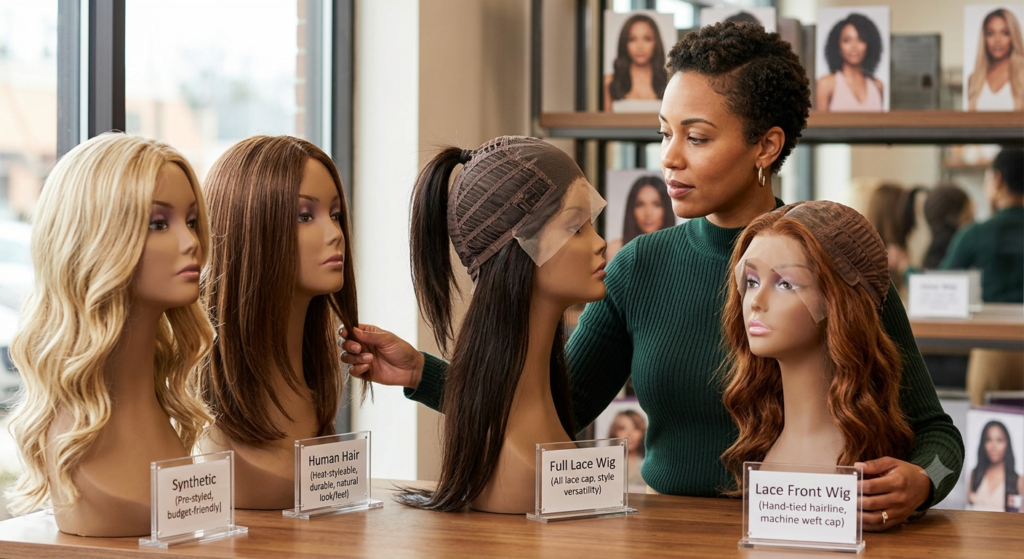
Wigs get treated as one category, but the differences between construction types change everything about how natural they look and how long they last.
Lace Front Wigs
The hairline is hand-tied into a sheer lace panel, creating the illusion of natural hair growth at the front. The rest of the wig cap is typically machine-wefted, which makes these more affordable and faster to produce than full lace units.
Where people get it wrong: they buy a lace front expecting to part it anywhere, but standard lace fronts only have lace at the front — the crown and back are solid wefting. If you want to wear it in a high ponytail or center-part it freely, you need a full lace or 360 lace wig instead.
Full Lace Wigs
The entire cap is lace, allowing parting anywhere and styling in any direction, including updos. They cost significantly more and are more delicate, since the lace itself is fragile at the seams.
Synthetic vs. Human Hair Wigs
Synthetic wigs:
- Hold their curl/style pattern even after washing (no restyling needed)
- Cannot handle high heat — most melt or frizz irreversibly above 250–300°F
- Typically last 4–6 months with regular wear
- Budget-friendly, great for trying new colors risk-free
Human hair wigs:
- Can be heat-styled, colored, and treated like your own hair
- Require the same maintenance as natural hair (deep conditioning, heat protectant, careful brushing)
- Last 1–3 years with proper care
- Significantly higher upfront cost, but better cost-per-wear over time for regular users
A nuance worth knowing: “human hair” isn’t one standard. Remy human hair has cuticles aligned in the same direction (less tangling, more expensive), while non-Remy hair is collected from mixed sources and processed to remove tangling — it looks similar new, but degrades faster.
Must-Have Wig & Extension Accessories (That Actually Get Used)
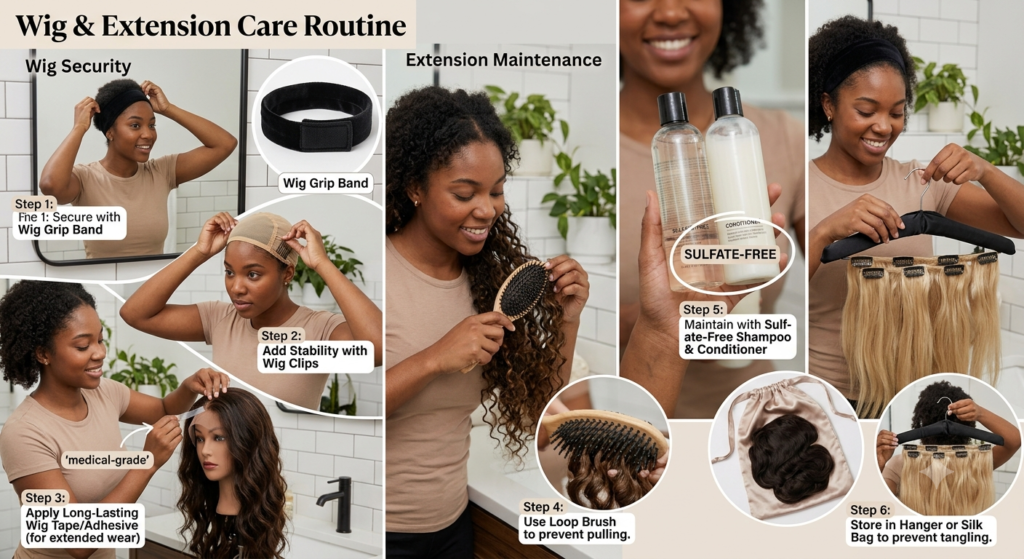
Accessory lists online are often padded with products nobody actually needs. Here’s what genuinely earns a spot in your routine, organized by what problem each one solves.
For securing wigs:
- Wig grip band — a velvet-lined adjustable band worn under the wig that prevents slipping, especially useful for those with little to no natural hair underneath. This solves the single most common wig complaint: shifting during the day.
- Wig clips (combs) — small hair clips sewn inside the wig cap that grip onto your own hair or a wig cap for extra stability. Useful as a backup to adhesive, not a replacement for it.
- Wig tape or adhesive — for lace front wigs worn for extended periods; skin-safe medical-grade tape lasts longer and irritates less than standard extension tape.
For extension maintenance:
- Loop brush (extension-safe brush) — has looped bristles instead of standard nylon bristles, designed to glide through wefts without pulling at the tape or clips.
- Extension-safe shampoo and conditioner (sulfate-free) — sulfates strip the bonding adhesive on tape-ins faster and dry out the extension hair itself, shortening its lifespan.
- Storage hanger or silk bag — clip-ins and wigs should never be balled up in a drawer; tangling and cuticle damage happen fast in storage, not just during wear.
Frequently skipped but genuinely useful:
- Wig cap (nylon or mesh) — worn under any wig to protect natural hair and give a smoother base, especially for those with thick or textured natural hair underneath.
- Heat protectant spray rated for wigs — standard heat protectant sprays are formulated for natural hair chemistry and don’t always perform the same on processed extension or wig fibers; wig-specific sprays exist for a reason.
Common Mistakes That Damage Hair and Ruin Extensions or Wigs Faster
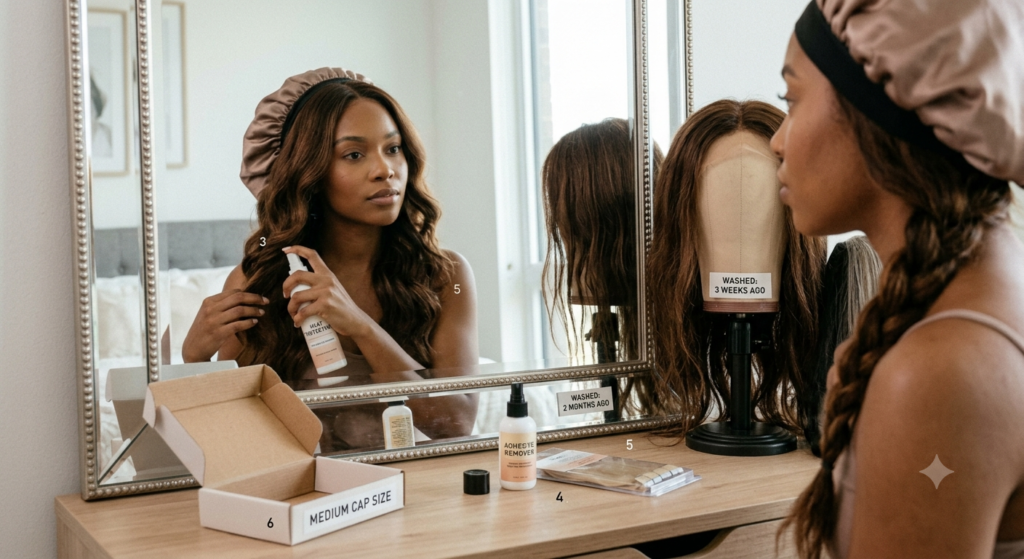
Most damage isn’t caused by wearing extensions or wigs — it’s caused by how they’re handled day to day.
- Sleeping in clip-ins or extensions without braiding first. Loose extension hair tangles with your natural hair overnight, and the friction weakens both. A loose braid or ponytail prevents this in seconds.
- Washing wigs with regular shampoo daily. This strips synthetic fiber coatings and dries out human hair wigs. Wigs need far less frequent washing than natural hair — synthetic wigs typically only need washing every 15–20 wears.
- Skipping heat protectant on human hair extensions or wigs. Since the hair has no natural scalp oils feeding it, it dries out and becomes brittle faster than your own hair under the same heat exposure.
- Pulling tape-ins or clip-ins out instead of following removal instructions. Tape-ins specifically need a proper adhesive remover — pulling them out takes natural hair with them.
- Buying based on length alone. Density (how full the wefts are) affects the final look more than length does. A long but thin set looks stringy; a shorter, denser set often looks more natural and expensive.
- Ignoring cap size on wigs. Wigs run in small, medium, and large cap sizes. A wig that’s too tight causes headaches and visible strain at the hairline; too loose, and it slips no matter how much tape or grip you use.
How to Make Extensions or Wigs Look Natural (Not Obvious)
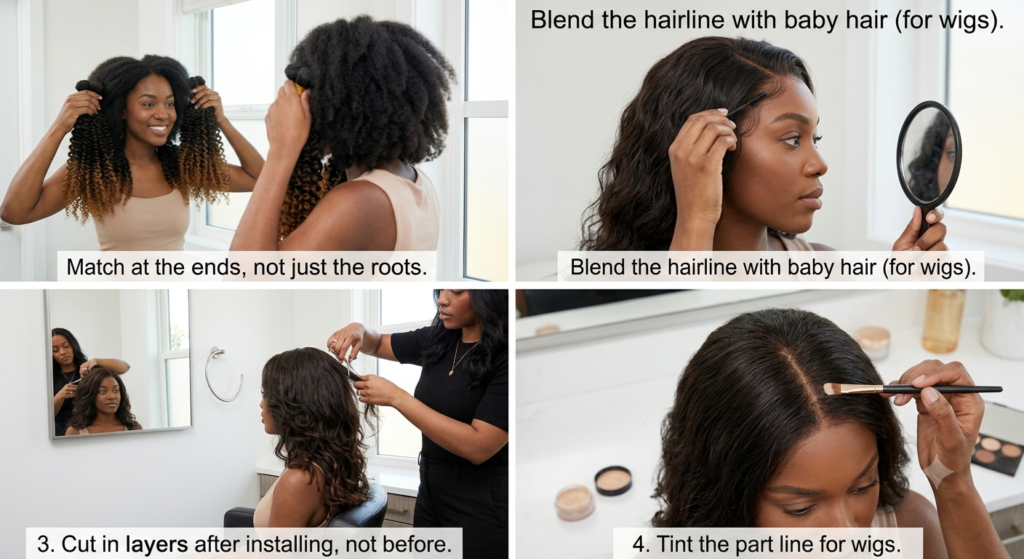
This is where most people either succeed completely or give up entirely — and it usually comes down to a few overlooked technical details rather than skill.
- Match at the ends, not just the roots. Many people match extension color to their roots, but hair naturally lightens toward the ends from sun exposure. Matching to your mid-lengths and ends usually blends better than matching your root color.
- Blend the hairline with baby hair (for wigs). Plucking the lace slightly and using a small amount of gel to lay down “baby hairs” at the front mimics a natural growth pattern far more convincingly than a straight, untouched hairline.
- Cut in layers after installing, not before. Wefted extensions and wigs often come blunt-cut. Having them cut into layers after they’re on your head (by a stylist familiar with extensions) blends them with your natural hair’s movement.
- Tint the part line for wigs. A small amount of concealer, powder, or specialized “wig part” tinting product applied to the lace along the parting line mimics scalp visibility and instantly reduces the “wig shine” giveaway.
Frequently Asked Questions
How long do clip-in extensions typically last? With proper care (gentle washing, avoiding daily wear, using a loop brush), quality clip-ins made from real human hair can last 6–12 months of regular use.
Can you swim or shower with wigs on? Synthetic wigs generally should not be exposed to chlorine or saltwater regularly, as it degrades the fiber. Human hair wigs can tolerate swimming occasionally if rinsed and conditioned promptly afterward, but adhesive-secured lace fronts need waterproof adhesive specifically rated for swimming.
Do tape-in extensions damage natural hair? When applied and removed correctly by a professional, tape-ins are considered lower-risk than sew-ins or heavy clip-ins. Damage typically occurs from incorrect removal (pulling instead of dissolving the adhesive) or leaving them in beyond the recommended 6–8 week window.
What’s the difference between a wig and a topper? A topper covers only a portion of the scalp (typically the crown or top) and is designed for those with partial thinning, blending with the wearer’s existing hair around the edges. A full wig covers the entire head and is worn independently of natural hair.
Final Thoughts
The right choice between extensions and wigs — and the right accessories to go with either — comes down to matching the method to your actual hair, lifestyle, and maintenance tolerance, not to whichever option is trending.
If you’re just starting out, begin with the lowest-commitment option that solves your specific problem: clip-ins for occasional length, a lace front wig for a dramatic change without touching your natural hair, or a topper if thinning is your main concern. From there, invest in the few accessories that genuinely extend the life of your piece — a proper wig grip, sulfate-free wash, and a loop brush will do more for your results than any amount of extra product.
Whichever direction you go, the goal is the same: hair that looks like yours, feels comfortable enough to forget about, and holds up wear after wear.