Hair Care for Men: A Simple Routine That Actually Works
Good hair doesn’t happen by accident. Whether your hair is thick, curly, straight, fine, or starting to thin, the way you care for it every day makes a noticeable difference.
Many men spend years using whatever shampoo happens to be in the shower, skipping conditioner entirely, or styling with products that slowly damage their hair. The result is often dryness, excess oil, dandruff, breakage, or hair that simply refuses to cooperate.
The good news is that effective hair care for men doesn’t require dozens of products or an expensive grooming routine. A few smart habits can dramatically improve the health, appearance, and manageability of your hair.
In this guide, you’ll learn:
- A simple hair care routine men can follow daily
- The best hair care tips for men
- How to choose products for your hair type
- Common grooming mistakes to avoid
- Practical advice for teenagers, young adults, and older men
Why Hair Care Matters for Men
Healthy hair begins with a healthy scalp.
Your scalp produces natural oils called sebum that protect both your skin and hair. When this balance is disrupted—either by over-washing, under-washing, or harsh products—you may experience problems like:
- Dry hair
- Oily scalp
- Dandruff
- Itching
- Hair breakage
- Frizz
- Flat-looking hair
Good hair care isn’t about perfection. It’s about maintaining that natural balance while protecting your hair from unnecessary damage.
Hair Care Routine Men Can Follow Every Day
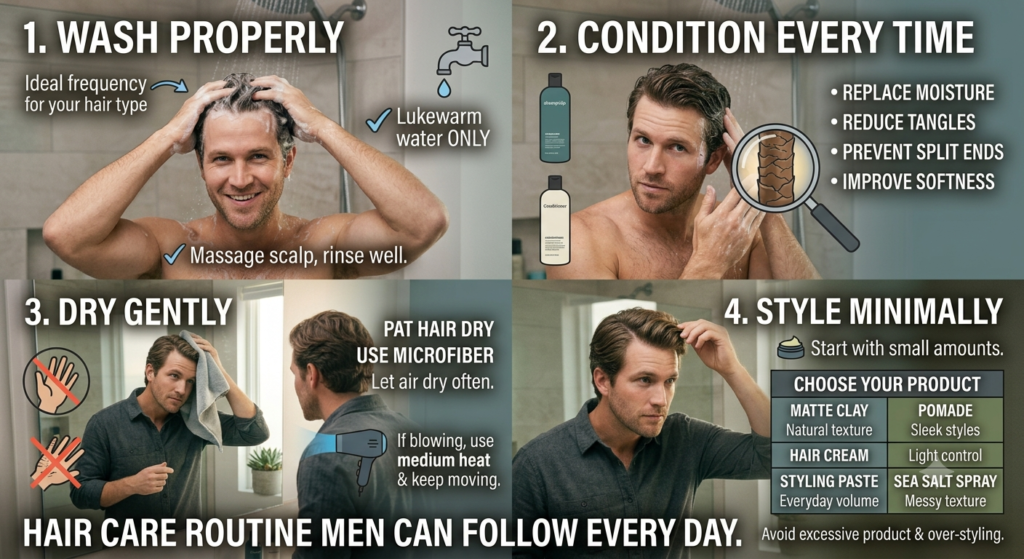
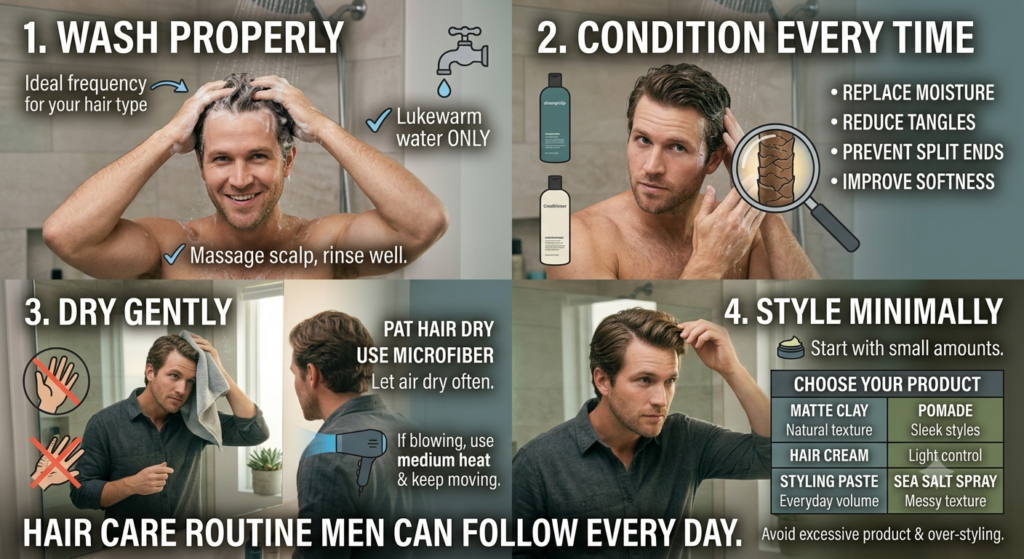
A consistent routine usually works better than constantly changing products.
Step 1: Wash Your Hair Properly
Many men either wash their hair too often or not enough.
The ideal schedule depends on your hair type.
Wash Daily If:
- You exercise heavily
- Your scalp becomes oily quickly
- You use styling products every day
Wash 2–3 Times Weekly If:
- You have curly hair
- Your hair is dry
- Your scalp rarely becomes greasy
Use lukewarm water instead of very hot water, which strips away natural oils.
Massage shampoo into your scalp—not just your hair—and rinse thoroughly.
Step 2: Never Skip Conditioner
Conditioner isn’t only for women.
It helps:
- Replace lost moisture
- Reduce tangles
- Prevent split ends
- Improve softness
- Reduce frizz
Apply conditioner mainly to the mid-lengths and ends rather than directly onto the scalp unless the product specifically recommends it.
Step 3: Dry Hair Gently
One of the biggest causes of breakage is rough towel drying.
Instead:
- Pat hair dry
- Use a microfiber towel if possible
- Let hair air dry when practical
- Avoid aggressive rubbing
If using a blow dryer, choose medium heat and keep it moving.
Step 4: Style Without Damaging Hair
Styling products should support your hairstyle—not harden your hair into place every day.
Popular options include:
| Product | Best For |
|---|---|
| Matte clay | Natural texture |
| Pomade | Sleek styles |
| Hair cream | Light control |
| Styling paste | Everyday volume |
| Sea salt spray | Messy textured looks |
Avoid using excessive product, which can clog the scalp and make hair appear greasy.
Hair Care Tips for Men That Make a Big Difference
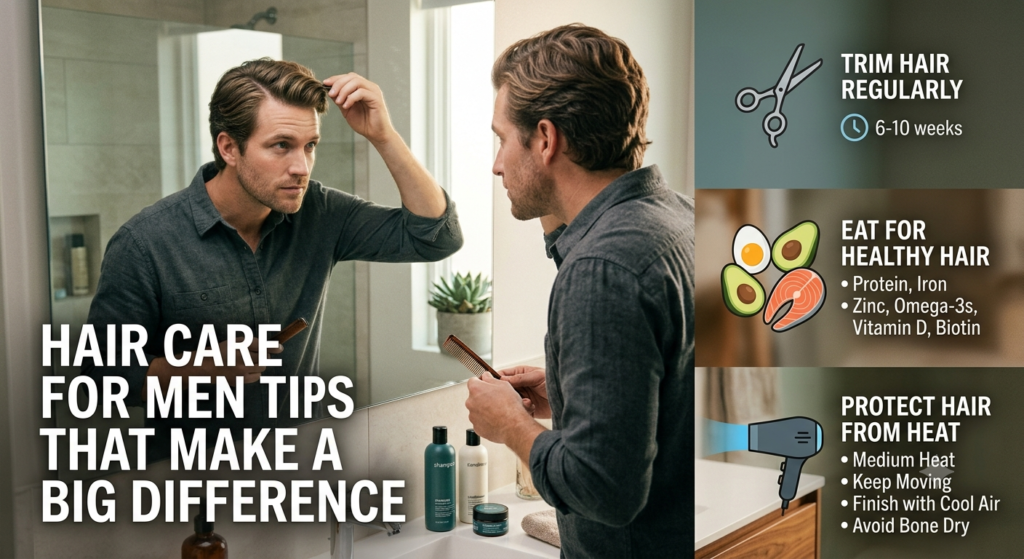
Small habits often produce bigger results than expensive products.
Trim Hair Regularly
Even if you’re growing your hair out, regular trims help remove split ends and keep hair looking healthy.
A trim every 6–10 weeks works for most styles.
Protect Hair From Heat
Frequent heat styling weakens hair over time.
If you use a blow dryer often:
- Use medium heat
- Keep the dryer moving
- Finish with cool air
- Avoid drying completely bone dry
Eat for Healthy Hair
Hair grows from the nutrients your body receives.
Focus on foods rich in:
- Protein
- Iron
- Zinc
- Omega-3 fats
- Vitamin D
- Biotin-containing foods like eggs and nuts
A balanced diet supports healthier hair growth better than relying on supplements unless advised by a healthcare professional.
Stay Hydrated
Hair doesn’t absorb hydration directly from drinking water, but dehydration can affect overall skin and scalp health.
Aim to drink enough fluids consistently throughout the day.
Reduce Stress
Long-term stress may contribute to increased hair shedding in some people.
Helpful habits include:
- Regular exercise
- Quality sleep
- Walking
- Meditation
- Taking breaks from work
Hair Care for Different Hair Types
Not every routine works for every man.
Straight Hair
Straight hair often becomes oily faster.
Best practices:
- Wash more frequently
- Use lightweight conditioner
- Avoid heavy oils
Wavy Hair
Wavy hair benefits from moisture while maintaining volume.
Choose:
- Curl creams
- Leave-in conditioners
- Lightweight styling creams
Curly Hair
Curly hair tends to be naturally drier because oils travel less easily down the hair shaft.
Focus on:
- Moisturizing conditioners
- Sulfate-free shampoo
- Wide-tooth combs
- Less frequent washing
Thick Hair
Thick hair usually requires:
- Rich conditioner
- Occasional deep conditioning
- Products that control volume
Fine Hair
Fine hair benefits from:
- Volumizing shampoo
- Lightweight conditioner
- Minimal product buildup
Heavy styling products can quickly flatten fine hair.
Hair Care Boys: Building Good Habits Early
Teen boys often experience oilier scalps due to hormonal changes.
Simple habits include:
- Washing after sports
- Avoiding excessive gel
- Cleaning hats regularly
- Not scratching the scalp
- Using conditioner after shampoo
Building these habits early makes long-term hair care much easier.
Common Hair Care Mistakes Men Make
Many hair problems come from everyday habits.
Washing Too Often
Overwashing removes protective oils and may leave hair dry or encourage the scalp to produce even more oil.
Using Extremely Hot Water
Hot water feels relaxing but can dry out both the scalp and hair.
Warm water followed by a cool rinse works better.
Applying Too Much Product
More product rarely creates a better hairstyle.
Start with a small amount and add only if necessary.
Ignoring Scalp Health
Healthy hair starts with a healthy scalp.
Persistent itching, redness, flakes, or irritation shouldn’t be ignored.
If dandruff doesn’t improve after several weeks of using an anti-dandruff shampoo, consider speaking with a healthcare professional.
Wearing Tight Hairstyles
Constant tension from tight buns, braids, or ponytails may contribute to breakage over time.
Alternate hairstyles when possible.
Weekly Hair Care Routine Men Can Follow
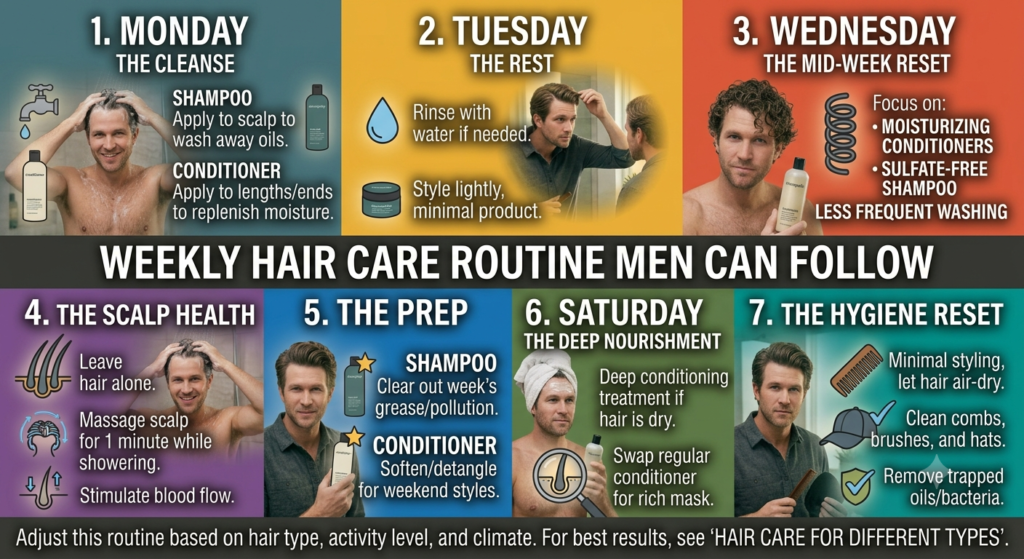
Here’s an easy schedule that fits most lifestyles.
Monday
- Shampoo
- Conditioner
Tuesday
- Rinse with water if needed
- Style lightly
Wednesday
- Shampoo
- Conditioner
Thursday
- Leave hair alone
- Massage scalp for a minute while showering
Friday
- Shampoo
- Conditioner
Saturday
- Deep conditioning treatment if hair is dry
Sunday
- Minimal styling
- Clean combs, brushes, and hats
Adjust this routine based on your hair type, activity level, and climate.
Signs Your Hair Care Routine Needs Improvement
You may want to rethink your routine if you notice:
- Constant flakes
- Excessive oil within hours of washing
- Dry, brittle strands
- Frequent breakage
- Persistent itching
- Product buildup
- Hair that feels rough despite conditioning
Sometimes changing just one product can make a noticeable difference.
Hair Care Products Worth Considering
You don’t need a cabinet full of products.
For most men, these basics are enough:
- Gentle shampoo
- Conditioner
- Styling product suited to your hair type
- Wide-tooth comb
- Microfiber towel
Optional additions include:
- Leave-in conditioner
- Scalp scrub once every few weeks
- Hair oil for dry ends
- Heat protectant if blow drying often
Frequently Asked Questions
How often should men wash their hair?
Most men do well washing every two to three days, although those with very oily scalps or who exercise daily may prefer washing more often. Men with curly or dry hair often benefit from washing less frequently.
Is conditioner really necessary?
Yes. Conditioner helps replace moisture, reduces tangles, smooths the hair cuticle, and minimizes breakage.
Does wearing a hat cause hair loss?
Wearing a clean, properly fitting hat does not typically cause hair loss. However, extremely tight hats or poor scalp hygiene may contribute to irritation.
What’s the best hairstyle for thinning hair?
Short, textured styles often create the appearance of fuller hair. Keeping the sides shorter than the top can also improve balance and volume.
Conclusion
The best hair care for men is built on consistency rather than complexity.
A routine that includes gentle cleansing, regular conditioning, healthy eating, proper drying techniques, and choosing products suited to your hair type will help your hair look healthier and feel easier to manage.
Whether you’re creating your first hair care routine, improving your current habits, or teaching good hair care boys can follow from an early age, small daily choices often deliver the biggest long-term results.
Start with the basics, pay attention to how your hair responds, and adjust your routine as needed. Healthy hair is less about finding a miracle product and more about building habits that support your scalp and hair every day.