Every decade had its own idea of what skin should look like. The 80s wanted sculpted and powdered, the 90s wanted barely-there and matte, and the 2000s wanted bronzed and glowing, sometimes all the way to orange.
The base is what makes a retro look read as authentic. You can wear blue eyeshadow in any era, but the finish and coverage of the foundation is what places it in time. It’s also the part most people get wrong, because retro skin was often applied differently than we apply it now.
This guide breaks down how each decade’s foundation looked, what product types get you close, how to adapt each look for real life, and the mistakes that turn “vintage-inspired” into “costume.”
This article may contain affiliate links. If you purchase through one of these links, we may earn a small commission at no additional cost to you.
What Defined Foundation in Each Decade
Before choosing products, it helps to know what you’re aiming for. Here’s the short version.
| Decade | Finish | Coverage | Signature Detail |
|---|---|---|---|
| 80s | Matte to powdery | Medium to full | Strong blush and defined cheekbones |
| 90s | Soft matte to natural | Light to medium | Concealer-focused, skin-like texture |
| 2000s | Luminous, bronzed | Medium, often airbrushed | Shimmer, warmth, and a “sun-kissed” tone |
These are general trends. Real people in every decade wore everything, but these are the looks most associated with each era.
The 80s Foundation Look: Sculpted, Matte, and Bold
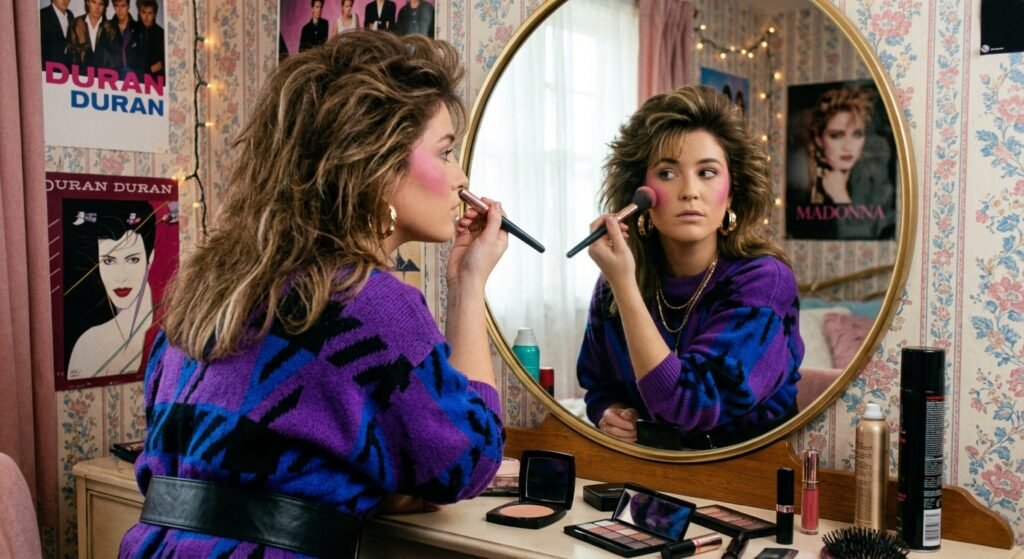
What it looked like
Eighties makeup was built to be seen. Foundation was usually fuller coverage with a matte or powdered finish, and it served as a backdrop for the real focal points: bright blush, strong eyes, and statement lips. Blush was often swept diagonally from the cheekbone toward the temple instead of sitting on the apples of the cheeks.
How to recreate it
- Prep lightly. A thin layer of moisturizer is enough. Heavy, dewy primers fight the matte finish.
- Apply a medium-to-full coverage liquid or cream foundation with a dense brush or sponge, building coverage where you want it and keeping edges blended.
- Conceal selectively under the eyes and around the nose, then set with a translucent powder.
- Add the blush early. In this look, blush is part of the base, not an afterthought. Apply it high on the cheekbones and blend toward the hairline.
- Define with contour. Use a soft, matte shade under the cheekbone, blended well so it looks sculpted instead of striped.
Product types to look for
- A matte or soft-matte, buildable-coverage foundation
- A translucent setting powder
- A pigmented powder or cream blush in pink, coral, or berry
Common 80s mistakes
- Going a shade too light or too orange. Many vintage photos show visible lines at the jaw. Match your shade to your neck and chest.
- Applying powder everywhere. Set the T-zone and under-eyes, and leave the cheeks a bit more natural unless you want a fully matte finish.
- Skipping blending. Retro doesn’t mean harsh. The goal is bold, not unblended.
The 90s Foundation Look: Minimal, Matte, and Skin-Like
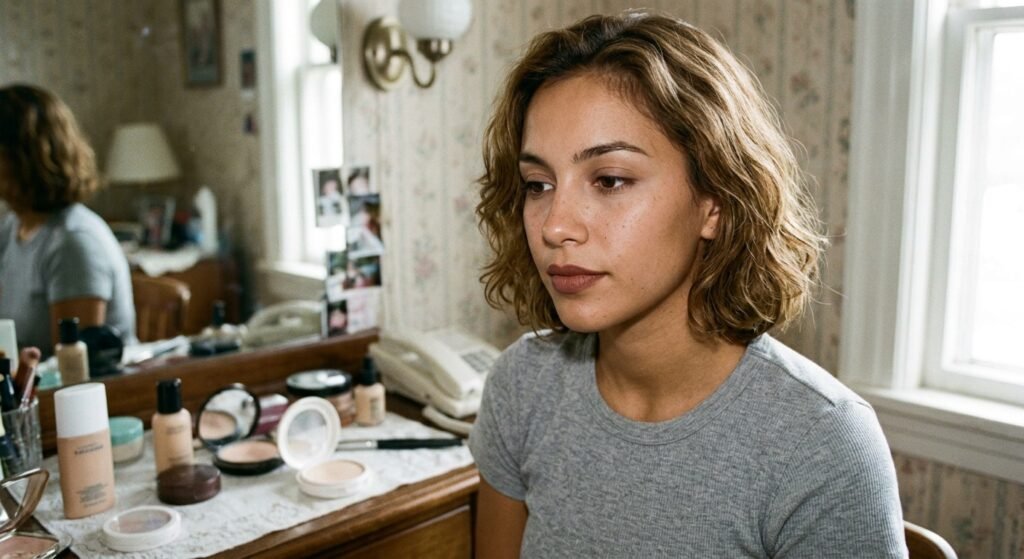
What it looked like
The 90s pulled back from the previous decade. Coverage was lighter, skin looked more like skin, and the finish leaned soft matte. Concealer did much of the work, and the face was often balanced with brown or nude lips, defined brows, and minimal eye makeup. A grungier version also existed, with a flatter, paler base and smudged eyes.
How to recreate it
- Start with a sheer-to-light foundation or a tinted base. Skin tint, light-coverage foundation, or a thin layer of liquid foundation all work.
- Use concealer where needed. Dab it on blemishes, redness, and under-eye shadows instead of covering the whole face.
- Set lightly with powder. You want a soft, flat finish, not a chalky one.
- Skip heavy highlighter and contour. The look relies on subtle, natural-looking dimension.
- Finish with neutral lips. A brown-leaning or muted rose lip sells the decade more than the foundation does.
Product types to look for
- A skin tint or light-coverage foundation with a natural-matte finish
- A creamy, medium-coverage concealer
- A lightweight pressed or loose powder
Common 90s mistakes
- Using too much coverage. If it looks like a full face of foundation, it will drift toward the 80s or 2000s.
- Adding a glossy, glowy finish. A dewy base reads more modern than 90s.
- Overdoing the powder. Soft matte isn’t the same as dry. If your skin is dry, use powder sparingly.
The 2000s Foundation Look: Bronzed, Shimmery, and Airbrushed
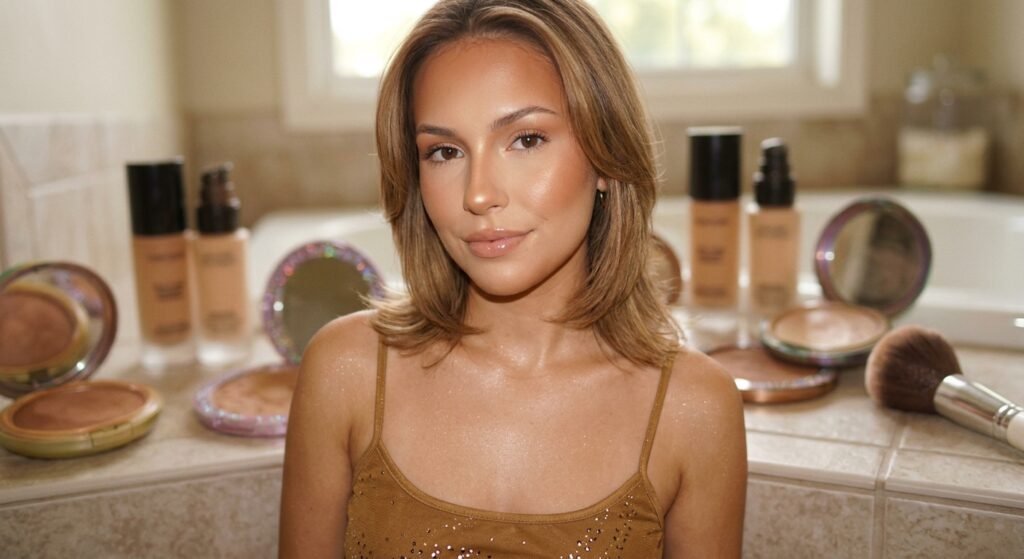
What it looked like
Early-2000s skin was warm, glossy, and often very tan. Foundation looked smooth and even, sometimes almost airbrushed, and was layered with bronzer, shimmer, and frosty or glowing highlighter. Mineral powder foundations were popular, along with bronzing powders and body shimmer. The overall effect was “sun-kissed,” often deliberately more golden than natural skin.
How to recreate it
- Apply a medium-coverage, smooth foundation with a sponge or a flat buffing brush for an even finish.
- Warm it up with bronzer. Sweep it across the forehead, cheekbones, and jawline. Choose a shade that matches your undertone and isn’t dramatically darker than your natural skin.
- Add shimmer strategically. Use a pearly or golden highlighter on the high points of the cheeks, the brow bone, and the bridge of the nose.
- Keep lips glossy and neutral. Sheer, shiny lip color finishes the look.
- Set with a light dusting of shimmery powder if you want the full period effect.
Product types to look for
- A medium-coverage liquid or mineral powder foundation
- A matte or shimmer bronzer in a shade that suits your skin
- A pearly, golden, or champagne highlighter
Common 2000s mistakes
- Choosing a bronzer that’s too orange. Test it on your jawline and check it in natural light.
- Using shimmer across the whole face. Keep it to the high points so the face doesn’t look flat.
- Forgetting your neck. A warm face against a pale neck is the fastest way to look unblended.
Product Recommendations by Category
Because I haven’t verified specific listings, think of this section as a shopping framework. When you open an Amazon product page, check the shade range, ingredient list, recent reviews, and return policy.
Matte Buildable-Coverage Foundation (80s)

Best For: Anyone who wants a full-coverage, matte base and has normal-to-oily skin.
Why Consider It: A matte formula with buildable coverage gives you the backdrop the 80s look depends on, without needing to layer several products.
Pros:
- Good for oily or combination skin
- Buildable, so you can adjust coverage
- Pairs well with bold blush and eye makeup
Cons:
- Can look heavy or cakey on dry or textured skin
- May require more careful blending at the jawline
What to Consider Before Buying: Check the shade range and undertone options. If you have dry skin, look for matte formulas that also mention hydration, and check the ingredient list for anything you know irritates your skin.
Verdict for This Specific Use: A good fit if you want a convincing 80s base and don’t mind a matte finish. If your skin runs dry, a satin-matte formula is likely more comfortable.
Skin Tint or Light-Coverage Foundation (90s)

Best For: Beginners, minimalists, and anyone who dislikes the feel of heavy makeup.
Why Consider It: The 90s look relies on skin that looks like skin. A lighter formula gives you that effect with less effort.
Pros:
- Easy to apply and blend
- Comfortable for everyday wear
- Forgiving if your shade match isn’t perfect
Cons:
- Limited coverage for strong redness or dark circles
- May need concealer to complete the look
What to Consider Before Buying: Look for a finish labeled natural, soft matte, or satin. Avoid anything marketed as dewy or radiant if you want the 90s effect.
Verdict for This Specific Use: Well suited to anyone who wants a wearable retro look. If you need more coverage, pair it with a separate concealer.
Concealer (90s, and Useful for All Three)

Best For: Targeted coverage under the eyes and on blemishes.
Why Consider It: Concealer is the workhorse of the 90s base and a helpful finishing step in the 80s and 2000s looks.
Pros:
- Lets you keep the rest of your skin lighter
- Works across all three decades
- Small amounts go a long way
Cons:
- Creamier formulas can crease under the eyes
- Shade matching under-eyes can take trial and error
What to Consider Before Buying: Check whether the formula is meant for the under-eye area or for blemishes, since they’re often different. If you’re acne-prone, look for non-comedogenic wording and check ingredients.
Verdict for This Specific Use: A practical purchase for almost anyone recreating these looks, particularly if you’re keeping the foundation light.
Bronzer and Highlighter (2000s)

Best For: Readers who want the warm, glowing Y2K effect.
Why Consider It: Bronzer and highlighter do most of the work in the 2000s look. The foundation underneath can stay fairly simple.
Pros:
- Quick way to add warmth and dimension
- Easy to dial up or down
- Works on the face, and many are usable on the body
Cons:
- Wrong shade or too much product can look muddy or streaky
- Shimmer can emphasize texture on some skin types
What to Consider Before Buying: Choose a bronzer close to your natural skin tone, only a couple of shades deeper at most. For highlighter, champagne and gold tones tend to suit warmer skin, while pearl and soft pink tones suit cooler skin.
Verdict for This Specific Use: Worth it if you want the full Y2K effect. If you already own a bronzer you like, you may not need another one.
Translucent Setting Powder

Best For: Locking in the matte finish of the 80s and 90s looks.
Why Consider It: Powder is part of what gave these eras their signature flat, matte finish.
Pros:
- Helps control shine
- Extends wear time
- A small amount lasts a long time
Cons:
- Can look dry or flat on mature or dry skin
- Some powders can flash white in photos with a flash
What to Consider Before Buying: Look for finely milled formulas, and if you take photos with flash, check recent reviews for any mention of flashback.
Verdict for This Specific Use: Useful for the 80s and 90s looks, and optional for the 2000s. If your skin is dry, apply it sparingly or skip it.
Quick Comparison Table
| Product Type | Best For | Key Feature | Main Advantage | Potential Drawback |
|---|---|---|---|---|
| Matte buildable foundation | 80s | Full, flat finish | Strong base for bold blush and eyes | Can look heavy on dry skin |
| Skin tint / light foundation | 90s | Sheer, natural finish | Comfortable and easy | Limited coverage |
| Concealer | All three | Targeted coverage | Lets you use less foundation | Can crease |
| Bronzer and highlighter | 2000s | Warmth and shimmer | Quick Y2K effect | Easy to overdo |
| Translucent powder | 80s, 90s | Sets the base | Controls shine | Can look dry or flash back |
How to Choose Based on Your Skin
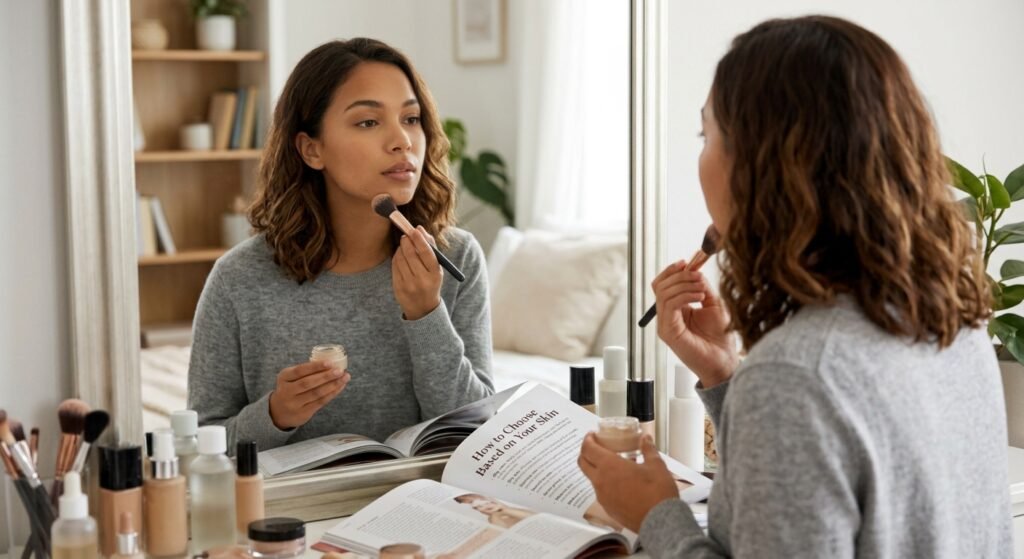
- Oily skin: Matte and soft-matte formulas suit the 80s and 90s looks well. For the 2000s, keep shimmer to the high points.
- Dry skin: Choose satin-matte instead of full matte, hydrate well beforehand, and use powder sparingly.
- Sensitive skin: Read ingredient lists carefully and patch test new products on your jawline or inner arm before wearing them on your face.
- Acne-prone skin: Look for non-comedogenic formulas, and remove makeup thoroughly each night.
- Mature skin: Lightweight formulas and minimal powder often look more flattering than heavy, fully matte finishes.
Individual results vary, so what works on one person may not work on another.
Common Retro Foundation Mistakes
- Matching the era’s mistakes too literally. Visible jaw lines and orange tones were part of the period, but they don’t have to be part of your look.
- Using the wrong finish. A dewy foundation will pull a 90s look into the present day.
- Ignoring the neck and chest. Blend down so the base doesn’t stop abruptly at the jaw.
- Skipping skin prep. Matte products grip dry patches. A quick moisturizer makes a real difference.
- Doing everything at once. If you’re nervous, borrow one element, like 90s concealer placement or a 2000s bronzed cheek, and keep everything else modern.
Quick Checklist Before You Start
- Do I know which finish I’m aiming for: matte, soft matte, or glowing?
- Does my foundation shade match my neck?
- Have I patch tested anything new?
- Do I have a blush, bronzer, or lip shade that completes the era?
- Have I checked the look in natural light?
FAQ
Can I do a retro look if I have sensitive skin?
Yes, but patch test new products first, choose fragrance-free options if fragrance bothers you, and check the ingredient list for known irritants.
Do I need to buy new products for each decade?
Not necessarily. A matte foundation, a concealer, a bronzer, and a setting powder can cover most of these looks if you adjust how much you use and where you place them.
Which decade is easiest for beginners?
The 90s look. It uses lighter coverage and fewer steps, and it’s the most forgiving if your shade match isn’t perfect.
How do I stop the 2000s look from looking orange?
Choose bronzer close to your natural skin tone, apply it with a light hand, and blend it down onto your neck.
Does foundation with SPF replace sunscreen?
Not usually. Most people don’t apply enough foundation to get the SPF on the label, so use a dedicated sunscreen underneath.
Conclusion
The foundation is what makes a retro look feel real, and each decade asks for something different. The 80s want a matte, sculpted backdrop for bold color. The 90s want skin that looks like skin, with concealer doing the precision work. The 2000s want warmth, shimmer, and a smooth, airbrushed finish.
You don’t need a full collection of products to try them. Start with the decade that suits your skin type and comfort level, borrow one signature element, and build from there.
Your next step: Pick one era, check your shade in natural light, and look through the product categories above on Amazon, paying attention to shade range, ingredient lists, and recent customer reviews before you buy.