Most skin care gift baskets fail for the same reason: they’re built around what looks nice in a photo, not what the recipient’s skin actually needs. A loofah, a bar of soap, and a candle crammed into cellophane isn’t a gift basket—it’s a guess.
The good news is that building a skin care gift someone genuinely uses (instead of quietly regifting) isn’t complicated once you understand a few things: skin type matters more than brand name, presentation changes how a gift feels even when the contents are identical, and a $25 basket built with intention beats a $90 basket built with panic-shopping the night before.
This guide walks through real skin care gift basket ideas—organized by format, occasion, budget, and recipient—along with the specific mistakes that make gift baskets feel generic, and how to avoid them. By the end, you’ll have a clear format in mind, a shopping list to work from, and a presentation plan, rather than a vague sense of “something skin care-related.”
What Actually Makes a Skin Care Gift Basket Good
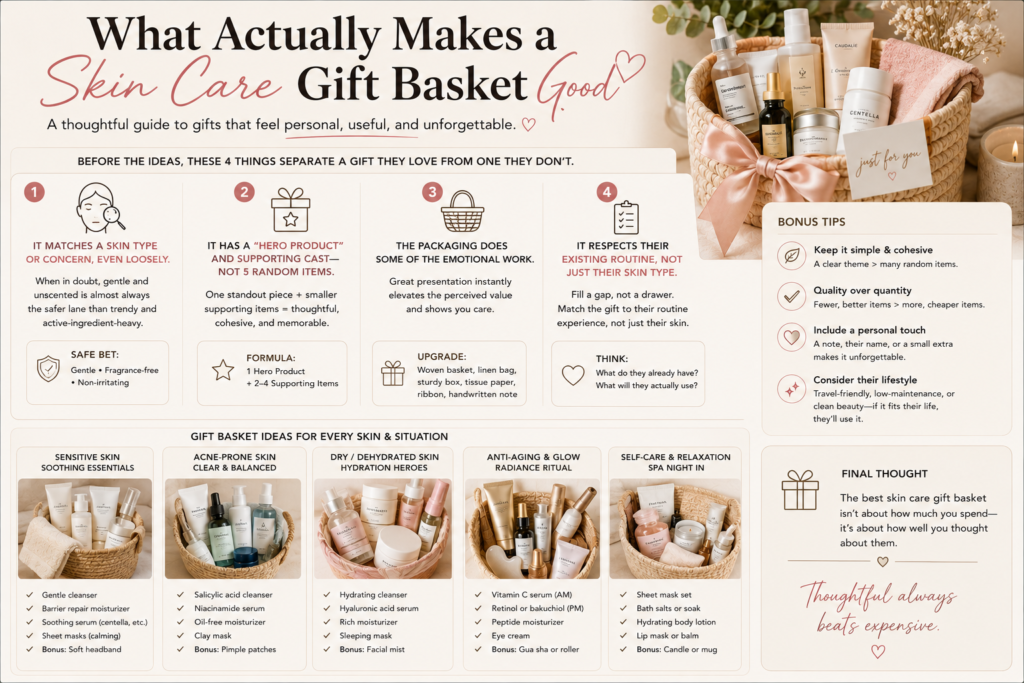
Before the ideas, three things separate a gift someone loves from one they quietly return or leave in a drawer.
1. It matches a skin type or concern, even loosely.
You don’t need to know if someone is “combination-dehydrated” to give a good gift. But you do need to know if they have sensitive skin, if they’re prone to breakouts, or if they’re older and focused on hydration and fine lines. A vitamin C serum is a poor gift for someone with rosacea; a rich, fragrance-free cream is a poor gift for someone with oily, acne-prone skin. When in doubt, gentle and unscented is almost always the safer lane than trendy and active-ingredient-heavy.
2. It has a “hero product” and supporting cast—not five random items of equal weight.
The best gift baskets have one standout piece (a good serum, a nice sheet mask set, a proper gua sha tool) surrounded by smaller items that support it. A basket where everything is equally cheap feels like a bundle from a clearance aisle. A basket with one clearly nice item feels like a gift, even if the total spend is identical.
3. The packaging does some of the emotional work.
This is where most people cut corners, and it’s the easiest place to fix. A $60 collection of products stuffed into a plastic basket from a dollar store reads as a $20 gift. The same products in a woven hamper, a linen drawstring bag, or a sturdy box with tissue paper reads as considerably more thoughtful—at zero extra product cost. Presentation is the cheapest upgrade available to any gift giver.
4. It respects the recipient’s existing routine, not just their skin type.
This is a nuance most guides skip. Someone who already has a well-developed 8-step routine doesn’t need another cleanser—they need something that fills a genuine gap, like a niche tool, an unusual mask format, or a product category they haven’t tried (like a facial mist or an eye patch set). Someone with no routine at all is better served by fundamentals than by a niche product they won’t know how to use.
How to Choose the Right Format for the Occasion
Before diving into specific ideas, it helps to match the format (basket, hamper, box, bag, bouquet) to the occasion, since some formats read as more appropriate than others depending on the relationship and event.
| Occasion | Best Format | Why |
|---|---|---|
| Birthday, close friend | Bouquet or box | Playful, photographs well, feels personal |
| Bridal shower or wedding party gift | Hamper | Reads as more formal and coordinated |
| Christmas / holiday | Box or basket | Fits under a tree, easy to wrap thematically |
| Get well soon | Bouquet or small box | Lighter, less overwhelming than a full basket |
| New mom | Hamper or bag | Practical, fragrance-free items travel well in either |
| College student / long distance | Package | Built to survive shipping |
| Corporate or client gift | Hamper or box | Neutral, professional presentation |
| Teen or young adult | Bag | More useful long-term than a basket sitting on a shelf |
| Self-care gift for yourself | Kit gift | No assembly needed, curated by the brand |
Skin Care Gift Basket Ideas by Recipient
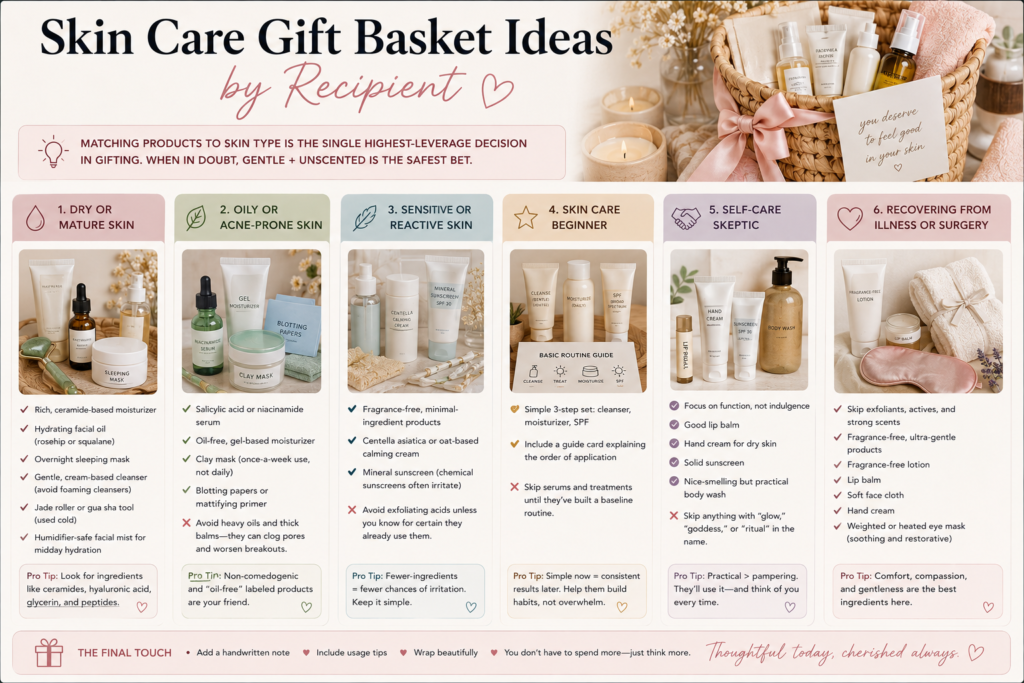
Matching products to skin type is the single highest-leverage decision in the entire gifting process, and it’s the step most people skip in favor of picking whatever smells nice in the store.
For Someone With Dry or Mature Skin
- Rich, ceramide-based moisturizer
- Hydrating facial oil (rosehip or squalane)
- Overnight sleeping mask
- Gentle, cream-based cleanser (avoid foaming cleansers—they strip dry skin further)
- A jade roller or gua sha tool, used cold, to reduce puffiness and support circulation
- A humidifier-safe facial mist for midday hydration touch-ups
For Someone With Oily or Acne-Prone Skin
- Salicylic acid or niacinamide serum
- Oil-free, gel-based moisturizer
- Clay mask (once-a-week use, not daily)
- Blotting papers or a mattifying primer
- Avoid heavy oils and thick balms—well-intentioned but genuinely wrong for this skin type, and a common gifting mistake
For Sensitive or Reactive Skin
- Fragrance-free, minimal-ingredient products
- Centella asiatica or oat-based calming cream
- Mineral sunscreen (chemical sunscreens are a common irritant for this group)
- Avoid exfoliating acids unless you know for certain they already use them
For a Skin Care Beginner
- A simple 3-step set: cleanser, moisturizer, SPF
- A basic guide card explaining the order of application (genuinely useful—most beginners don’t know cleanser comes before serum, and serum before moisturizer)
- Skip serums and treatments until they’ve built a baseline routine; too many products at once leads to abandonment, not enthusiasm
For the Self-Care Skeptic
Some people feel silly using “pampering” products, and gifting them a spa-branded basket often backfires. For this recipient, frame the basket around function, not indulgence: a good lip balm, hand cream for dry winter skin, a solid sunscreen, and a nice-smelling but practical body wash. Skip anything with “glow,” “goddess,” or “ritual” in the name—it will sit unused regardless of quality.
For Someone Recovering From Illness or Surgery
This is an overlooked category. Skip exfoliants, active ingredients, and anything with a strong scent, since sensitivity and nausea are common during recovery. Favor unscented, ultra-gentle products: a fragrance-free lotion, lip balm, a soft face cloth, and hand cream. A weighted or heated eye mask is also a frequently appreciated, non-obvious addition for this recipient.
Skin Care Bouquet: The Trend Worth Trying
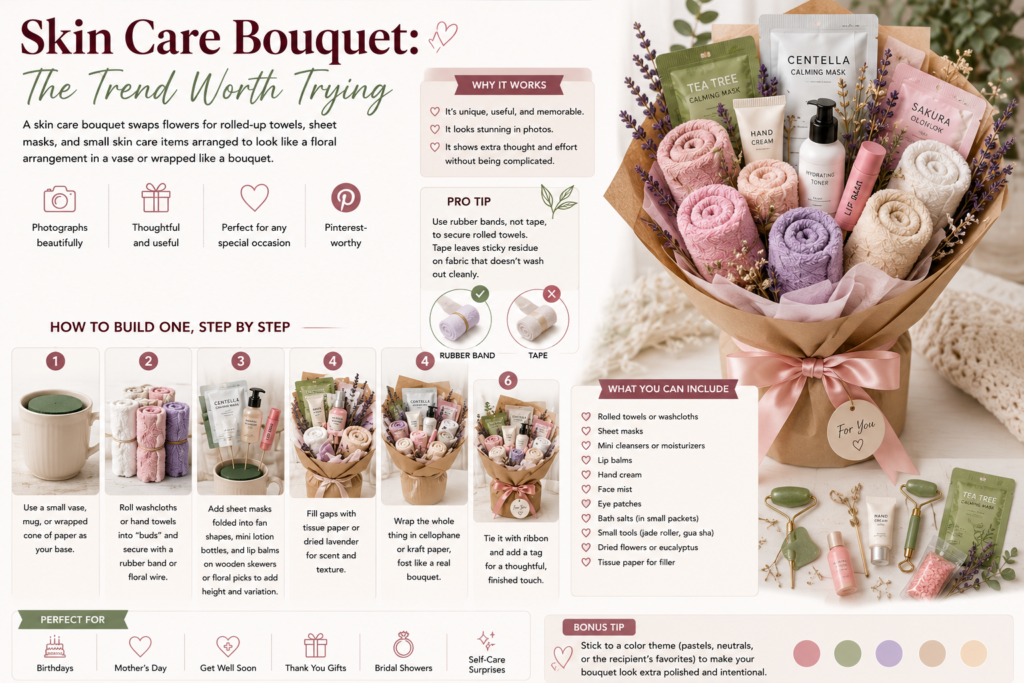
A skin care bouquet swaps flowers for rolled-up towels, sheet masks, and small skin care items arranged to look like a floral arrangement in a vase or wrapped in kraft paper like a bouquet from a flower shop.
How to build one, step by step:
- Use a small vase, mug, or wrapped cone of paper as your base.
- Roll washcloths or hand towels into “buds” and secure with a rubber band or floral wire.
- Add sheet masks folded into fan shapes, mini lotion bottles, and lip balms mounted on wooden skewers or floral picks to give the arrangement height and variation.
- Fill gaps with tissue paper or dried lavender for scent and texture, the same way a florist uses greenery as filler.
- Wrap the whole thing in cellophane or brown kraft paper, tied with ribbon, exactly as you would a real bouquet.
This format works especially well for birthdays, Mother’s Day, or “get well soon” gifts, because it photographs beautifully and doesn’t require a traditional basket container. It’s also one of the more Pinterest-friendly formats since the visual novelty does a lot of the marketing work on its own—people share bouquets more than they share flat-lay baskets.
A tip most tutorials skip: use rubber bands, not tape, to secure rolled towels. Tape leaves adhesive residue on fabric that doesn’t wash out cleanly, which undermines the “useful gift” quality of the towel afterward.
Skin Care Xmas Gifts: Holiday-Specific Ideas
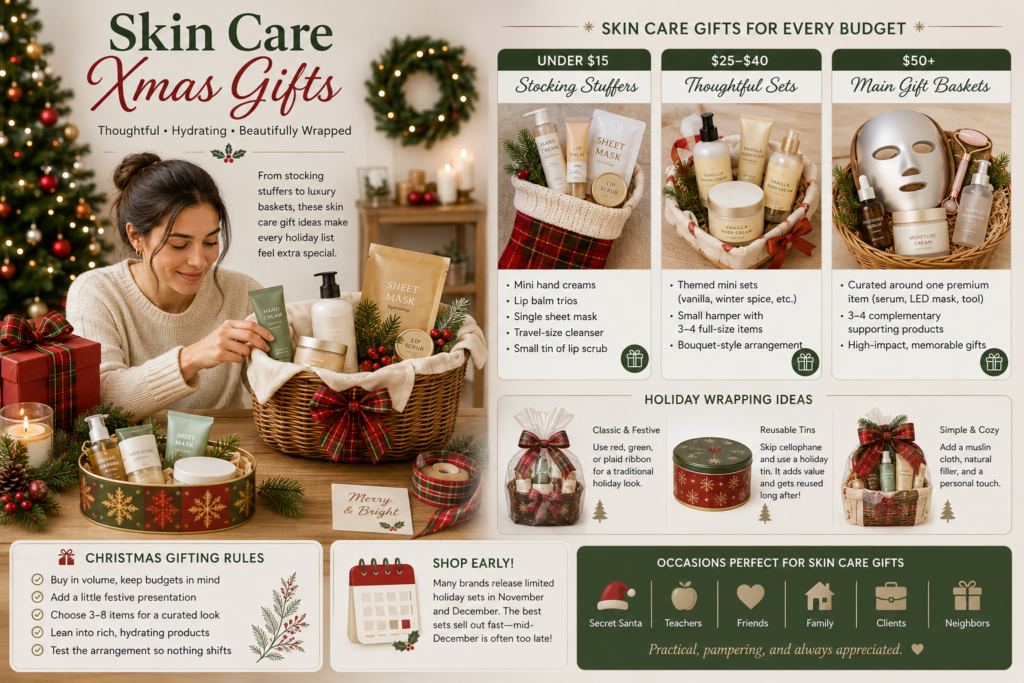
Christmas gifting has its own rules. People are buying in volume, budgets are tighter across more people on the list, and there’s an expectation of at least a little festive presentation, even for practical gifts.
- Under $15 stocking stuffers: mini hand creams, lip balm trios, a single sheet mask, travel-size cleanser, a small tin of lip scrub
- $25–$40 range: a themed mini set (all vanilla or winter-spice scented), a small hamper with 3–4 full-size items, or a bouquet-style arrangement
- $50+ “main gift” baskets: a curated set built around one nicer item (a proper serum, an LED mask, or a facial tool) with 3–4 supporting products chosen to complement it
A holiday-specific tip most gift guides don’t mention: winter skin is drier for almost everyone due to indoor heating and cold, dry outdoor air, regardless of someone’s usual skin type. Leaning into rich, hydrating products for Christmas gifts is a safer bet than it would be for a spring or summer gift, even for people who normally run oilier. This is one of the few times of year where you can gift a heavier cream to someone with combination skin without much risk.
Wrap in red, green, or plaid ribbon, or skip traditional cellophane entirely for a reusable holiday tin—it adds perceived value and the tin gets reused afterward for storage, which people tend to remember and mention long after the products themselves are gone.
Also worth considering: many skin care brands release limited holiday sets in November and December specifically designed as gifts, often at a better per-product value than buying items individually. These sell out earlier than most shoppers expect—mid-December is usually too late for the better sets.
Skin Care Hamper Ideas
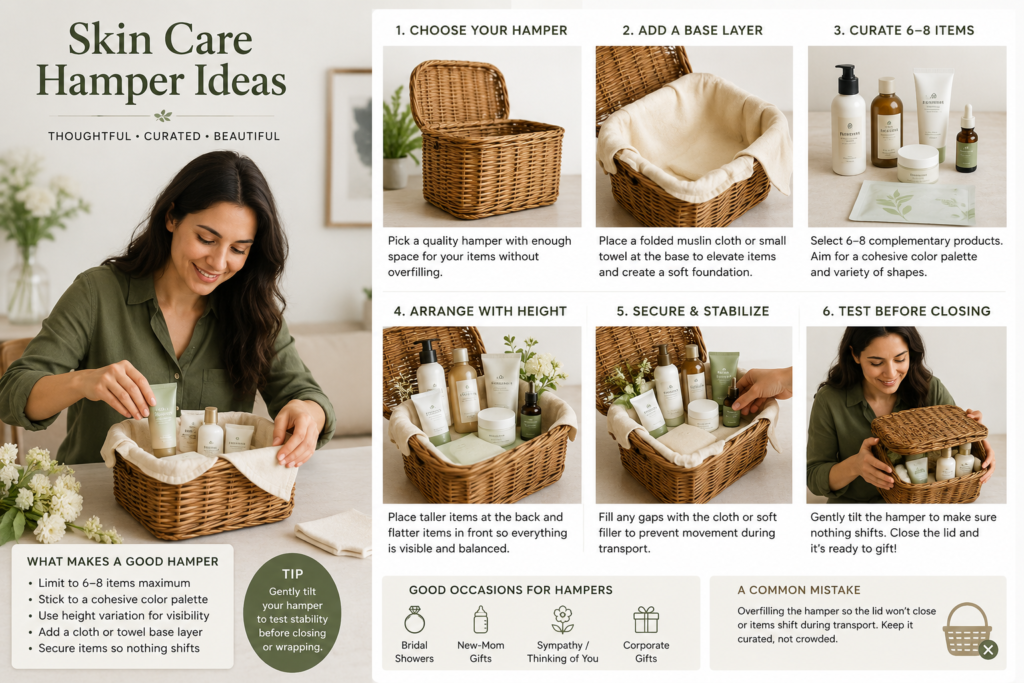
A hamper implies a slightly more traditional, structured presentation than a basket—usually a woven or wicker container, sometimes with a lid, often associated with more formal occasions like bridal showers, retirement gifts, or sympathy and “thinking of you” gifts.
What separates a good hamper from a cluttered one:
- Limit it to 6–8 items maximum. More than that and it looks chaotic rather than curated, no matter how nice the individual products are.
- Group by color palette. A hamper with products in whites, creams, and soft greens looks intentional; a hamper with five different bright, competing labels looks like a clearance bin.
- Use height variation—place taller bottles toward the back, flatter items like sheet masks and soaps toward the front so nothing is hidden behind something else.
- Add a folded muslin cloth or small towel as a base layer before placing products. This raises items up so they’re visible above the rim of the hamper, rather than sitting flat and invisible at the bottom.
Good hamper occasions: bridal showers, new-mom gifts (look specifically for fragrance-free, pregnancy-safe products, since many active ingredients like retinol are advised against during pregnancy), condolence gifts, or corporate client gifts where a slightly more formal presentation matters more than personalization.
A mistake specific to hampers: overfilling the container so the lid won’t close, or so items shift and fall during transport. Test the fully-loaded hamper by gently tilting it before wrapping—anything that moves needs better placement or padding.
Skin Care Gift Box Ideas (Step-by-Step DIY)
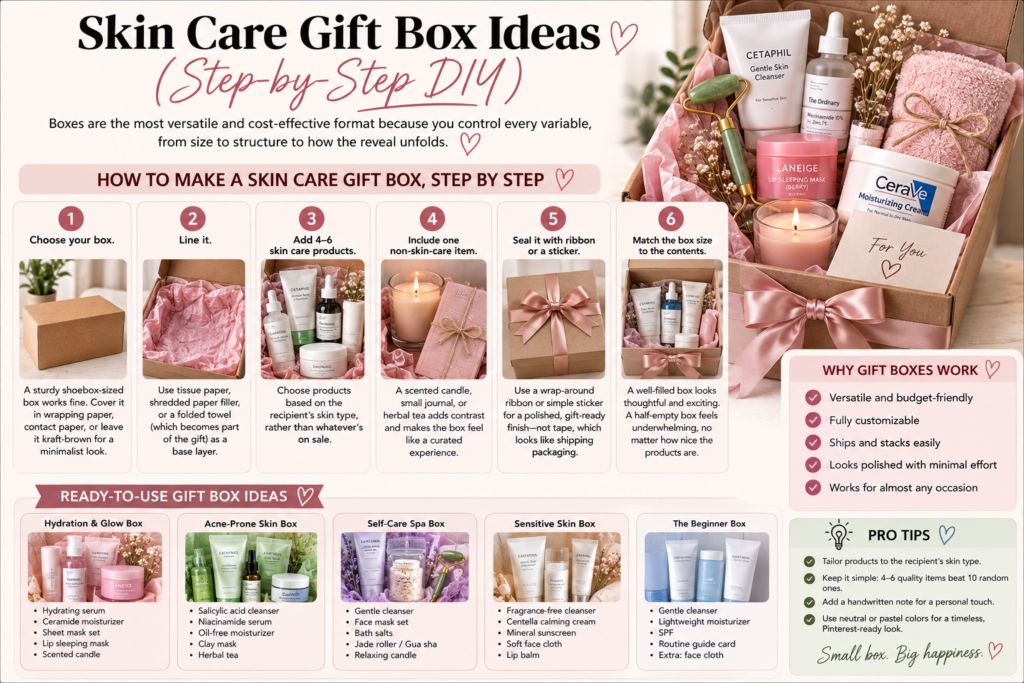
Boxes are the most versatile and cost-effective format because you control every variable, from size to structure to how the reveal unfolds.
- Choose your box. A sturdy shoebox-sized box works fine—it doesn’t need to be a specialty gift box from a craft store. Cover it in wrapping paper, contact paper, or leave it kraft-brown for a minimalist look that photographs well.
- Line it. Tissue paper, shredded paper filler, or even a folded towel (which becomes part of the gift itself, not just packaging) as a base layer.
- Choose 4–6 products following the skin-type guidance above, rather than defaulting to whatever’s on sale.
- Add one non-skin-care item for contrast—a scented candle, a small journal, or herbal tea. This breaks up the visual monotony of bottles and jars and makes the box feel more like a curated experience than a straightforward product bundle.
- Seal with a wrap-around ribbon or a simple sticker rather than tape, which looks like shipping packaging rather than a gift.
This format is ideal for anyone shipping a gift, since boxes travel and stack far better than open baskets or hampers, and they fit standard shipping supplies without modification.
One detail worth getting right: match the box size closely to the contents. A half-empty box, even beautifully wrapped, reads as underwhelming the moment it’s opened, regardless of how nice the actual products are.
Skin Care Kit Gift: When to Buy Pre-Made Instead of DIY
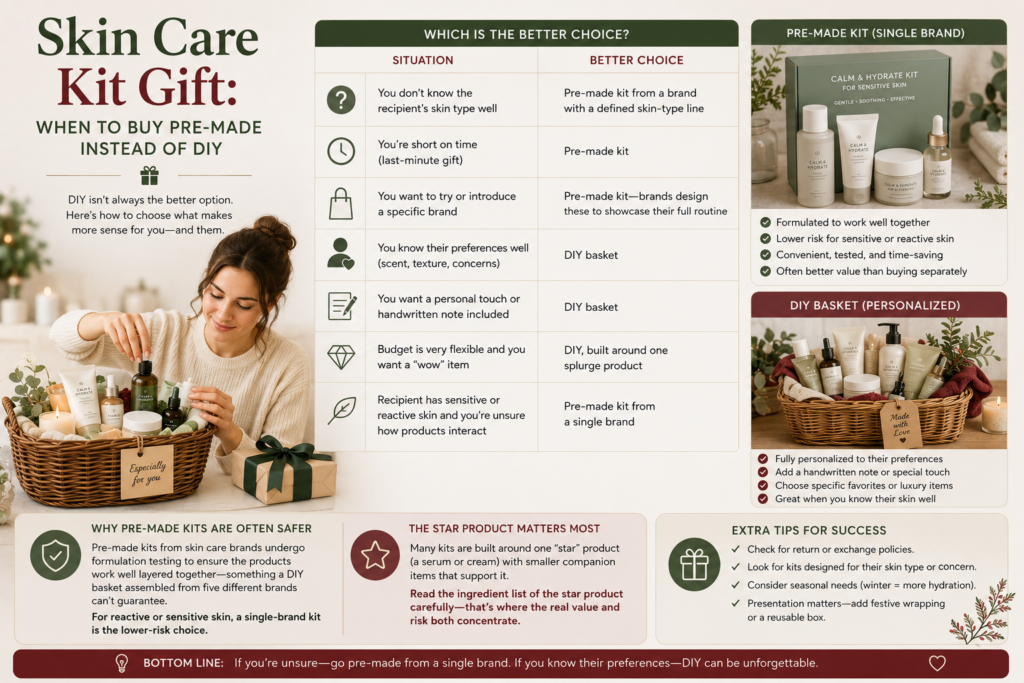
DIY isn’t always the better option, and it’s worth being honest about when a pre-made kit makes more sense than assembling one yourself.
| Situation | Better Choice |
|---|---|
| You don’t know the recipient’s skin type well | Pre-made kit from a brand with a defined skin-type line |
| You’re short on time (last-minute gift) | Pre-made kit |
| You want to try or introduce a specific brand | Pre-made kit—brands design these to showcase their full routine |
| You know their preferences well (scent, texture, concerns) | DIY basket |
| You want a personal touch or handwritten note included | DIY basket |
| Budget is very flexible and you want a “wow” item | DIY, built around one splurge product |
| Recipient has sensitive or reactive skin and you’re unsure how products interact | Pre-made kit from a single brand |
Pre-made kits from skin care brands typically undergo formulation testing to ensure the products work well layered together—something a DIY basket assembled from five different brands can’t guarantee. If the recipient has reactive skin and you’re unsure how products interact, a single-brand kit is genuinely the lower-risk choice, even if it feels less personal on the surface.
A nuance worth knowing: many pre-made kits are built around a single “star” product (a serum or cream) with smaller companion items designed mainly to demonstrate that product’s benefits. Reading the ingredient list of the star product carefully matters more than reading every item in the box, since that’s typically where the real value and risk both concentrate.
Skin Care Bag Ideas
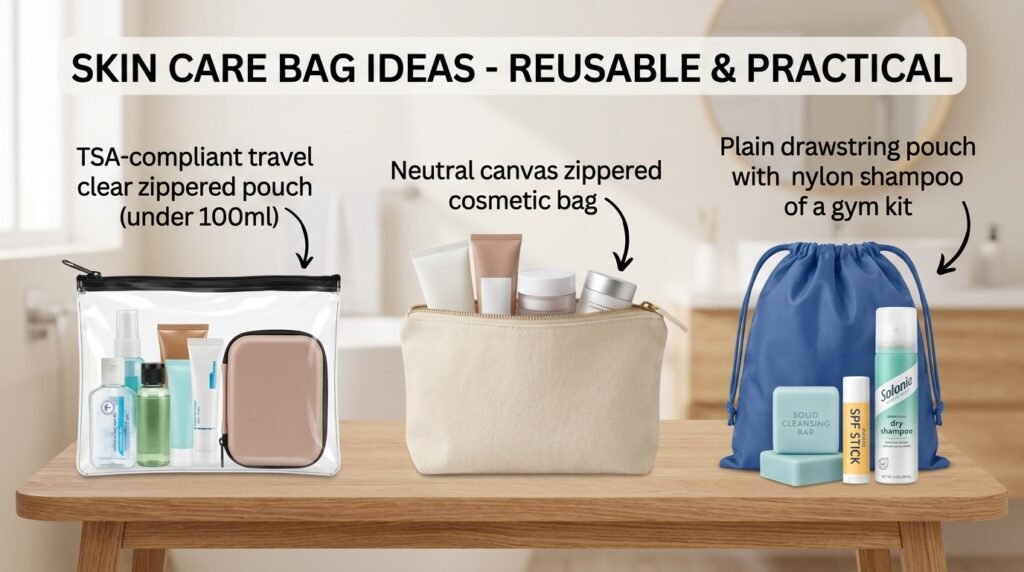
A “bag” format—drawstring pouch, cosmetic bag, or small tote—works well for two audiences in particular: travelers and teenagers or young adults who may not want a “basket” sitting visibly on a shelf.
- Travel-focused bag: TSA-compliant sizes only (3.4 oz / 100 ml or under per item), a reusable clear pouch, and a hard-shell case for anything glass or breakable that might shift during transit.
- Everyday cosmetic bag: slightly larger sizes are fine here; focus on a bag they’d actually reuse afterward—a plain canvas or neutral-colored pouch outlasts a novelty-print one that feels dated within a year.
- Gym or overnight bag version: focus on multi-use items—a solid cleansing bar (no spill risk), a small SPF stick, and a travel-size deodorant or dry shampoo alongside the skin care.
The advantage of the bag format is reusability. Unlike a basket, which often gets discarded once emptied, a good-quality bag becomes part of the recipient’s actual routine long after the products inside are gone—which meaningfully extends how long the gift is “remembered” and used.
Skin Care Package Ideas (For Shipping or Care Packages)
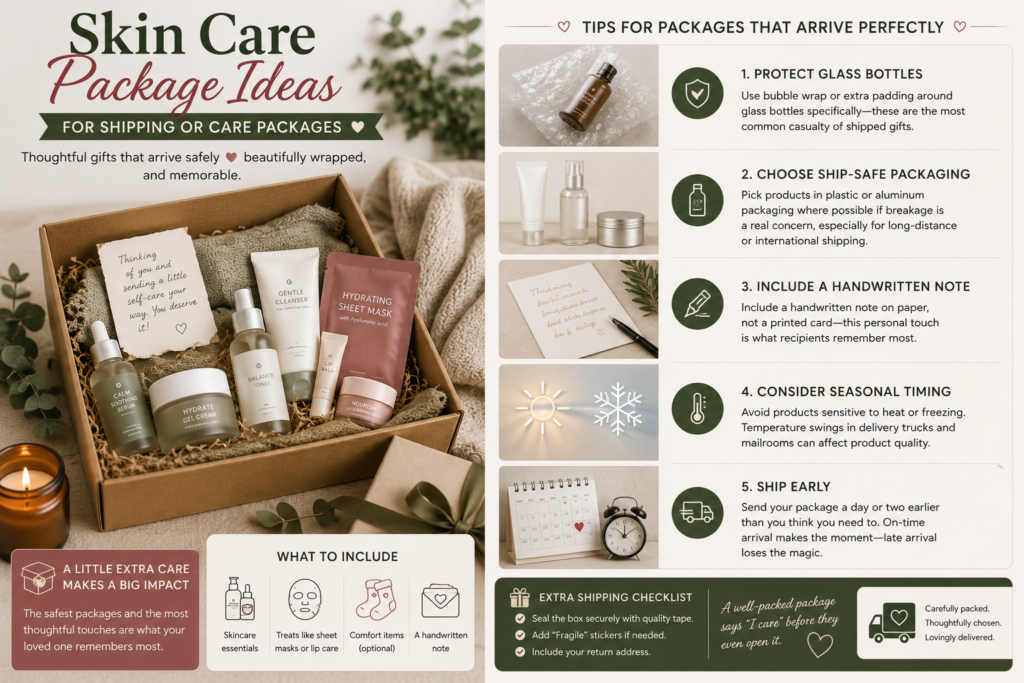
“Package” gifts differ from baskets mainly in one respect: they need to survive transit intact, which changes several decisions upstream.
- Use bubble wrap or extra padding around glass bottles specifically—these are the most common casualty of shipped gift baskets, and a broken bottle in transit can ruin every other item in the box.
- Choose products in plastic or aluminum packaging where possible if breakage is a real concern, especially for longer or international shipping routes.
- Include a handwritten note on paper, not a printed card—for shipped gifts especially, this is often what recipients mention first in a thank-you message, ahead of the products themselves.
- Consider seasonal timing: a package that sits in a mailroom or on a porch for a few days shouldn’t include anything sensitive to heat or freezing (avoid this during extreme summer or winter shipping windows, when temperature swings inside delivery vehicles and mailrooms can be significant).
- Ship a day or two earlier than feels necessary. Care packages that arrive after the occasion they’re meant for lose most of their emotional impact, even when the contents are identical.
Skin Care Unboxing: Making the Reveal Part of the Gift
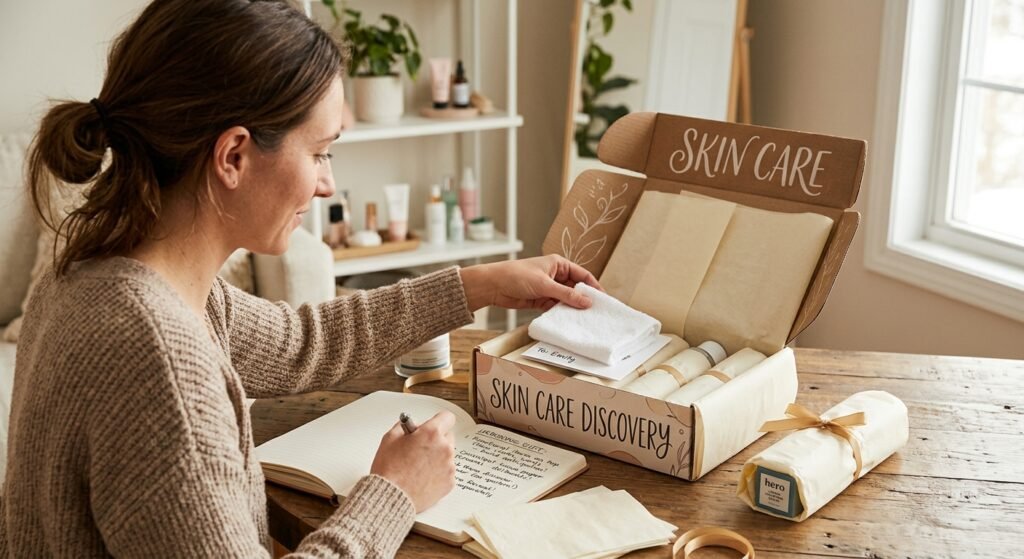
“Unboxing” has become its own gifting consideration, not just a video trend borrowed from social media. The order in which someone uncovers items changes how the gift feels, even with completely identical contents.
Layering tips for a better reveal:
- Put the least exciting or functional item on top (a face cloth, a card) and the “hero” product at the bottom, so anticipation builds rather than fizzles out early.
- Use one consistent tissue paper color rather than mixed leftover paper from past occasions—it reads as more deliberate and considered.
- If gifting in person, resist the urge to explain every item before they open it. Let them discover it themselves; narrate afterward if they ask about a specific product.
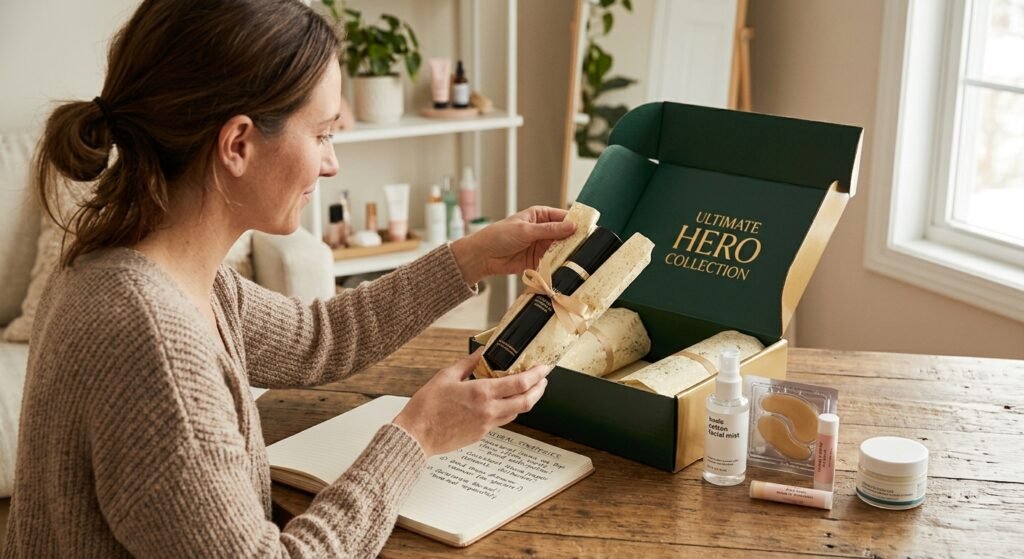
- Consider a small “reveal moment” for the hero product specifically—wrapping just that one item separately inside the larger box, so it gets its own unwrapping beat instead of blending in with everything else.
This matters more than it sounds like it should. A basket with excellent products but a flat, everything-visible-at-once presentation gets a noticeably weaker reaction than a mediocre basket with a well-paced reveal. The pacing is doing real emotional work, not just aesthetic work.
Budget Breakdown: What to Expect at Each Price Point
- $15–$25: 3–4 travel or mini-size products, simple wrapping (tissue paper and ribbon), best suited to stocking stuffers, coworker gifts, or “just because” gestures.
- $30–$50: 4–6 full-size products with one mid-tier “hero” item, a proper container (box, small hamper, or bag), suitable as a standalone birthday or holiday gift.
- $60–$100: 5–7 products including at least one higher-end serum or tool, upgraded presentation (woven hamper, branded box, or a bouquet arrangement), appropriate for close friends, family, or client gifts.
- $100+: built around a genuine splurge item—an LED mask, a premium retinol or peptide serum, or a professional-grade tool—supported by 3–4 complementary products, reserved for milestone occasions.
Common Mistakes That Make Skin Care Gifts Feel Generic
- Buying based on packaging alone. A gorgeous bottle with a formula that doesn’t suit the recipient’s skin type will go unused regardless of how well it photographs on a shelf.
- Overloading with scent. Combining a scented candle, scented lotion, and scented soap in one basket is overwhelming rather than luxurious—pick one dominant scent family, if any, and let it carry through consistently.
- Ignoring expiration dates. Skin care products, especially natural or preservative-free ones, have shorter shelf lives than most people expect. Check dates carefully, particularly on clearance or discount-bin purchases, which are often close to expiring for a reason.
- Skipping SPF. It’s one of the most universally useful products you can include, and it’s frequently left out of gift baskets in favor of more “exciting” items like masks or tools.
- Assuming more items equals more value. Six full-size, well-matched products almost always outperform twelve miscellaneous samples that don’t relate to each other or the recipient’s actual skin.
- Forgetting to check for allergies you already know about. If you know someone reacts to a specific ingredient (often fragrance, certain essential oils, or particular preservatives), that knowledge should override every other consideration on this list.
Frequently Asked Questions
How much should I spend on a skin care gift basket?
A genuinely nice basket can be built for $30–$50 using 4–5 products plus presentation materials. Under $20 works well for stocking stuffers or add-on gifts rather than standalone presents. Above $75 typically means including at least one higher-end serum or tool as the centerpiece, with everything else built around supporting it.
What if I don’t know the recipient’s skin type?
Default to gentle, fragrance-free, broadly suitable products—cleanser, moisturizer, SPF, lip balm. These four rarely go wrong regardless of skin type, unlike active ingredients (retinol, exfoliating acids, vitamin C) which can genuinely irritate skin if mismatched to the wrong person.
Should I include makeup or just skin care?
Keep gift baskets focused on skin care only unless you know the recipient’s exact makeup shade preferences. Skin care products are largely shade- and preference-agnostic, which makes them a considerably safer gifting category than color cosmetics.
Is it better to buy a pre-made basket or build my own?
Build your own when you know the person well and have the time; buy pre-made when you’re short on time or unfamiliar with their skin needs. Both are valid depending on the situation—see the comparison table above for a clearer breakdown of when each makes sense.
How far in advance should I put a gift basket together?
For DIY builds, two to three days ahead is usually enough time to shop, assemble, and wrap without rushing the presentation. For shipped care packages, add several more days depending on shipping method, and always check expiration dates on anything purchased well ahead of the gifting date.
What’s the single most commonly forgotten item in skin care gift baskets?
Sunscreen. It’s practical rather than exciting, so it gets skipped in favor of masks and serums, but it’s genuinely one of the most useful and universally appropriate products you can include for almost any skin type or age.
Final Thoughts
A memorable skin care gift basket isn’t about spending more—it’s about matching the contents to the person, giving one item room to stand out, and putting a little thought into how it’s presented and opened. Whether you’re building a full hamper for a bridal shower, a quick bag of travel minis, or a shipped care package for a college student, the same principles apply: fewer, better-matched products beat a pile of mismatched ones every time, and presentation is doing more emotional work than most gift-givers give it credit for.
Pick one format from this list, choose products based on skin type rather than packaging, and spend the last ten minutes on presentation rather than skipping it. That’s the difference between a basket that gets used and one that gets left in a drawer.